

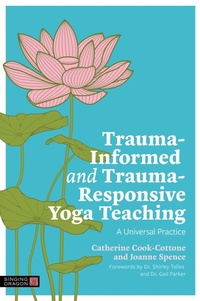
Trauma-Informed and Trauma-Responsive Yoga Teaching
A Universal Practice
Published on 21. June 2024
304 pages
978-1-83997-817-3 (ISBN)
Description

This essential manual meets the increasing need for yoga teachers to be trauma-informed and trauma-responsive, and aware of how poses, breathwork, and meditation can impact the body. In detailing all aspects of trauma as it relates to yoga teaching, this guide lays a strong foundation in fostering trust and building authentic connections with students safely and confidently.
Yoga teachers will benefit from a number of yoga practices for self-regulation, self-determination, and agency, as well as guidance on polyvagal theory, communication, setting boundaries, and yoga teacher self-care. It also includes a de-escalation protocol for in-session trauma responses and how to cultivate a trauma-informed teaching environment.
Written by an internationally renowned author duo, this is a universal resource for yoga teachers looking to empower themselves and their clients from all demographics and in all settings.
Yoga teachers will benefit from a number of yoga practices for self-regulation, self-determination, and agency, as well as guidance on polyvagal theory, communication, setting boundaries, and yoga teacher self-care. It also includes a de-escalation protocol for in-session trauma responses and how to cultivate a trauma-informed teaching environment.
Written by an internationally renowned author duo, this is a universal resource for yoga teachers looking to empower themselves and their clients from all demographics and in all settings.
More details
Edition
Digital original
Language
English
Place of publication
London
United Kingdom
Target group
College/higher education
Professional and scholarly
Edition type
Illustrated edition
Illustrations
Approx. 100 black and white illustrations and figures
File size
3,72 MB
ISBN-13
978-1-83997-817-3 (9781839978173)
Copyright in bibliographic data and cover images is held by Nielsen Book Services Limited or by the publishers or by their respective licensors: all rights reserved.
Schweitzer Classification
Other editions
Additional editions
Catherine Cook-Cottone | Joanne Spence
Trauma-Informed and Trauma-Responsive Yoga Teaching
A Universal Practice
Book
06/2024
Jessica Kingsley Publishers
€35.00
Shipment within 3-4 weeks
Persons
Catherine Cook-Cottone, Ph.D., is a licensed psychologist, yoga therapist, and professor at University at Buffalo, SUNY. She has written 10+ books and over 100 research articles and chapters on mindful self-care, yoga, embodiment, self-regulation, eating disorders, and trauma. She is a trauma therapist and conducts trainings internationally on trauma-informed and responsive yoga. In 2018, she was awarded the American Psychological Association's Citizen Psychologist Presidential Citation. She lives in Amherst, NY.
Joanne Spence, D.Min, ERYT-500, C-IAYT is a certified yoga therapist and founder and director of Yoga in Schools. Joanne trains and teaches internationally in a range of settings, including teaching yoga in prisons, hospitals, schools, churches, and sometimes on street corners. She has more than thirty-five years of clinical experience as a mental health professional and twenty-plus years as a teacher and practitioner of yoga. She is the author of two books and book chapters. She lives in Pittsburgh, PA.
Joanne Spence, D.Min, ERYT-500, C-IAYT is a certified yoga therapist and founder and director of Yoga in Schools. Joanne trains and teaches internationally in a range of settings, including teaching yoga in prisons, hospitals, schools, churches, and sometimes on street corners. She has more than thirty-five years of clinical experience as a mental health professional and twenty-plus years as a teacher and practitioner of yoga. She is the author of two books and book chapters. She lives in Pittsburgh, PA.
Content
- Intro
- Trauma-Informed and Trauma-Responsive Yoga Teaching
- Cover
- Of related interest
- Title Page
- Copyright
- Contents
- Foreword by Dr. Shirley Telles
- Foreword by Dr. Gail Parker
- Acknowledgments
- List of Trauma-Informed and Responsive (TIR) Principles for Teaching Yoga
- List of Trauma-Informed and Responsive (TIR) Practices
- Introduction
- Part I: Foundations of Trauma-Informed and Responsive Yoga Teaching
- 1. Trauma-Informed and Responsive Methods Defined
- 2. Trauma Basics and Terminology
- 3. Preparedness-Resource, Assess, Pause, De-escalate, and Connect
- 4. Mindful Self-Care as a Trauma-Informed and Responsive Practice
- Part II: Research and Theory: Embodiment, Polyvagal Theory, and Sensations
- 5. Positive Embodiment, Interoception, and Self-Regulation
- 6. Polyvagal Theory, Window of Tolerance, and Co-Regulation
- 7. Sensations-The Basics
- 8. Sensations as Communication-Physiology, Emotions, Memories, and State Activation
- 9. Sensations and Self-Regulation
- Part III: Trauma-Informed and Responsive Communication
- 10. Communication Basics-Mindful and Heartful Listening
- 11. Nonviolent Communication and Conflict
- 12. Content Warnings, Microaggressions, and Inclusive Language
- 13. Trauma-Informed and Responsive Cueing and Assisting
- Part IV: Trauma-Informed and Responsive Yoga Teaching Practices
- 14. Teaching Self-Awareness and Attunement-Being With and Working With
- 15. Practices that Soothe and Calm
- 16. Practices that Activate and Stimulate
- 17. Practices that Balance and Integrate
- 18. Cultivating a Trauma-Informed and Responsive Yoga Space
- References
- Index
