

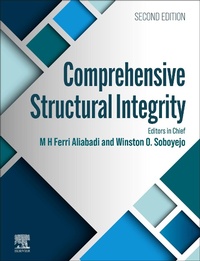
Comprehensive Structural Integrity
Description

Comprehensive Structural Integrity, Second Edition, a Ten Volume Set, provides material scientists and engineers with an authoritative and complete one-stop reference tool on all aspects of this exciting field. The book puts special emphasis on the interaction between mechanics and materials and structural integrity applications. Because of the interdisciplinary and applied nature of the work, it is an indispensable resource for mechanical engineers and materials scientists from both academic and industrial backgrounds, including bioengineering, interface engineering and nanotechnology.
Structural Integrity is the ability of a component, structure or asset to operate properly under the pressure of a load, including the weight of the asset itself. It's a vital consideration for structural engineering: essentially the science and technology which can prevent disaster.
- Provides a one-stop resource for researchers with its comprehensive coverage of theoretical and practical aspects of structural integrity
- Covers detailed information that will benefit a wide range of readers in this multidisciplinary field
- Presents case studies that are important for practical applications and industries such as construction/engineering, aircraft, energy (nuclear, oil and gas, power engineering)
- Includes new chapters that focus on recent developments in materials engineering e.g., advanced composite materials, bio/bio-medical engineering, nano- and micro- structured materials
More details
Other editions
Additional editions
Content
Section 1: Structural Integrity Assessment - Examples and Case Studies Section 2: Fundamental Theories and Mechanisms of Failure Section 3: Numerical and Computational Methods Section 4: Cyclic Loading and Fatigue Section 5: Creep and High-temperature Failure Section 6: Environmentally Assisted Fatigue Section 7: Practical Failure Assessment Methods Section 8: Interfacial and Nanoscale Fracture Section 9: Bioengineering Section 10: Mechanical Characterisation of Materials
