

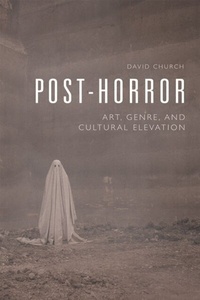
Post-Horror
Art, Genre and Cultural Elevation
1st Edition
Published on 4. December 2020
280 pages
978-1-4744-7590-7 (ISBN)
Description

Explores one of the most prominent and debated trends within the horror genre
- Offers the first in-depth study of one of the twenty-first-century horror genre's most important and divisive developments
- Explores the shared aesthetics, themes, and reception of the post-horror corpus
- Updates existing debates about horror cinema, artistic value, and cultural taste
- Listen to David Church discuss his book on the Full Contact Nerd podcast
Horror's longstanding reputation as a popular but culturally denigrated genre has been challenged by a new wave of films mixing arthouse minimalism with established genre conventions. Variously dubbed ''elevated horror'' and ''post-horror,'' films such as The Babadook, It Follows, The Witch, It Comes at Night, Get Out, The Invitation, Hereditary, Midsommar, A Ghost Story, and mother! represent an emerging nexus of taste, politics, and style that has often earned outsized acclaim from critics and populist rejection by wider audiences. Post-Horror is the first full-length study of one of the most important and divisive movements in twenty-first-century horror cinema.
Case studies include:
- It Follows
- The Witch
- The Babadook
- Get Out
- Hereditary
- Midsommar
- Goodnight Mommy
- It Comes at Night
- The Invitation
- I Am the Pretty Thing that Lives in the House
- mother!
- A Dark Song
- A Ghost Story
More details
Other editions
Additional editions
Book
01/2023
Edinburgh University Press
€29.00
Shipment within 15-20 days
Book
02/2021
Edinburgh University Press
€131.50
Shipment within 15-20 days
Content
- Intro
- Figures
- Acknowledgments
- 1. Apprehension Engines: Defining a New Wave of Art-Horror Cinema
- 2. "Slow," "Smart," "Indie," "Prestige," "Elevated": Discursive Struggle for Cultural Distinction
- 3. Grief, Mourning, and the Horrors of Familial Inheritance
- 4. Horror by Gaslight: Epistemic Violence and Ambivalent Belonging
- 5. Beautiful, Horrible Desolation: Landscape in Post-Horror Cinema
- 6. Queer Ethics and the Urban Ruin-Porn Landscape: The Horrors of Monogamy in It Follows
- 7. Existential Dread and the Trouble with Transcendence
- Selected Bibliography
- Index
