

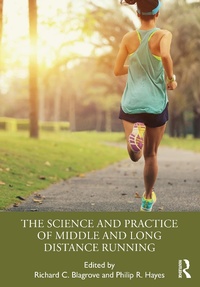
The Science and Practice of Middle and Long Distance Running
1st Edition
Published on 29. March 2021
450 pages
978-1-000-36481-1 (ISBN)
Description

The popularity of distance running as a sport, and a recreational activity, is at an all-time high. Motivated by the desire to achieve a personal best, remain healthy, or simply complete an event, distance runners of all ages and abilities actively seek out advice from experienced coaches and sport scientists. This is also reflected in the growth of programmes of education for young coaches and aspiring sport scientists in recent years. There are a multitude of different approaches to training distance runners; however, the basic principles and ingredients required for success are applicable to any distance runner. The science that underpins the training and physical preparation of distance runners has developed considerably in recent years. The most experienced and successful coaches in the distance running community rarely have the opportunity to share their tried and tested methods of training. Similarly, the novel work of sport scientists is often only accessible to elite runners, their support teams and academia.
The Science and Practice of Middle and Long Distance Running links together the science and coaching artistry associated with preparing distance runners for events ranging from 800 m up to ultra-marathon distances. It combines the latest scientific evidence, published by world-leading sport scientists, with the sound training principles and strategies adopted by experienced coaches. The book translates cutting-edge scientific research from the fields of physiology, biomechanics, psychology and nutrition into practical suggestions for achieving success. Important topical issues and contemporary practices related to health and performance are also addressed. This book is an essential addition to the library of any distance runner, coach or sport scientist.
The Science and Practice of Middle and Long Distance Running links together the science and coaching artistry associated with preparing distance runners for events ranging from 800 m up to ultra-marathon distances. It combines the latest scientific evidence, published by world-leading sport scientists, with the sound training principles and strategies adopted by experienced coaches. The book translates cutting-edge scientific research from the fields of physiology, biomechanics, psychology and nutrition into practical suggestions for achieving success. Important topical issues and contemporary practices related to health and performance are also addressed. This book is an essential addition to the library of any distance runner, coach or sport scientist.
More details
Edition
1. Auflage
Language
English
Place of publication
London
United Kingdom
Publishing group
Taylor & Francis Ltd
Target group
College/higher education
Professional and scholarly
Product notice
Reflowable
Illustrations
43 Tables, black and white; 37 Line drawings, black and white; 19 Halftones, black and white
ISBN-13
978-1-000-36481-1 (9781000364811)
Copyright in bibliographic data and cover images is held by Nielsen Book Services Limited or by the publishers or by their respective licensors: all rights reserved.
Schweitzer Classification
Other editions
Additional editions

Book
04/2021
Routledge
Unfortunately, price unknown
Available (delivery time upon request)
Richard Blagrove | Philip Hayes
The Science and Practice of Middle and Long Distance Running
Book
03/2021
1st Edition
Routledge
€198.41
Shipment within 15-20 days
Richard Blagrove | Philip Hayes
The Science and Practice of Middle and Long Distance Running
Book
03/2021
1st Edition
Routledge
€64.70
Shipment within 15-20 days
Persons
Richard C. Blagrove , PhD, SFHEA, ASCC, CSCS is Lecturer in Physiology and Programme Director of the MSc Strength and Conditioning at Loughborough University, UK. Richard is an Accredited Strength and Conditioning Coach and Certified Strength and Conditioning Specialist and was previously Director of the UK Strength and Conditioning Association. He has provided coaching support to middle- and long-distance runners for almost 15 years, including several Olympians and athletes who have won medals at major international championships. He gained a PhD from Northumbria University investigating the utility of strength-based exercise in post-pubertal adolescent distance runners and has delivered over a dozen invited presentations on the physical preparation of runners.
Philip R. Hayes , PhD, CSci is Senior Lecturer at Northumbria University, where he gained his PhD and has worked since 1991. During that time, he has spent 14 years as Programme Leader on the BSc. (Hons) Applied Sport and Exercise Science. His main research interest is the role of muscular strength (acute and chronically) and its role in (i) running performance, (ii) offsetting fatigue-related changes in gait, (iii) overuse injuries. Phil is a UK Athletics Level 4 middle-distance running coach, coaching for a local athletics club. He has coached GB U23, GB Students, GB U20, and GB U18 runners, along with Inter-Counties, British Universities and England Schools medallists. Previously, he has been the UK Athletics Regional Coach (North East England) for Endurance Events. Phil has also provided sport science support to numerous local athletes, some of whom have competed at international championships including the Olympics, World Cross-Country Championships and Commonwealth Games.
Philip R. Hayes , PhD, CSci is Senior Lecturer at Northumbria University, where he gained his PhD and has worked since 1991. During that time, he has spent 14 years as Programme Leader on the BSc. (Hons) Applied Sport and Exercise Science. His main research interest is the role of muscular strength (acute and chronically) and its role in (i) running performance, (ii) offsetting fatigue-related changes in gait, (iii) overuse injuries. Phil is a UK Athletics Level 4 middle-distance running coach, coaching for a local athletics club. He has coached GB U23, GB Students, GB U20, and GB U18 runners, along with Inter-Counties, British Universities and England Schools medallists. Previously, he has been the UK Athletics Regional Coach (North East England) for Endurance Events. Phil has also provided sport science support to numerous local athletes, some of whom have competed at international championships including the Olympics, World Cross-Country Championships and Commonwealth Games.
Content
PART I
The Scientific Bases of Training and Performance 1
1 Physiological Determinants of Middle- and Long-Distance
Running 3
Philip R. Hayes and Daniel A. Gordon
2 The Biomechanics of Distance Running 17
Brian Hanley
3 Common Overuse Injuries in Runners and Injury Risk Factors 28
Christopher A. Bramah
4 Nutritional Requirements for Distance Runners 47
Matthew Cole, Richard C. Blagrove, Meghan A. Brown, Jennie Carter and Justin D. Roberts
5 Psychology of Distance Running 66
Stacy Winter and Carla Meijen
PART II
Training and Event Considerations 77
6 Physiological Assessment of Middle- and Long-Distance Runners 79
Andy Galbraith
7 Movement Screening and Physical Capacity Assessments 97
Louis P. Howe and Paul J. Read
8 Training Volume and Intensity Distribution Among Elite
Middle- and Long-Distance Runners 118
Arturo Casado and Leif Inge Tjelta
9 Tapering and Peaking for an Event or Major Competition 132
Kate L. Spilsbury
10 Running Coaching Case Study and Lessons Learned 145
Steve Macklin
11 Short-Term Nutrition Strategies to Maximise Event-Day Performance 163
Justin D. Roberts and Matthew Cole
12 Strategic and Tactical Decision-Making in Middle- and
Long-Distance Running Races 176
Andy Renfree and Brian Hanley
13 Gait Retraining for Performance and Injury Risk 185
Izzy S. Moore, Tom Goom and Kelly J. Ashford
14 Strength Training for Enhancing Performance and Reducing Injury Risk 207
Richard C. Blagrove and David R. Hooper
15 Specific Conditioning to Reduce Injury Risk 223
Stuart Butler
PART III
Specific Issues and Populations 247
16 Training Monitoring 249
Mark R. Homer and Charles R. Pedlar
17 Recovery Strategies 266
Glyn Howatson and Tom Clifford
18 Low Energy Availability: Identification, Management and Treatment 281
Jessica Piasecki
19 Nurturing Young Distance Runners 291
Richard C. Blagrove, Philip E. Kearney and Karla L. Drew
20 Considerations for the Female Runner 306
Georgie Bruinvels, Esther Goldsmith and Nicola Brown
21 Performance Decline in Master Endurance
The Scientific Bases of Training and Performance 1
1 Physiological Determinants of Middle- and Long-Distance
Running 3
Philip R. Hayes and Daniel A. Gordon
2 The Biomechanics of Distance Running 17
Brian Hanley
3 Common Overuse Injuries in Runners and Injury Risk Factors 28
Christopher A. Bramah
4 Nutritional Requirements for Distance Runners 47
Matthew Cole, Richard C. Blagrove, Meghan A. Brown, Jennie Carter and Justin D. Roberts
5 Psychology of Distance Running 66
Stacy Winter and Carla Meijen
PART II
Training and Event Considerations 77
6 Physiological Assessment of Middle- and Long-Distance Runners 79
Andy Galbraith
7 Movement Screening and Physical Capacity Assessments 97
Louis P. Howe and Paul J. Read
8 Training Volume and Intensity Distribution Among Elite
Middle- and Long-Distance Runners 118
Arturo Casado and Leif Inge Tjelta
9 Tapering and Peaking for an Event or Major Competition 132
Kate L. Spilsbury
10 Running Coaching Case Study and Lessons Learned 145
Steve Macklin
11 Short-Term Nutrition Strategies to Maximise Event-Day Performance 163
Justin D. Roberts and Matthew Cole
12 Strategic and Tactical Decision-Making in Middle- and
Long-Distance Running Races 176
Andy Renfree and Brian Hanley
13 Gait Retraining for Performance and Injury Risk 185
Izzy S. Moore, Tom Goom and Kelly J. Ashford
14 Strength Training for Enhancing Performance and Reducing Injury Risk 207
Richard C. Blagrove and David R. Hooper
15 Specific Conditioning to Reduce Injury Risk 223
Stuart Butler
PART III
Specific Issues and Populations 247
16 Training Monitoring 249
Mark R. Homer and Charles R. Pedlar
17 Recovery Strategies 266
Glyn Howatson and Tom Clifford
18 Low Energy Availability: Identification, Management and Treatment 281
Jessica Piasecki
19 Nurturing Young Distance Runners 291
Richard C. Blagrove, Philip E. Kearney and Karla L. Drew
20 Considerations for the Female Runner 306
Georgie Bruinvels, Esther Goldsmith and Nicola Brown
21 Performance Decline in Master Endurance
