

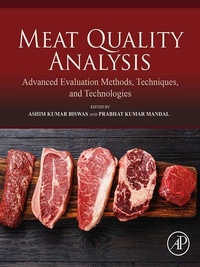
Meat Quality Analysis
Advanced Evaluation Methods, Techniques, and Technologies
Published on 21. August 2019
458 pages
978-0-12-819234-4 (ISBN)
Description

Meat Quality Analysis: Advanced Evaluation Methods, Techniques, and Technologies takes a modern approach to identify a compositional and nutritional analysis of meat and meat products, post-mortem aging methods, proteome analysis for optimization of the aging process, lipid profiles, including lipid mediated oxidations, meat authentication and traceability, strategies and detection techniques of potential food-borne pathogens, pesticide and drug residues, including antimicrobial growth promoters, food preservatives and additives, and sensory evaluation techniques. This practical reference will be extremely useful to researchers and scientists working in the meat industry, but will also be valuable to students entering fields of meat science, quality and safety.
- Presents focused detection techniques for reducing or eliminating foodborne pathogens from meat
- Includes strategies and methods on how to better understand meat authenticity and traceability, including meat speciation
- Provides tables, figures and illustrations to facilitate a better understanding of techniques and methods
More details
Other editions
Additional editions
Ashim Kumar Biswas | Prabhat Mandal
Meat Quality Analysis
Advanced Evaluation Methods, Techniques, and Technologies
Book
08/2019
Academic Press
€192.21
Shipment within 15-20 days
Content
SECTION-1 Current perspectives of meat quality evaluation1. Current perspectives of meat quality evaluation: Techniques, technologies and challenges
SECTION-2 Advances in carcass quality evaluation and nutritional composition of meat2. Methods for nutritional quality analysis of meat3. Non-destructive methods for carcass and meat quality evaluation
SECTION-3 Post-mortem ageing and meat quality evaluation4. Meat tenderization5. Biochemical changes of post-mortem meat during ageing process and strategies to improve meat quality6. Advances in evaluation of post-mortem ageing in meat7. Calpain assisted post-mortem ageing of meat and its detection methods
SECTION-4 Molecular basis of meat colour development and detection8. Molecular basis of meat colour
SECTION-5 Meat authenticity and traceability9. Molecular techniques for speciation of meat10. Meat traceability and certification in meat supply chain
SECTION-6 Chemical residues in meat and their detection techniques11. Residues of harmful chemicals and their detection techniques
SECTION-7 Food preservatives/additives in meat and their detection12. Use of food preservatives/additives in meat and their detection techniques
SECTION-8 Detection and prevention of lipid oxidation products 13. Lipids and lipid oxidation products and their detection and strategies to prevent lipid oxidation 14. Plant antioxidants, extraction strategies and their application in meat
SECTION-9 Strategies for elimination and detection of food-borne pathogens15. Strategies for elimination of food-borne pathogens, their influensive detection techniques and drawbacks16. Modern techniques for rapid detection of meat borne pathogens
SECTION-10 Modern biological concept of meat deterioration and its detection17. Spoilage bacteria and meat quality18. Modern concept of deterioration and detection of spoilage in meat and meat products
SECTION-11 Proteomic and genomic tools in meat quality evaluation19. Application of proteomic tools in meat quality evaluation20. Application of genomics tools in meat quality evaluation
SECTION-12 Sensory evaluation techniques 21. Advanced sensory evaluation techniques for meat and meat products
