

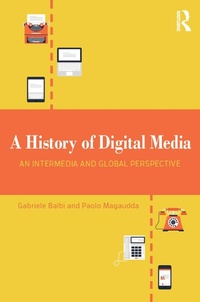
A History of Digital Media
An Intermedia and Global Perspective
1st Edition
Published on 24. April 2018
296 pages
978-1-351-80724-1 (ISBN)
Description

From the punch card calculating machine to the personal computer to the iPhone and more, this in-depth text offers a comprehensive introduction to digital media history for students and scholars across media and communication studies, providing an overview of the main turning points in digital media and highlighting the interactions between political, business, technical, social, and cultural elements throughout history. With a global scope and an intermedia focus, this book enables students and scholars alike to deepen their critical understanding of digital communication, adding an understudied historical layer to the examination of digital media and societies. Discussion questions, a timeline, and previously unpublished tables and maps are included to guide readers as they learn to contextualize and critically analyze the digital technologies we use every day.
Reviews / Votes
"A History of Digital Media is the go-to text for a compact overview of how our current communication universe came about. Spiced with sidebars and teaching helps, the book offers a gently revisionist account that places the telephone alongside the computer as a vector of innovation. Informed both by primary historical sources and classic theoretical insights, this easily readable volume will prove an essential resource to scholars and students sure to be fascinated by how the digital, while ever-pressing on the present, is in fact anything but new." -John Durham Peters, Yale University and Benjamin Peters, University of Tulsa"An original, theoretically sophisticated and historically informed work about the digitization of media and communication. Gabriele Balbi and Paolo Magaudda's pioneering book advances our understanding of the myths and mechanisms associated with the processes of digitization. Highly recommended." -Daya Thussu, University of Westminster, London
"A History of Digital Media is a first-rate introductory text that is as delightful to read as it is informative and instructive. It tells a complicated, global story in disarmingly charming and unhurried prose. Its long-range historical synthesis is rich but not labored, and can only be the fruit of meticulous research and deep theoretical thinking. Highly recommended to beginners and experts alike." -Guobin Yang, University of Pennsylvania
More details
Edition
1. Auflage
Language
English
Place of publication
London
United Kingdom
Publishing group
Taylor & Francis Ltd
Target group
College/higher education
Illustrations
12 s/w Tabellen
12 Tables, black and white
ISBN-13
978-1-351-80724-1 (9781351807241)
Copyright in bibliographic data and cover images is held by Nielsen Book Services Limited or by the publishers or by their respective licensors: all rights reserved.
Schweitzer Classification
Other editions
Additional editions
Book
04/2018
1st Edition
Routledge
€58.60
Shipment within 10-20 days
Book
04/2018
1st Edition
Routledge
€208.10
Shipment within 10-20 days
Persons
Gabriele Balbi is Assistant Professor in Media Studies at USI Universita della Svizzera Italiana (Switzerland), where he is Director of the China Media Observatory and teaches media history and sociology at the Faculty of Communication Sciences. His main areas of interest are media history and historiography of communication.
Paolo Magaudda is Senior Post-Doctoral Research Fellow in Sociology at the University of Padova (Italy) where his research is in technology, culture, and society with particular reference to media and consumption processes. Since 2013, he has been Secretary of STS Italia, the Italian Society for the Study of Science and Technology.
Paolo Magaudda is Senior Post-Doctoral Research Fellow in Sociology at the University of Padova (Italy) where his research is in technology, culture, and society with particular reference to media and consumption processes. Since 2013, he has been Secretary of STS Italia, the Italian Society for the Study of Science and Technology.
Content
Introduction
Chapter 1 - Why Study the History of Digital Media and How?
1.1. Contextualizing Digital in Contemporary Societies
1.2. Theoretical Paths
1.3. A Few of the Benefits of a Digital Media History
Chapter 2 - The Computer
2.1. The "Mother" of All Digital Devices
2.2. The Mechanical Computer Age and the Social Need for Calculation
2.3. The Birth of the Computer and the Mainframe Age
2.4. The Age of Personal Computers
2.5. The post-PC Age from a Global Perspective
Chapter 3 - Internet
3.1. What We Mean by the Internet
3.2. The Military Influence
3.3. The Academic Influence
3.4 The Counter-cultural Influence
3.5. The Public Service Influence
3.6. The Commercial Influence
3.7. The Social Influence
3.8. Re-reading the Internet in Historical Perspective
Chapter 4 - The Mobile Phone
4.1. The Origins of the Mobile Phone
4.2. Digital Rebirth and Growing up
4.3. The European Digital-Bureaucratic Miracle
4.4. The Power of Routine. A Concise History of Text Messaging
4.5. A New Mobile Phone Paradigm: 3G, Smartphones and Mobile Internet
4.6. The Global Mobile Phone Fever
4.7. Sociocultural Implications of Mobile Connectivity
Chapter 5 - The Digitization of Analog Media
5.1. Intermediality and the Digital Media Pattern
5.2. Music
5.3. Publishing: Books and Newsmaking
5.4. Cinema and Video
5.5. Photography
5.6. Television
5.7. Radio
5.8. Digitization and the Interweaving of Different Media
Conclusion
Myths and Counter-hegemonic Narratives in the History of Digitization
Chronology
Appendix: Statistical and Quantitative Data
Acronyms
Chapter 1 - Why Study the History of Digital Media and How?
1.1. Contextualizing Digital in Contemporary Societies
1.2. Theoretical Paths
1.3. A Few of the Benefits of a Digital Media History
Chapter 2 - The Computer
2.1. The "Mother" of All Digital Devices
2.2. The Mechanical Computer Age and the Social Need for Calculation
2.3. The Birth of the Computer and the Mainframe Age
2.4. The Age of Personal Computers
2.5. The post-PC Age from a Global Perspective
Chapter 3 - Internet
3.1. What We Mean by the Internet
3.2. The Military Influence
3.3. The Academic Influence
3.4 The Counter-cultural Influence
3.5. The Public Service Influence
3.6. The Commercial Influence
3.7. The Social Influence
3.8. Re-reading the Internet in Historical Perspective
Chapter 4 - The Mobile Phone
4.1. The Origins of the Mobile Phone
4.2. Digital Rebirth and Growing up
4.3. The European Digital-Bureaucratic Miracle
4.4. The Power of Routine. A Concise History of Text Messaging
4.5. A New Mobile Phone Paradigm: 3G, Smartphones and Mobile Internet
4.6. The Global Mobile Phone Fever
4.7. Sociocultural Implications of Mobile Connectivity
Chapter 5 - The Digitization of Analog Media
5.1. Intermediality and the Digital Media Pattern
5.2. Music
5.3. Publishing: Books and Newsmaking
5.4. Cinema and Video
5.5. Photography
5.6. Television
5.7. Radio
5.8. Digitization and the Interweaving of Different Media
Conclusion
Myths and Counter-hegemonic Narratives in the History of Digitization
Chronology
Appendix: Statistical and Quantitative Data
Acronyms
