

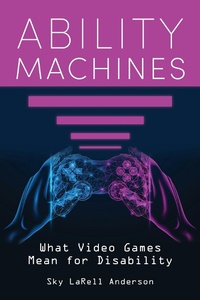
Ability Machines
Description

Video games are both physically and cognitively demanding-so what does that mean for those with a disability or mental illness? Though they may seem at odds, Ability Machines illuminates just how vital video games are to understanding our bodies and abilities.
In Ability Machines, Sky LaRell Anderson shows us how video games can help us imagine what our abilities mean and how they engage us physically, behaviorally, and cognitively to envision our agency beyond limitations. On the surface, this can mean games provide power fantasies; more profoundly, games can fundamentally reshape cultural and personal understandings of mental health, illness, disability, and accessibility. Video games are indeed ability machines that produce a reimagined state of agency.
Featuring a comparative analysis of key video game titles, including Metal Gear Solid V, Wolfenstein II, Celeste, Devil May Cry 5, Hellblade: Senua's Sacrifice, Hades, Nier: Automata, and more, Ability Machines tackles larger questions of ability and how our bodies relate to interactive media.
More details
Other editions
Additional editions
Person
Sky LaRell Anderson is Assistant Professor of Digital Media Arts in the Department of Emerging Media at the University of St. Thomas.
Content
Acknowledgments
Note to Reader: How I Have Tried to Make this Book Accessible
Prologue: Video Games and Your Body
Section 1: Accessing Ability
Interview with Steven Spohn of AbleGamers
1. Gaming Journalism and Discourse about Disability
Interview with Marijn Rongen of CanIPlayThat.com
2. Designing for Accessibility Improves Video Games
Section 2: Producing Ability
Interview with Clinton Lexa of Ubisoft Montréal
3. Streaming Transforms Disability Identities
Interview with Kelli Dunlap of Take This
4. The Gaming Industry Strains Mental Health
Interview with Artist and Game Designer Kara Stone
5. Designing Games Offers Mental Healing, Hurt, and Health
Section 3: Depicting Ability
Interview with University of St. Thomas Game Design Students
6. Reimagining Disability in Video Game Depictions
Interview with University of Utah Game Design Students
7. Portraying Mental Illness through Interactivity
Epilogue: Reimagining Your Body through Video Games
Gameography
References
Index
