

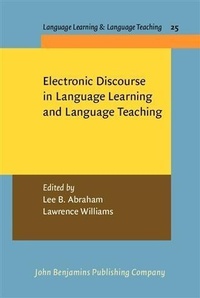
Electronic Discourse in Language Learning and Language Teaching
1st Edition
Published on 27. August 2009
X, 346 pages
978-90-272-9055-7 (ISBN)
Description

New technologies are constantly transforming traditional notions of language use and literacy in online communication environments. While previous research has provided a foundation for understanding the use of new technologies in instructed second language environments, few studies have investigated new literacies and electronic discourse beyond the classroom setting. This volume seeks to address this gap by providing corpus-based and empirical studies of electronic discourse analyzing social and linguistic variation as well as communicative practices in chat, discussion forums, blogs, and podcasts. Several chapters also examine the assessment and integration of new literacies. This volume will serve as a valuable resource for researchers, teachers, and students interested in exploring electronic discourse and new literacies in language learning and teaching.
More details
Other editions
Additional editions
Lee B. Abraham | Lawrence Williams
Electronic Discourse in Language Learning and Language Teaching
Book
08/2009
John Benjamins Publishing Co
€100.70
Shipment within 10-15 days
Persons
Content
- Electronic Discourse in Language Learning and Language Teaching
- Editorial page
- Title page
- LCC data
- Table of contents
- About the contributors
- Introduction
- 1. Aims and scope of the volume
- 2. Organization of the volume
- 2.1 Part I: New literacies
- 2.2 Part II: Chat
- 2.3 Part III: Podcasts
- 2.4 Part IV: Blogs and blogging
- 2.5 Part V: Discussion forums
- 3. Acknowledgments
- References
- Part I. New literacies
- English in cyberspace
- 1. Introduction
- 2. Background
- 3. Literacy and the Millennium Learner
- 4. Is there a native speaker online?
- 5. Literacy assessment and educational accountability in Ontario: The OSSLT
- 6. A digital take on the OSSLT: The mock test
- 7. A case study of teenagers' literacy experiences
- 8. Discussion
- 8.1 Daily digital literacy practices
- 8.2 Students' critique of the OSSLT
- 8.3 Students' critique of the mock literacy test
- 9. Conclusions
- Appendix
- References
- Navigating and interpreting hypertext in French
- 1. Introduction
- 2. Differences between text and hypertext
- 2.1 Format and organization of content
- 2.2 Linearity
- 2.3 Authorship
- 2.4 Editing
- 2.5 Spatial affordances and constraints
- 3. Pedagogical applications
- 3.1 Situated practice
- 3.2 Overt instruction
- 3.3 Critical framing
- 3.4 Transformed practice
- 3.5 Summary of pedagogical applications
- 4. Conclusion
- References
- Web-based translation for promoting language awareness
- 1. Introduction
- 1.1 Objectives
- 1.2 Background
- 1.3 Organization of the chapter
- 2. Method
- 2.1 Research questions
- 2.2 The participants
- 2.3 The task
- 2.4 The source
- 3. Results
- 3.1 The data
- 3.2 Analysis
- 3.3 Summary of results
- 4. Pedagogical applications
- 4.1 Recommendations for replication or using a similar task
- 5. Conclusion
- References
- Appendix
- Part II. Chat
- Learner noticing, negative feedback, and uptake in synchronous computer-mediated environments
- 1. Introduction
- 1.1 Second language acquisition and the cognitivist-interaction framework
- 1.2 Language-related episodes and attention to form
- 2. Computer-mediated communication (CMC) and SLA
- 3. Video and audio modalities in SCMC
- 4. Methodology
- 4.1 Research questions
- 4.2 Participants and tasks
- 4.3 Coding procedures: LREs, negative feedback, and learner uptake
- 4.4 Type and quality of negative feedback
- 5. Results and discussion
- 6. Conclusion and implications
- References
- Teaching language variation in French through authentic chat discourse
- 1. Introduction
- 2. The nature of moderation in chat
- 3. Analysis of the corpus
- 3.1 Orthographic variation
- 3.2 Sociolinguistic and pragmatic variation
- 4. Pedagogical recommendations
- 5. Other recommendations
- 6. Online resources for teachers
- References
- Exploring native and nonnative interactive discourse in text-based chat beyond classroom settings
- 1. Introduction
- 2. Communicative features of written discourse in CMC
- 3. Negotiation of meaning, feedback and responses in CMC
- 4. Social interaction and collaborative scaffolding in CMC
- 5. Methodology
- 5.1 Participants
- 5.2 Tasks
- 5.3 Procedure
- 6. Data collection and analysis
- 7. Findings and discussion
- 7.1 Negotiation types and strategies used by NSs and NNSs
- 7.2 The role of tasks
- 7.3 Expert scaffolding
- 8. Pedagogical implications
- 9. Conclusion
- References
- Part III. Podcasts
- Podcasts and second language learning
- 1. Introduction
- 2. A definition
- 3. Listening comprehension
- 4. Authentic materials
- 5. Lesson plans
- 5.1 Avoid overwhelming participants
- 5.2 Using podcasts of the teacher's choosing
- 5.3 Leading classroom-based podcast activities
- 5.4 Tasks
- 5.5 Student-found podcasts
- 6. Conclusion
- References
- Discourse analysis of podcasts in French
- 1. Introduction
- 2. Typology of the podcast
- 3. Terminology
- 4. Types of podcasts in French
- 4.1 Pedagogical podcasts
- 4.2 Personal podcasts
- 4.3 News podcasts
- 5. Analysis of podcast discourse
- 5.1 Europe 1: L'essentiel de l'info
- 5.2 France Info: La vie des mots
- 5.3 Le Journal en français facile
- 6. Podcast discourse and listening comprehension
- 6.1 Learner autonomy
- 6.2 Access to French-language podcasts
- 7. Final remarks
- References
- Appendix A
- Appendix B
- Appendix C
- Appendix D
- Part IV. Blogs
- Interactional and discursive features of English-language weblogs for language learning and teaching
- 1. Introduction
- 2. Blogs in L2 learning and teaching
- 3. The data
- 4. Interactional and discursive features of blogs
- 4.1 Participation framework
- 4.2 Message length
- 4.3 Personal blog entry genres and discourse
- 5. Pedagogical recommendations
- 5.1 Applying Herring's (2007) faceted classification scheme in the classroom
- 5.2 Constructing a blog corpus
- 5.3 Designing learning opportunities
- 6. Conclusion
- References
- Second-person pronoun use in French-language blogs
- 1. Introduction
- 2. Blog format and categories
- 3. The development of blogs in France and francophone Canada
- 4. The second-person address pronouns tu and vous
- 5. Data collection
- 6. Data analysis and results
- 7. Pedagogical applications
- References
- Appendix
- Blogs in Spanish beyond the classroom
- 1. Introduction
- 2. Web 2.0 and blogs in Spanish
- 3. Powerful digital technologies and L2 pedagogy
- 4. Spanish-language blogs in and beyond the classroom
- 5. Blogs, SCT, and L2 learning
- 6. Isomorphism between SCT and pedagogy
- 7. Conclusion
- References
- Appendix
- Part V. Discussion forums
- Linguistic and social dimensions of French-language discussion forums
- 1. Introduction
- 1.1 What is a discussion forum?
- 1.2 Some comments on terminology
- 1.3 Organization of the chapter
- 2. Discussion forum rules
- 2.1 Discussion forum rules: Pedagogical applications
- 3. Structural organization of communication in discussion forums
- 3.1 Analysis of typical thread structure
- 3.2 Discussion forum structure: Pedagogical applications
- 4. The French pronoun paradigm in discussion forums
- 4.1 Analysis of selected pronouns
- 4.2 The French pronoun paradigm: Pedagogical applications
- 5. Orthographic variation in discussion forums
- 5.1 The fight against orthographic variation on the Internet
- 5.2 Orthographic variation in discussion forums: Pedagogical applications
- 6. The variable use of ne in discussion forums
- 6.1 Analysis of verbal negation
- 6.2 Verbal negation: Pedagogical applications
- 7. Conclusion
- References
- Appendix A
- Appendix B
- The discussion forum as a locus for developing L2 pragmatic awareness
- 1. Introduction
- 2. Communities of practice
- 3. Language learning as a social process
- 4. Review of the literature
- 5. Data analysis
- 5.1 Weight management message boards
- 5.2 Dog ownership
- 6. Implications for foreign/second language curriculum
- 7. Conclusion
- References
- The discussion forum as a component of a technology-enhanced integrated performance assessment
- 1. Introduction
- 1.1 Research questions
- 1.2 Background
- 1.3 Organization of the chapter
- 2. Why use the IPA?
- 2.1 Core features of the IPA
- 2.2 Modes of communication
- 3. Two models for the Technology-Enhanced IPA (TIPA)
- 3.1 The discussion forum for the Interpretive Task
- 3.2 The discussion forum for the Interpersonal Task
- 3.3 Additional comments about the IPA/TIPA
- 4. Conclusion
- References
- Index
