

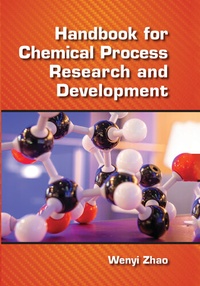
Handbook for Chemical Process Research and Development
1st Edition
Published on 30. June 2020
Book
Paperback/Softback
810 pages
978-0-367-57441-3 (ISBN)
Description
The Handbook for Chemical Process Research and Development focuses on developing processes for chemical and pharmaceutical industries. Forty years ago there were few process research and development activities in the pharmaceutical industry, partially due to the simplicity of the drug molecules. However, with the increasing structural complexity, especially the introduction of chiral centers into the drug molecules and strict regulations set by the EMA and FDA, process R&D has become one of the critical departments for pharmaceutical companies. This book assists with the key responsibility of process chemists to develop chemical processes for manufacturing pharmaceutical intermediates and final drug substances for clinical studies and commercial production.
More details
Language
English
Place of publication
London
United Kingdom
Publishing group
Taylor & Francis Ltd
Target group
College/higher education
Dimensions
Height: 254 mm
Width: 178 mm
Weight
1583 gr
ISBN-13
978-0-367-57441-3 (9780367574413)
Copyright in bibliographic data and cover images is held by Nielsen Book Services Limited or by the publishers or by their respective licensors: all rights reserved.
Schweitzer Classification
Other editions
New editions
Book
10/2024
2nd Edition
CRC Press
€103.70
Shipment within 10-20 days
Additional editions
Book
09/2016
1st Edition
Productivity Press
€267.41
Article exhausted; check for reprint
Person
Dr. Wenyi Zhao holds a PhD in Organic/Physical Chemistry from Nanjing University, China. After completing postdoctoral fellowships at the Chinese Academy of Sciences and Texas Tech University, he moved into the private sector to become a process chemist in the pharmaceutical industry in the US with over 15 years of experience. He is the author of numerous journal articles and holds several patents.
Content
Chapter 1: Modes Of Reagent Addition - Control of Impurity Formation
Chapter 2: Process Optimization
Chapter 3: Hazardous Reactions
Chapter 4: Catalytic Reactions
Chapter 5: Grignard Reagent And Related Reactions
Chapter 6: Challenging Reaction Intermediates
Chapter 7: Protecting Groups
Chapter 8: Reaction Solvents
Chapter 9: Base Reagent Selection
Chapter 10: Reagents For Amide Formation
Chapter 11: Various Reagent Surrogates
Chapter 12: Telescope Approach
Chapter 13: Stereochemistry
Chapter 14: Design Of New Synthetic Route
Chapter 15: Reaction Workup
Chapter 16: Pharmaceutical Salts
Chapter 17: Solid Form
Chapter 2: Process Optimization
Chapter 3: Hazardous Reactions
Chapter 4: Catalytic Reactions
Chapter 5: Grignard Reagent And Related Reactions
Chapter 6: Challenging Reaction Intermediates
Chapter 7: Protecting Groups
Chapter 8: Reaction Solvents
Chapter 9: Base Reagent Selection
Chapter 10: Reagents For Amide Formation
Chapter 11: Various Reagent Surrogates
Chapter 12: Telescope Approach
Chapter 13: Stereochemistry
Chapter 14: Design Of New Synthetic Route
Chapter 15: Reaction Workup
Chapter 16: Pharmaceutical Salts
Chapter 17: Solid Form