

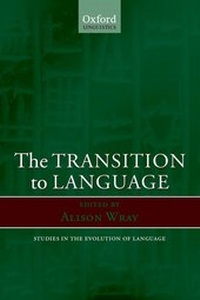
23: The Transition to Language
Published on 21. March 2002
Book
Paperback/Softback
424 pages
978-0-19-925066-0 (ISBN)
Description
The evolutionary emergence of each facet of human language can be viewed as a 'transition'. This book explores how different transitions took place, their preconditions, and their consequences. Among the questions it addresses are: what physiological and psychological differences between us and other animals lie at the heart of our superior capacity for language? Was the pre-linguistic period of humankind characterized by words without syntax, syntax without meaning, gesture without speech, or all, or none, of these? Once a community is ready and able to develop language, what internal and external factors trigger its emergence? How are we to interpret the archaeological evidence of early tool-making abilities, relative to the presence, or absence, of language? In what social circumstances could language have avoided being immediately harnessed for deception, so that it became too dangerous and unreliable to be of value? Was the universal form of language determined by pre-existing psychological capabilities, or by natural constraints in communication? Has language finished evolving? If not, how different were linguistic structures used by our early ancestors from those that we use today?
This investigation into one of the enduring mysteries of humankind brings together original contributions from linguists, archaeologists, anthropologists, psychologists, biologists, primatologists, and researchers in artificial intelligence. They offer the reader up-to-the-minute debates in the field of language evolution.
This investigation into one of the enduring mysteries of humankind brings together original contributions from linguists, archaeologists, anthropologists, psychologists, biologists, primatologists, and researchers in artificial intelligence. They offer the reader up-to-the-minute debates in the field of language evolution.
Reviews / Votes
... a thought-provoking volume, with implications not just for language evolution but for how we conceptualise language acquisition, language structure and language change. * Journal of Linguistics *More details
Series
Language
English
Place of publication
Oxford
United Kingdom
Target group
Professional and scholarly
Illustrations
numerous figures and tables
Dimensions
Height: 231 mm
Width: 153 mm
Thickness: 21 mm
Weight
582 gr
ISBN-13
978-0-19-925066-0 (9780199250660)
Copyright in bibliographic data and cover images is held by Nielsen Book Services Limited or by the publishers or by their respective licensors: all rights reserved.
Schweitzer Classification
Other editions
Additional editions
Alison Wray
The Transition to Language
Book
03/2002
Oxford University Press
€66.85
Shipment within 15-20 days
Person
Alison Wray gained her BA and D.Phil. degrees from the University of York. She has worked in departments of music, linguistics, and communication, and her research focuses on three major areas: historical pronunciation for early music, formulaic language, and language evolution. She has published papers and chapters on all three areas, and her books include: The Focusing Hypothesis (1992), Projects in Linguistics (1998, with Trott and Bloomer) and Formulaic Language and the Lexicon (2002).
Content
PART I: MAKING READY FOR LANGUAGE: NECESSARY, BUT NOT SUFFICIENT ; PART II: INTERNAL TRIGGERS TO TRANSITION: GENES, PROCESSING, CULTURE, GESTURE, AND TECHNOLOGY ; PART III: EXTERNAL TRIGGERS TO TRANSITION: ENVIRONMENT, POPULATION, AND SOCIAL CONTEXT ; PART IV: THE ONWARD JOURNEY: DETERMINING THE SHAPE OF LANGUAGE