

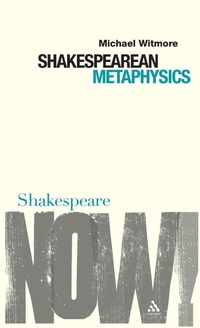
Shakespearean Metaphysics
Published on 28. October 2008
Book
Hardback
156 pages
978-0-8264-9043-8 (ISBN)
Description
This title offers a fresh approach to the plays that suggests they can be seen as metaphysical 'experiments' conducted in the medium of drama.Metaphysics is usually associated with that part of the philosophical tradition which asks about 'last things', questions such as: How many substances are there in the world? Which is more fundamental, quantity or quality? Are events prior to things, or do they happen to those things? While he wasn't a philosopher, Shakespeare was obviously interested in 'ultimates' of this sort. Instead of probing these issues with argument, however, he did so with plays. "Shakespearean Metaphysics" argues for Shakespeare's inclusion within a metaphysical tradition that opposes empiricism and Cartesian dualism.Through close readings of three major plays - "The Tempest", "King Lear" and "Twelfth Night" - Witmore proposes that Shakespeare's manner of depicting life on stage itself constitutes an 'answer' to metaphysical questions raised by later thinkers such as Spinoza, Bergson, and Whitehead.
Each of these readings shifts the interpretative frame around the plays in radical ways; taken together they show the limits of our understanding of theatrical play as an 'illusion' generated by the physical circumstances of production."Shakespeare Now!" is a series of short books that engage imaginatively and often provocatively with the possibilities of Shakespeare's plays. It goes back to the source - the most living language imaginable - and recaptures the excitement, audacity and surprise of Shakespeare. It will return you to the plays with opened eyes.
Each of these readings shifts the interpretative frame around the plays in radical ways; taken together they show the limits of our understanding of theatrical play as an 'illusion' generated by the physical circumstances of production."Shakespeare Now!" is a series of short books that engage imaginatively and often provocatively with the possibilities of Shakespeare's plays. It goes back to the source - the most living language imaginable - and recaptures the excitement, audacity and surprise of Shakespeare. It will return you to the plays with opened eyes.
Reviews / Votes
'Foregrounding dramaturgy (the staging of bodies, audience, the materiality of performance) in Twelfth Night, King Lear, and The Tempest rather than ideas voiced in speeches, and deploying a different philosopher -- Whitehead, Bergson, Spinoza -- for each play, Witmore builds a compelling vision of Shakespeare as a metaphysician of immanence...Lucid and original.' - Brian Rotman, Professor, Department of Comparative Studies, Ohio State University, USA Mention -Book News, February 2009 'Witmore's literary analyses of the plays' dramatic details are generally excellent...and his prose in most explications is supple, lucid, and often nicely poetic.' -- English Studies, Vol 91, No 6 Reviewed in Routledge ABESMore details
Series
Language
English
Place of publication
London
United Kingdom
Publishing group
Bloomsbury Publishing PLC
Target group
College/higher education
Dimensions
Height: 222 mm
Width: 145 mm
Thickness: 12 mm
Weight
336 gr
ISBN-13
978-0-8264-9043-8 (9780826490438)
Copyright in bibliographic data and cover images is held by Nielsen Book Services Limited or by the publishers or by their respective licensors: all rights reserved.
Schweitzer Classification
Other editions
Additional editions
Michael Witmore
Shakespearean Metaphysics
E-Book
10/2008
1st Edition
Continuum Publishing Corporation
€28.49
Available for download
Person
Michael Witmore is Associate Professor of Literary and Cultural Studies at Carnegie Mellon University, USA. His book, Culture of Accidents: Unexpected Knowledges in Early Modern England (Stanford, 2001) was the co-winner of the Perkins Prize for the Study of Narrative Literature in 2003.
Content
General Editors' Preface; Acknowledgements; 1.Shakespearean Metaphysics and the Drama of Immanence; 2.Whitehead and the Final Satisfaction of Twelfth Night; 3.Lear's Intensity, Bergson's Divided Kingdom; 4. Spinoza and The Tempest: An Island of One Bibliographical Note and Further Reading; Index.