

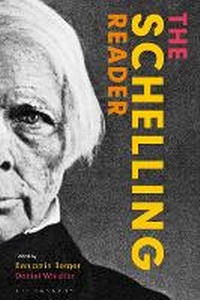
The Schelling Reader
Published on 29. October 2020
Book
Hardback
440 pages
978-1-350-05332-8 (ISBN)
Description
F.W.J. Schelling (1775-1854) stands alongside J.G. Fichte and G.W.F. Hegel as one of the great philosophers of the German idealist tradition. The Schelling Reader introduces students to Schelling's philosophy by guiding them through the first ever English-language anthology of his key texts-an anthology which showcases the vast array of his interests and concerns (metaphysics, epistemology, philosophy of nature, ethics, aesthetics, philosophy of religion and mythology, and political philosophy). The reader includes the most important passages from all of Schelling's major works as well as lesser-known yet illuminating lectures and essays, revealing a philosopher rigorously and boldly grappling with some of the most difficult philosophical problems for over six decades, and constantly modifying and correcting his earlier thought in light of new insights.
Schelling's evolving philosophies have often presented formidable challenges to the teaching of his thought. For the first time, The Schelling Reader arranges readings from his work thematically, so as to bring to the fore the basic continuity in his trajectory, as well as the varied ways he tackles perennial problems. Each of the twelve chapters includes sustained readings that span the whole of Schelling's career, along with explanatory notes and an editorial introduction that introduces the main themes, arguments, and questions at stake in the text. The Editors' Introduction to the volume as a whole also provides important details on the context of Schelling's life and work to help students effectively engage with the material.
Schelling's evolving philosophies have often presented formidable challenges to the teaching of his thought. For the first time, The Schelling Reader arranges readings from his work thematically, so as to bring to the fore the basic continuity in his trajectory, as well as the varied ways he tackles perennial problems. Each of the twelve chapters includes sustained readings that span the whole of Schelling's career, along with explanatory notes and an editorial introduction that introduces the main themes, arguments, and questions at stake in the text. The Editors' Introduction to the volume as a whole also provides important details on the context of Schelling's life and work to help students effectively engage with the material.
Reviews / Votes
Whistler and Berger have done us a great service by showing us the whole span of Schelling's genius. One comes away struck by the breadth and depth of Schelling's thought, and also by its rigorous consistency. These translations, and the insightful commentary that accompanies them, should have a game-changing impact on Schelling studies in English. * Sean McGrath, Professor of Philosophy, Memorial University, Canada * Schelling is one of the greatest philosophers of all time, who provides illuminating views of every area of philosophy. Compared to other great German Idealists such as Fichte and Hegel, Schelling's thought has been neglected, especially among English speakers. This judiciously chosen, thematically arranged collection of excellent translations makes an overview of Schelling's philosophy accessible in English for the first time, bringing into view his dynamic conception of nature, his account of the unconscious, and his emphasis on the importance of art and myth in human life. This volume is an indispensable resource for anybody who is interested in nineteenth century European philosophy, in existentialism, and in the contemporary revival of post-Kantian Idealism. * Paul Franks, Professor of Philosophy and Religious Studies and Judaic Studies, Yale University, New Haven, USA * Schelling is one of the most influential post-Kantian philosophers and this excellent collection now makes it possible for English-speaking readers to discover the impressive breadth, subtlety and originality of his thought. It contains well-chosen texts on a wide range of topics, from metaphysics and the philosophy of nature to aesthetics and politics, together with clear and accessible introductions and helpful suggestions for further reading. Berger and Whistler are to be congratulated on putting together an outstanding and very welcome volume. * Stephen Houlgate, Professor of Philosophy, University of Warwick, UK * The great virtue of Berger and Whistler's anthology is to make clear the depth and extraordinary range of Schelling's work, while providing newcomers and scholars alike with tools to understand the importance of one of the most difficult and influential post-Kantian philosophers. As the first English-language anthology of Schelling's writings, The Schelling Reader will have a lasting impact on scholarship of German idealism, by enabling a new generation of readers to think with Schelling about topics in many areas of philosophy. * Karin Nisenbaum, Assistant Professor of Philosophy, Boston College, USA *More details
Language
English
Place of publication
London
United Kingdom
Publishing group
Bloomsbury Publishing PLC
Target group
College/higher education
Dimensions
Height: 234 mm
Width: 156 mm
Weight
794 gr
ISBN-13
978-1-350-05332-8 (9781350053328)
Copyright in bibliographic data and cover images is held by Nielsen Book Services Limited or by the publishers or by their respective licensors: all rights reserved.
Schweitzer Classification
Other editions
Additional editions
Daniel Whistler | Benjamin Berger
The Schelling Reader
E-Book
10/2020
1st Edition
Bloomsbury Academic
€38.49
Available for download
Persons
Daniel Whistler is Senior Lecturer, Department of Philosophy, University of Liverpool, UK
Benjamin Berger is Instructor in Philosophy at Loyola University, Chicago, USA. He is the editor of the 26th volume of Pli (Schelling: Powers of the Idea, 2014)
Benjamin Berger is Instructor in Philosophy at Loyola University, Chicago, USA. He is the editor of the 26th volume of Pli (Schelling: Powers of the Idea, 2014)
Content
Editors' Introduction
Part One: Metaphysics
1. The Unconditioned
2. Identity and Difference
3. Nature
4. Time, Space and the Categories
Part Two: Philosophical Methods
5. Intuition, Construction and Recollection
6. Reason and Experience
7. System
8. History of Philosophy
Part Three: The Ideal World
9. Freedom
10. Art and Mythology
11. Religion
12. Politics
Part One: Metaphysics
1. The Unconditioned
2. Identity and Difference
3. Nature
4. Time, Space and the Categories
Part Two: Philosophical Methods
5. Intuition, Construction and Recollection
6. Reason and Experience
7. System
8. History of Philosophy
Part Three: The Ideal World
9. Freedom
10. Art and Mythology
11. Religion
12. Politics