

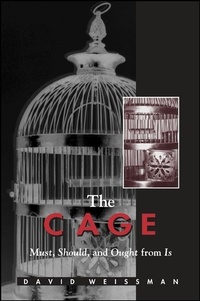
The Cage
Must, Should, and Ought from Is
Published on 1. June 2007
Book
Paperback/Softback
308 pages
978-0-7914-6880-7 (ISBN)
Description
Philosophical examination of the relationship of normativity and freedom.
Hume argued that is does not entail ought; that we cannot infer necessity or obligation from any description of actual states of affairs. His philosophical heirs continue to argue that nothing outside ourselves constrains us. The Cage maintains, contrary to Humean tradition, that reality is a set of nested contexts, each distinguished by intrinsic norms. Author David Weissman offers an innovative exploration of these norms intrinsic to human life, including practical affairs, morals, aesthetics, and culture. In this critical examination of character formation and the conditions for freedom, Weissman suggests that eliminating context (because of regarding it as an impediment to freedom) impoverishes character and reduces freedom. He concludes that positive freedom-the freedom to choose and to act-has no leverage apart from the contexts where character forms and circumstances provide opportunities to express one's thoughts, tastes, or talents.
Hume argued that is does not entail ought; that we cannot infer necessity or obligation from any description of actual states of affairs. His philosophical heirs continue to argue that nothing outside ourselves constrains us. The Cage maintains, contrary to Humean tradition, that reality is a set of nested contexts, each distinguished by intrinsic norms. Author David Weissman offers an innovative exploration of these norms intrinsic to human life, including practical affairs, morals, aesthetics, and culture. In this critical examination of character formation and the conditions for freedom, Weissman suggests that eliminating context (because of regarding it as an impediment to freedom) impoverishes character and reduces freedom. He concludes that positive freedom-the freedom to choose and to act-has no leverage apart from the contexts where character forms and circumstances provide opportunities to express one's thoughts, tastes, or talents.
More details
Language
English
Place of publication
Albany, NY
United States
Target group
College/higher education
Professional and scholarly
US School Grade: College Graduate Student and over
Edition type
Annotated edition
Product notice
Paperback (trade)
Dimensions
Height: 215 mm
Width: 149 mm
Thickness: 19 mm
Weight
422 gr
ISBN-13
978-0-7914-6880-7 (9780791468807)
Copyright in bibliographic data and cover images is held by Nielsen Book Services Limited or by the publishers or by their respective licensors: all rights reserved.
Schweitzer Classification
Other editions
Additional editions

E-Book
02/2012
1st Edition
De Gruyter
€38.49
Available for download
Person
David Weissman is Professor of Philosophy at City College of New York and the author of many books, including Lost Souls: The Philosophic Origins of a Cultural Dilemma, also published by SUNY Press.
Content
Introduction
1. Categorial Form
1. Evidence of Categorial Form
2. The Method for Discovering Categorial Form
3. Kantian Objections
4. Some Possible Categorial Forms
5. Antecedent Formulations
6. Practical Applications
7. Which Is the Better Hypothesis?
2. Nature
1. Logic
2. Possible and Actual Worlds
3. The Actual World: Nature
A. Spacetime
B. Causality and Natural Laws
C. Dispositions
D. Systems
E. The Whole
4. Testability
5. Humean Objections
6. Natural Norms
3. Practical Norms
1. How are Systems Formed and Stabilized?
2. Practical Imperatives
3. Ends and Aims
4. Consequential and Instrumental Values versus Intrinsic Values
5. From Is to Must, Should, or Ought
4. Moral Norms
1. Semantic Preliminaries
2. The Context of Morality
3. Ontological Assumptions
4. Signature Values
5. Moral Psychology
6. Thick Moral Concepts: The Cognitive and Emotive Aspects of Moral Norms
7. Duties to Systems, Their Members, and Others
8. Moral Flashpoints
9. From Facts to Norms
10. Opposed Perspectives: Norms Founded in Material Systems or Rational Ideals
11. Norms of Several Kinds
12. Rights
13. Layered Publics
14. Truth and Error
15. Should and Ought from Is
16. Support from Principal Moral Theorists
17. Resolving the Diversity of Moral Theories
5. Aesthetic Norms
1. The Conditions for Aesthetic Value in Created Works
2. Objections
3. Natural Beauty
4. Virtual Form
5. Must, Should, and Ought in the Context of Is
6. Cultural Variation
1. Generic Needs and Their Determinate Expressions
2. Aristotelian and Nietzschean Problems
3. Change
7. Freedom
1. Positive and Negative Freedom
2. Alternative Ontologies
3. Free Will
4. Positive Freedom: Character and Opportunity
5. Pathologies of Freedom
6. Is Freedom a Good in Itself?
Conclusion
Notes
Index
1. Categorial Form
1. Evidence of Categorial Form
2. The Method for Discovering Categorial Form
3. Kantian Objections
4. Some Possible Categorial Forms
5. Antecedent Formulations
6. Practical Applications
7. Which Is the Better Hypothesis?
2. Nature
1. Logic
2. Possible and Actual Worlds
3. The Actual World: Nature
A. Spacetime
B. Causality and Natural Laws
C. Dispositions
D. Systems
E. The Whole
4. Testability
5. Humean Objections
6. Natural Norms
3. Practical Norms
1. How are Systems Formed and Stabilized?
2. Practical Imperatives
3. Ends and Aims
4. Consequential and Instrumental Values versus Intrinsic Values
5. From Is to Must, Should, or Ought
4. Moral Norms
1. Semantic Preliminaries
2. The Context of Morality
3. Ontological Assumptions
4. Signature Values
5. Moral Psychology
6. Thick Moral Concepts: The Cognitive and Emotive Aspects of Moral Norms
7. Duties to Systems, Their Members, and Others
8. Moral Flashpoints
9. From Facts to Norms
10. Opposed Perspectives: Norms Founded in Material Systems or Rational Ideals
11. Norms of Several Kinds
12. Rights
13. Layered Publics
14. Truth and Error
15. Should and Ought from Is
16. Support from Principal Moral Theorists
17. Resolving the Diversity of Moral Theories
5. Aesthetic Norms
1. The Conditions for Aesthetic Value in Created Works
2. Objections
3. Natural Beauty
4. Virtual Form
5. Must, Should, and Ought in the Context of Is
6. Cultural Variation
1. Generic Needs and Their Determinate Expressions
2. Aristotelian and Nietzschean Problems
3. Change
7. Freedom
1. Positive and Negative Freedom
2. Alternative Ontologies
3. Free Will
4. Positive Freedom: Character and Opportunity
5. Pathologies of Freedom
6. Is Freedom a Good in Itself?
Conclusion
Notes
Index