

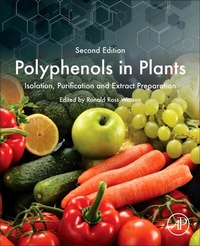
Polyphenols in Plants
Isolation, Purification and Extract Preparation
2nd Edition
Published on 17. August 2018
Book
Paperback/Softback
442 pages
978-0-12-813768-0 (ISBN)
Description
Polyphenols in Plants: Isolation, Purification and Extract Preparation, 2nd edition, provides a detailed insight into polyphenols that occur naturally in plants and how they can be affected during growth and development, then effectively removed and optimized for various applications in food production. Historically, plants have been the major sources for drugs and health promotion. While there are a small number of nutrients contained, the growing focus is on the very diverse, complex ring structures: polyphenols that are not nutritious. In order to study or use them in patient treatment, the polyphenols need to be isolated, identified, and purified for application and study. This book brings together experts in the field who share their ongoing examination of isolation and purification of polyphenols as well as determination of their structures and composition.
Polyphenols in Plants covers a range of new topics including polyphenols in vegetable waste and agricultural byproducts, extraction methods and characterization of polyphenols, and isolation techniques in the development of new compounds and their use in cancer therapy. This book will be useful to plant scientists and dietary supplement producers, as well as scientists in the food industry and alternative medicine who are interested in the specific health benefits of various dietary extracts and other polyphenol resources.
Polyphenols in Plants covers a range of new topics including polyphenols in vegetable waste and agricultural byproducts, extraction methods and characterization of polyphenols, and isolation techniques in the development of new compounds and their use in cancer therapy. This book will be useful to plant scientists and dietary supplement producers, as well as scientists in the food industry and alternative medicine who are interested in the specific health benefits of various dietary extracts and other polyphenol resources.
More details
Edition
2nd edition
Language
English
Place of publication
San Diego
United States
Publishing group
Elsevier Science Publishing Co Inc
Target group
Professional and scholarly
Agricultural and Food Scientists interested in the specific health benefits of various dietary extracts and other polyphenol resources. These include scientists in food industry, alternative medicine groups and academics including some in nutritional sciences.
Dimensions
Height: 276 mm
Width: 216 mm
Weight
1220 gr
ISBN-13
978-0-12-813768-0 (9780128137680)
Copyright in bibliographic data and cover images is held by Nielsen Book Services Limited or by the publishers or by their respective licensors: all rights reserved.
Schweitzer Classification
Other editions
Additional editions
E-Book
08/2018
2nd Edition
Academic Press
€131.00
Available for download
Previous edition
Book
03/2014
Academic Press
€120.50
Shipment within 15-20 days
Person
Ronald Ross Watson, PhD, is Professor of Health Promotion Sciences at the University of Arizona, Mel and Enid Zuckerman College of Public Health. Dr. Watson began his research in public health at the Harvard School of Public Health as a Fellow in 1971 doing field work on vaccines in Saudi Arabia. He has done clinical studies in Colombia, Iran, Egypt, Saudi Arabia and the United States which provides a broad international view of public health. He has served in the military reserve hospital for 17 years with extensive training in medical responses to disasters as the chief biochemistry officer of a general hospital, retiring as a Lt. Colonel. He is a distinguished member of several national and international nutrition, immunology, and cancer societies. Dr. Watson's career has involved studying many lifestyle aspects for their uses in health promotion. He has edited over 100 biomedical reference books and 450 papers and chapters. His teaching and research focuses on alcohol, tobacco, and drugs of abuse in heart function and disease in mouse models.
Content
Section 1: Modification by Plant Growth and Environment
1. Not only what is food is good - polyphenols from edible and non-edible vegetable waste
2. Polyphenols in agricultural by-products and food waste
3. Phenolic natural compounds and their influence on physiological processes in plants
4. Improving bioavailability of polyphenols using nano-delivery systems based on food polymers
5. Plant phenolics in foods
Section 2: Isolation and Analysis of Polyphenol Structure
6. Structure and antioxidant efficiency of beech (Fagus sylvatica L.) bark polyphenols unravelled by high-performance liquid chromatography/photodiode array detection/multistage electrospray mass spectrometry and chemometrics
7. Characterization and Quantification of Polyphenols in Fruits
8. Phenotypic diversity of colored phytochemicals in sorghum accessions with various pericarp pigments
9. Relevance and analysis of citrus flavonoids
10. Extraction methods of polyphenol from grapes
11. Total polyphenols content and antioxidant DPPH assays on biological samples
12. Extraction phenolic compounds from Coriandrum sativum L. and Amaranthus hybridus L. by microwave technology
13. Curcumin/turmeric as an environment-friendly stain for proteins on acrylamide gels
14. Anthocyanins and other polyphenols in citrus genus: Biosynthesis, chemical profile, and biological activity
15. Rice phenolics: extraction, characterization and utilization in foods
Section 3: Analysis Techniques for Polyphenols
16. Gas chromatography - mass spectrometry analysis of polyphenols in foods
17. Reaction of Hemoglobin with the Schiff base intermediate of the Glucose/Asparagine reaction: Formation of a Hemichrome
18. Adsorption and ion exchange for the recovery and fractionation of polyphenols - Principles and applications
19. Flavonoids from Holarrhena floribunda (G.don) leaves
20. HILIC chromatography- Powerful technique in the analysis of polyphenols
21. Chromatographic analysis of polyphenols
22. Preparative purification of polyphenols from sweet potato (Ipomoea batatas L.) leaves by AB-8 macroporous resin
23. Evaluation of the phytochemistry and biological activity of grape (Vitis vinifera L.) stems: towards a sustainable winery industry
24. The phenolic gingerols and gingerol-derived shogaols: features and properties related to the prevention and treatment of cancer and chronic inflammation
25. Polyphenols presents in campomanesia genus: Pharmacological and nutraceutical approach
1. Not only what is food is good - polyphenols from edible and non-edible vegetable waste
2. Polyphenols in agricultural by-products and food waste
3. Phenolic natural compounds and their influence on physiological processes in plants
4. Improving bioavailability of polyphenols using nano-delivery systems based on food polymers
5. Plant phenolics in foods
Section 2: Isolation and Analysis of Polyphenol Structure
6. Structure and antioxidant efficiency of beech (Fagus sylvatica L.) bark polyphenols unravelled by high-performance liquid chromatography/photodiode array detection/multistage electrospray mass spectrometry and chemometrics
7. Characterization and Quantification of Polyphenols in Fruits
8. Phenotypic diversity of colored phytochemicals in sorghum accessions with various pericarp pigments
9. Relevance and analysis of citrus flavonoids
10. Extraction methods of polyphenol from grapes
11. Total polyphenols content and antioxidant DPPH assays on biological samples
12. Extraction phenolic compounds from Coriandrum sativum L. and Amaranthus hybridus L. by microwave technology
13. Curcumin/turmeric as an environment-friendly stain for proteins on acrylamide gels
14. Anthocyanins and other polyphenols in citrus genus: Biosynthesis, chemical profile, and biological activity
15. Rice phenolics: extraction, characterization and utilization in foods
Section 3: Analysis Techniques for Polyphenols
16. Gas chromatography - mass spectrometry analysis of polyphenols in foods
17. Reaction of Hemoglobin with the Schiff base intermediate of the Glucose/Asparagine reaction: Formation of a Hemichrome
18. Adsorption and ion exchange for the recovery and fractionation of polyphenols - Principles and applications
19. Flavonoids from Holarrhena floribunda (G.don) leaves
20. HILIC chromatography- Powerful technique in the analysis of polyphenols
21. Chromatographic analysis of polyphenols
22. Preparative purification of polyphenols from sweet potato (Ipomoea batatas L.) leaves by AB-8 macroporous resin
23. Evaluation of the phytochemistry and biological activity of grape (Vitis vinifera L.) stems: towards a sustainable winery industry
24. The phenolic gingerols and gingerol-derived shogaols: features and properties related to the prevention and treatment of cancer and chronic inflammation
25. Polyphenols presents in campomanesia genus: Pharmacological and nutraceutical approach