

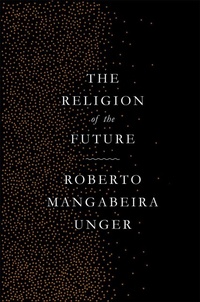
The Religion of the Future
Published on 25. October 2016
Book
Paperback/Softback
480 pages
978-1-78478-730-1 (ISBN)
Description
How can we live in such a way that we die only once? How can we organise a society that gives us a better chance to be fully alive? How can we reinvent religion so that it liberates us instead of consoling us?
These questions stand at the centre of Roberto Mangabeira Unger's The Religion of the Future. Both a book about religion and a religious work in its own right, it proposes the content of a religion that can survive faith in a transcendent God and in life after death. According to this religion-the religion of the future-human beings can be more human by becoming more godlike, not just later, in another life or another time, but right now, on Earth and in their own lives.
Unger begins by facing the irreparable flaws in the human condition: our mortality, groundlessness, and insatiability. He goes on to discuss the conflicting approaches to existence that have dominated the last 2,500 years of the history of religion. Turning next to the religious revolution that we now require, he explores the political ideal of this revolution, an idea of deep freedom. And he develops its moral vision, focused on a refusal to squander life.
The Religion of the Future advances Unger's philosophical program: a philosophy for which history is open, the new can happen, and belittlement need not be our fate.
These questions stand at the centre of Roberto Mangabeira Unger's The Religion of the Future. Both a book about religion and a religious work in its own right, it proposes the content of a religion that can survive faith in a transcendent God and in life after death. According to this religion-the religion of the future-human beings can be more human by becoming more godlike, not just later, in another life or another time, but right now, on Earth and in their own lives.
Unger begins by facing the irreparable flaws in the human condition: our mortality, groundlessness, and insatiability. He goes on to discuss the conflicting approaches to existence that have dominated the last 2,500 years of the history of religion. Turning next to the religious revolution that we now require, he explores the political ideal of this revolution, an idea of deep freedom. And he develops its moral vision, focused on a refusal to squander life.
The Religion of the Future advances Unger's philosophical program: a philosophy for which history is open, the new can happen, and belittlement need not be our fate.
Reviews / Votes
A philosophical mind out of the Third World turning tables, to become a synoptist and seer of the First. -- Perry Anderson A restless visionary. * New York Times * One of the few living philosophers whose thinking has the range of the great philosophers of the past. -- Lee Smolin * Times Higher Education Supplement * His ideas are wide-ranging but essentially amount to a passionate call to stop thinking about everything in terms of economics and finance, what he calls "the dictatorship of no alternatives". * Financial Times *More details
Language
English
Place of publication
London
United Kingdom
Product notice
Paperback (trade)
Unsewn / adhesive bound
Dimensions
Height: 233 mm
Width: 157 mm
Thickness: 38 mm
Weight
749 gr
ISBN-13
978-1-78478-730-1 (9781784787301)
Copyright in bibliographic data and cover images is held by Nielsen Book Services Limited or by the publishers or by their respective licensors: all rights reserved.
Schweitzer Classification
Other editions
Additional editions
E-Book
11/2016
Verso Books
€14.49
Available for download
Roberto Mangabeira Unger
The Religion of the Future
E-Book
10/2016
Verso Books
€24.49
Available for download
Person
Roberto Mangabeira Unger is one of the leading philosophers and political thinkers in the world today. He is also active in Brazilian public life and has served twice as Brazil's Minister of Strategic Affairs, charged with developing initiatives that signal a direction for the country. Verso has published much of his work: in philosophy (The Religion of the Future), in social theory (False Necessity, Social Theory: Its Situation and Its Task, and Plasticity into Power), in political economy (The Knowledge Economy), and in legal theory (What Should Legal Analysis Become?).