


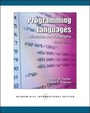
Programming Languages: Principles and Paradigms
Published on 16. December 2001
Book
Hardback
432 pages
978-0-07-238111-5 (ISBN)
Description
Programming Languages: Principles and Paradigms by Allen Tucker and Robert Noonan provides balanced coverage of both the principles of language design and the different programming paradigms.The principles of language design are covered using a formal model and a hands-on laboratory suite that uses a Java interpreter to implement the formal model. This approach gives students an excellent grasp of language design theory and its relationship to practice. It also lays the foundation for the paradigms that are presented in the second half of the book.The text presents and contrasts six major programming paradigms: imperitave, object-oriented, functional, logic, concurrent, and event-driven programming. Through the use of one language for each paradigm, students gain a deep understanding of the paradigm without being distracted by a profusion of languages.
More details
Language
English
Place of publication
United States
Publishing group
McGraw-Hill Education - Europe
Target group
College/higher education
Illustrations
illustrations
Dimensions
Height: 236 mm
Width: 191 mm
Thickness: 36 mm
Weight
975 gr
ISBN-13
978-0-07-238111-5 (9780072381115)
Copyright in bibliographic data and cover images is held by Nielsen Book Services Limited or by the publishers or by their respective licensors: all rights reserved.
Schweitzer Classification
Other editions
New editions
Allen Tucker | Robert Noonan
Programming Languages
Book
11/2006
2nd Edition
McGraw Hill Higher Education
€63.13
Article is exhausted; no reprint
Content
1 Overview2 Syntax3 Type Systems and Semantics4 Imperative Programming5 Memory Management6 Exception Handling7 Object-Oriented Programming8 Functional Programming9 Logic Programming10 Event-Driven Programming11 Concurrent ProgrammingSummary of NotationsLanguage Jay-A Formal DescriptionJava TutorialBibliography