

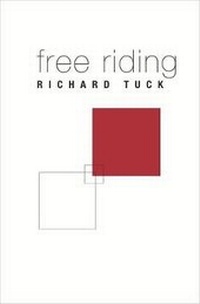
Free Riding
Published on 1. June 2008
Book
Hardback
232 pages
978-0-674-02834-0 (ISBN)
Description
One individual's contribution to a large collective project-such as voting in a national election or contributing to a public television fund-raising campaign-often seems negligible. A striking proposition of contemporary economics and political science is that it would be an exercise of reason, not a failure of it, not to contribute to a collective project if the contribution is negligible, but to benefit from it nonetheless.
But Richard Tuck wonders whether this phenomenon of free riding is a timeless aspect of human nature or a recent, historically contingent one. He argues for the latter, showing that the notion would have seemed strange to people in the nineteenth century and earlier and that the concept only became accepted when the idea of perfect competition took hold in economics in the early twentieth century.
Tuck makes careful distinctions between the prisoner's dilemma problem, threshold phenomena such as voting, and free riding. He analyzes the notion of negligibility, and shows some of the logical difficulties in the idea-and how the ancient paradox of the sorites illustrates the difficulties.
Tuck presents a bold challenge to the skeptical account of social cooperation so widely held today. If accepted, his argument may over time encourage more public-spirited behavior.
But Richard Tuck wonders whether this phenomenon of free riding is a timeless aspect of human nature or a recent, historically contingent one. He argues for the latter, showing that the notion would have seemed strange to people in the nineteenth century and earlier and that the concept only became accepted when the idea of perfect competition took hold in economics in the early twentieth century.
Tuck makes careful distinctions between the prisoner's dilemma problem, threshold phenomena such as voting, and free riding. He analyzes the notion of negligibility, and shows some of the logical difficulties in the idea-and how the ancient paradox of the sorites illustrates the difficulties.
Tuck presents a bold challenge to the skeptical account of social cooperation so widely held today. If accepted, his argument may over time encourage more public-spirited behavior.
Reviews / Votes
This is a hugely interesting book that will almost certainly start a controversy. It addresses some of the widest assumptions in contemporary economic and social thought and calls them into question; and it provides a very illuminating history of the appearance of those assumptions. -- Philip Pettit, Princeton University Original, full of good ideas and insights, Richard Tuck's Free Riding could initiate an important debate about the least human of the human sciences. -- John Ferejohn, Stanford UniversityMore details
Language
English
Place of publication
Cambridge, Mass
United States
Target group
Professional and scholarly
US School Grade: College Graduate Student
Illustrations
7 line illustrations
Dimensions
Height: 235 mm
Width: 156 mm
ISBN-13
978-0-674-02834-0 (9780674028340)
Copyright in bibliographic data and cover images is held by Nielsen Book Services Limited or by the publishers or by their respective licensors: all rights reserved.
Schweitzer Classification
Other editions
Additional editions
Person
Richard Tuck is Frank G. Thomson Professor of Government, Harvard University.
Content
* Preface * Introduction: Olson's Problem Part I: Philosophy * the Prisoners' Dilemma * Voting and Other Thresholds * Negligibility Conclusion to Part I Part II: History * Rule-and Act-Utilitarianism * Perfect Competition, Oligopoly and Monopoly Conclusion to Part II * Index