

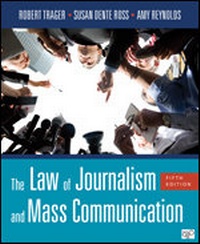
The Law of Journalism and Mass Communication
5th Edition
Published on 29. December 2015
Book
Paperback/Softback
760 pages
978-1-5063-0341-3 (ISBN)
Description
The Law of Journalism and Mass Communication, Fifth Edition offers a clear and engaging introduction to media law with comprehensive coverage and analysis for future journalists and media professionals. Hypothetical "Suppose" cases at the start of each chapter get students thinking about key legal issues, while timelines show the progression of landmark cases in context. Each chapter concludes with two excerpted Cases for Study with explanatory headnotes and questions. The text also features a student website to help students review the material and prepare for exams.
Reviews / Votes
"As with its previous editions, the 5th edition of The Law of Journalism and Mass Communication provides up-to-date court rulings that make First Amendment law more relevant to undergraduate college students, who are generally intimidated by law and do not fully understand their First Amendment rights and responsibilities. This text is an engaging blend of the landmark court decisions that have formed the foundation of First Amendment law with current decisions that are re-shaping First Amendment law in the age of Internet and social media." -- Eddith A. Dashiell "If you are looking for a media law text that provides undergraduate students with crucial understanding of landmark decisions, presented in a readable fashion, you need to require your students to use The Law of Journalism and Mass Communication. Trager, Ross, and Reynolds have compiled the definitive work for departments of mass communication, journalism, and media arts. This work allows your students to understand the historical development of the law with specific applications to 21st century technology." -- Roger Soenksen "After more than 30 years of teaching media law at USC, during which I have used several course texts with varying degrees of success, this is the one that works the best for me and my senior and graduate level students. It reads easily, is comprehensive, yet concise, and, thanks to frequently published updates, always both relevant and timely. It is a winner." -- Jonathan KotlerMore details
Edition
5th Revised edition
Language
English
Place of publication
Washington
United States
Publishing group
SAGE Publications Inc
Target group
College/higher education
Edition type
Revised edition
Dimensions
Height: 232 mm
Width: 191 mm
ISBN-13
978-1-5063-0341-3 (9781506303413)
Copyright in bibliographic data and cover images is held by Nielsen Book Services Limited or by the publishers or by their respective licensors: all rights reserved.
Schweitzer Classification
Other editions
Previous edition
Robert E. Trager | Joseph Russomanno | Susan D. Ross
The Law of Journalism and Mass Communication
Book
01/2014
4th Edition
CQ Press
€133.92
Article exhausted; check for reprint
Persons
Robert Trager teaches courses in communication law, freedom of expression, and media institutions at the University of Colorado. He is the founding editor of Communication Law and Policy. Before joining the University of Colorado faculty, Trager was an attorney with a major cable television company and practiced media law with a firm in Washington, D.C.
Susan Dente Ross is professor at Washington State University where she serves as the associate dean for research in the College of Liberal Arts. She conducts research on the freedoms of speech and press and the ways in which these rights can help advance greater global equity and justice. She also is a leader in international initiatives to increase the ability of media to contribute to conflict transformation and resolution.
Amy Reynolds is dean of the College of Communication and Information at Kent State University. Her research focuses on dissent, First Amendment history, and breaking news. She has written or edited seven books. Prior to becoming a professor and dean, she worked as a reporter at newspapers and television stations.
Susan Dente Ross is professor at Washington State University where she serves as the associate dean for research in the College of Liberal Arts. She conducts research on the freedoms of speech and press and the ways in which these rights can help advance greater global equity and justice. She also is a leader in international initiatives to increase the ability of media to contribute to conflict transformation and resolution.
Amy Reynolds is dean of the College of Communication and Information at Kent State University. Her research focuses on dissent, First Amendment history, and breaking news. She has written or edited seven books. Prior to becoming a professor and dean, she worked as a reporter at newspapers and television stations.
Content
Chapter 1: The Rule Of Law: Law In A Changing Communication Environment
The Court System
Sources of the Law
The Case Process
Finding the Law
Reading Case Law
CASES FOR STUDY
Chapter 2: The First Amendment: Speech and Press Freedoms in Theory and Reality
Interpreting the First Amendment
The Origins of the First Amendment
First Amendment Values
Media Emergence, Convergence and Consolidation
Contemporary Prior Restraints
Political Speech
Elections and Campaign Finance
Anonymous Speech
Government Speakers
Public and Nonpublic Forums
Compelled Speech
CASES FOR STUDY
Chapter 3: Speech Distinctions: Dangers, Fights, Threats, Other Harms and Educational Needs
National Security and Tranquility
Court Tests to Protect Disruptive Speech
Media Incitement to Harm
Media and Physical Harm
Speech Assaults
Symbolic Speech
Speech in the Schools
Other Harms
CASES FOR STUDY
Chapter 4: Libel & Emotional Distress: The Plaintiff's Case
A Brief History
Contemporary Issues
The Elements of Libel: The Plaintiff's Case
Emotional Distress
Intentional Infliction of Emotional Distress
Negligent Infliction of Emotional Distress
CASES FOR STUDY
Chapter 5: Libel: Defenses and Privileges
Fair Report Privilege
Fair Comment and Criticism
Opinion
Neutral Reportage
Wire Service Defense
Single-Publication Rule
The Libel-Proof Plaintiff
Other Defense Issues
CASES FOR STUDY
Chapter 6: Protecting Privacy: Conflicts Between the Press, the Government and the Right to Privacy
Sources of Privacy Protection
Electronic Privacy and the Supreme Court
Privacy Law's Development
False Light
Appropriation
Intrusion
Private Facts
CASES FOR STUDY
Chapter 7: Newsgathering: Pitfalls and Protections
Access to Property
Newsgathering Pitfalls
Covert Recording
Newsgathering Protections
Access to Meetings
Denying Access to Records
CASES FOR STUDY
Chapter 8: Reporter's Privilege: Protecting the Watchdogs
Reporter's Privilege
Shield Laws
Breaking Promises of Confidentiality
Search Warrants
CASES FOR STUDY
Chapter 9: The Media and the Courts: Preserving Public Trials and Preventing Prejudice
Fair Trials and Prejudicial Speech
Remedies to Prejudice
Access to Trials
Electronic Access to Trials
Bench-Bar-Press Guidelines
Access to Court Records
CASES FOR STUDY
Chapter 10: Electronic Media Regulation: From Radio to the Internet
Federal Communications Commission
Broadcast Regulation
Cable Television Regulation
Direct Broadcast Satellites
Internet Regulation
CASES FOR STUDY
Chapter 11: Obscenity, Indecency and Violence: Social Norms and Legal Standards
Obscenity
Indecency
Video Games and Media Violence
CASES FOR STUDY
Chapter 12: Intellectual Property: Protecting and Using Intangible Creations
Copyright
Trademarks
CASES FOR STUDY
Chapter 13: Advertising: When Speech and Commerce Converge
The Evolution of the Commercial Speech Doctrine
Legislative and Administrative Advertising Regulation
CASES FOR STUDY
The Court System
Sources of the Law
The Case Process
Finding the Law
Reading Case Law
CASES FOR STUDY
Chapter 2: The First Amendment: Speech and Press Freedoms in Theory and Reality
Interpreting the First Amendment
The Origins of the First Amendment
First Amendment Values
Media Emergence, Convergence and Consolidation
Contemporary Prior Restraints
Political Speech
Elections and Campaign Finance
Anonymous Speech
Government Speakers
Public and Nonpublic Forums
Compelled Speech
CASES FOR STUDY
Chapter 3: Speech Distinctions: Dangers, Fights, Threats, Other Harms and Educational Needs
National Security and Tranquility
Court Tests to Protect Disruptive Speech
Media Incitement to Harm
Media and Physical Harm
Speech Assaults
Symbolic Speech
Speech in the Schools
Other Harms
CASES FOR STUDY
Chapter 4: Libel & Emotional Distress: The Plaintiff's Case
A Brief History
Contemporary Issues
The Elements of Libel: The Plaintiff's Case
Emotional Distress
Intentional Infliction of Emotional Distress
Negligent Infliction of Emotional Distress
CASES FOR STUDY
Chapter 5: Libel: Defenses and Privileges
Fair Report Privilege
Fair Comment and Criticism
Opinion
Neutral Reportage
Wire Service Defense
Single-Publication Rule
The Libel-Proof Plaintiff
Other Defense Issues
CASES FOR STUDY
Chapter 6: Protecting Privacy: Conflicts Between the Press, the Government and the Right to Privacy
Sources of Privacy Protection
Electronic Privacy and the Supreme Court
Privacy Law's Development
False Light
Appropriation
Intrusion
Private Facts
CASES FOR STUDY
Chapter 7: Newsgathering: Pitfalls and Protections
Access to Property
Newsgathering Pitfalls
Covert Recording
Newsgathering Protections
Access to Meetings
Denying Access to Records
CASES FOR STUDY
Chapter 8: Reporter's Privilege: Protecting the Watchdogs
Reporter's Privilege
Shield Laws
Breaking Promises of Confidentiality
Search Warrants
CASES FOR STUDY
Chapter 9: The Media and the Courts: Preserving Public Trials and Preventing Prejudice
Fair Trials and Prejudicial Speech
Remedies to Prejudice
Access to Trials
Electronic Access to Trials
Bench-Bar-Press Guidelines
Access to Court Records
CASES FOR STUDY
Chapter 10: Electronic Media Regulation: From Radio to the Internet
Federal Communications Commission
Broadcast Regulation
Cable Television Regulation
Direct Broadcast Satellites
Internet Regulation
CASES FOR STUDY
Chapter 11: Obscenity, Indecency and Violence: Social Norms and Legal Standards
Obscenity
Indecency
Video Games and Media Violence
CASES FOR STUDY
Chapter 12: Intellectual Property: Protecting and Using Intangible Creations
Copyright
Trademarks
CASES FOR STUDY
Chapter 13: Advertising: When Speech and Commerce Converge
The Evolution of the Commercial Speech Doctrine
Legislative and Administrative Advertising Regulation
CASES FOR STUDY