

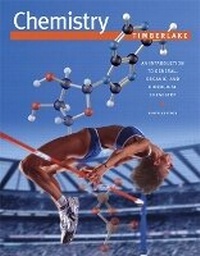
Chemistry
An Introduction to General, Organic, and Biological Chemistry with The Chemistry Place CD-ROM: United States E
9th Edition
Published on 9. August 2005
Book
Mixed media product
736 pages
978-0-8053-3015-1 (ISBN)
Description
This best-selling text, now in its Ninth Edition, makes chemistry exciting to students by showing them why important concepts are relevant to their lives and future careers. Timberlake's Guide to Problem Solving, visual solution pathways, new InterAct Math web problems, Visualizing the Chemistry questions, and a host of media tools enhance the new edition. It also retains the many features that have made the book so successful: a clear and friendly writing style, a modernized design, Career Focus features, macro-to-micro art work, modern applications and pedagogical tools, and extensive media resources. The book is most suited to the one-semester allied health sequence.
More details
Edition
9th edition
Language
English
Place of publication
Upper Saddle River
United States
Target group
Professional and scholarly
Dimensions
Height: 276 mm
Width: 216 mm
Weight
1740 gr
ISBN-13
978-0-8053-3015-1 (9780805330151)
Copyright in bibliographic data and cover images is held by Nielsen Book Services Limited or by the publishers or by their respective licensors: all rights reserved.
Schweitzer Classification
Other editions
New editions
Karen C. Timberlake
Chemistry
An Introduction to General, Organic, & Biological Chemistry: United States Edition
Book
03/2008
10th Edition
Pearson
€92.99
Article exhausted; check for reprint
Previous edition
Book
08/2002
8th Edition
Pearson Education (US)
€119.42
Article exhausted; check for reprint
Person
Karen Timberlake is an emeritus professor of chemistry at Los Angeles Valley College, where she has taught chemistry for allied health and preparatory chemistry for 36 years. She received her bachelor's degree in chemistry from the University of Washington in 1962 and her master's degree in biochemistry from the University of California at Los Angeles in 1965. She has also taken graduate courses in science education during a sabbatical at the University of Northern Colorado.
Professor Timberlake has been writing textbooks for general, organic, and biological chemistry for 28 years. During that time, her name has become associated with the strategic use of pedagogical tools that promote student success in chemistry and the application of chemistry to real-life situations in health and medicine. More than one million students have learned chemistry using texts, laboratory manuals, and study guides written by Karen Timberlake. In addition to Chemistry: An Introduction to General, Organic, and Biological Chemistry, she is also the author of General, Organic, and Biological Chemistry: Structures of Life, Platinum Edition.
Professor Timberlake belongs to numerous science and education organizations, including the American Chemical Society (ACS) and the National Science Teachers Association (NSTA). In 1987, she was the Western Regional Winner of Excellence in College Chemistry Teaching Award given by the Chemical Manufacturers Association. She has participated in education grants for science teaching including the Los Angeles Collaborative for Teaching Excellence (LACTE) and the Title III grant at her college. She often speaks at conferences and education meetings on using student-centered teaching methods in chemistry to promote the learning success of students.
Her husband, Bill, is also a chemistry professor and contributes much to Professor Timberlake's textbooks. When the Professors Timberlake are not writing textbooks, they relax by hiking, traveling to Mexico and Europe, trying new restaurants, and playing lots of tennis. The Timberlakes' son, John, and daughter-in-law, Cindy, live in Long Beach, California, where he is in curriculum sales. The Timberlakes' one year-old grandson, Daniel, does not know what he wants to be yet.
Professor Timberlake has been writing textbooks for general, organic, and biological chemistry for 28 years. During that time, her name has become associated with the strategic use of pedagogical tools that promote student success in chemistry and the application of chemistry to real-life situations in health and medicine. More than one million students have learned chemistry using texts, laboratory manuals, and study guides written by Karen Timberlake. In addition to Chemistry: An Introduction to General, Organic, and Biological Chemistry, she is also the author of General, Organic, and Biological Chemistry: Structures of Life, Platinum Edition.
Professor Timberlake belongs to numerous science and education organizations, including the American Chemical Society (ACS) and the National Science Teachers Association (NSTA). In 1987, she was the Western Regional Winner of Excellence in College Chemistry Teaching Award given by the Chemical Manufacturers Association. She has participated in education grants for science teaching including the Los Angeles Collaborative for Teaching Excellence (LACTE) and the Title III grant at her college. She often speaks at conferences and education meetings on using student-centered teaching methods in chemistry to promote the learning success of students.
Her husband, Bill, is also a chemistry professor and contributes much to Professor Timberlake's textbooks. When the Professors Timberlake are not writing textbooks, they relax by hiking, traveling to Mexico and Europe, trying new restaurants, and playing lots of tennis. The Timberlakes' son, John, and daughter-in-law, Cindy, live in Long Beach, California, where he is in curriculum sales. The Timberlakes' one year-old grandson, Daniel, does not know what he wants to be yet.
Content
1. Measurements
2. Energy and Matter
3. Atoms and Elements
4. Compounds and Their Bonds
5. Chemical Reactions and Quantities
6. Gases
7. Solutions
8. Acids and Bases
9. Nuclear Radiation
10. Introduction to Organic Chemistry: Alkanes
11. Unsaturated Hydrocarbons
12. Organic Compounds with Oxygen and Sulfur
13. Carboxylic Acids, Esters, Amines, and Amides
14. Carbohydrates
15. Lipids
16. Amino Acids, Proteins, and Enzymes
17. Nucleic Acids and Protein Synthesis
18. Metabolic Pathways and Energy Production.
2. Energy and Matter
3. Atoms and Elements
4. Compounds and Their Bonds
5. Chemical Reactions and Quantities
6. Gases
7. Solutions
8. Acids and Bases
9. Nuclear Radiation
10. Introduction to Organic Chemistry: Alkanes
11. Unsaturated Hydrocarbons
12. Organic Compounds with Oxygen and Sulfur
13. Carboxylic Acids, Esters, Amines, and Amides
14. Carbohydrates
15. Lipids
16. Amino Acids, Proteins, and Enzymes
17. Nucleic Acids and Protein Synthesis
18. Metabolic Pathways and Energy Production.