

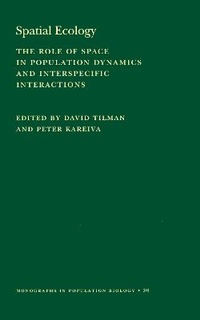
Spatial Ecology
The Role of Space in Population Dynamics and Interspecific Interactions
Published on 28. December 1997
Book
Hardback
416 pages
978-0-691-01653-5 (ISBN)
Description
Addresses the fundamental effects of space in the dynamics of individual species and on the structure, dynamics, diversity and stability of multispecies communities. The book aims to demonstrate that the spatial structure of a habitat can fundamentally alter both the qualitative and quantitative dynamics and outcomes of ecological processes. It highlights the importance of space to five areas: stability, patterns of diversity, invasions, coexistence and pattern generation. It illustrates both the diversity of approaches used to study spatial ecology and the underlying similarities of these approaches.
More details
Series
Language
English
Place of publication
New Jersey
United States
Target group
College/higher education
Professional and scholarly
Product notice
Trade binding
Illustrations
11 halftones, 81 line illustrations, 4 tables
Dimensions
Height: 203 mm
Width: 127 mm
Weight
624 gr
ISBN-13
978-0-691-01653-5 (9780691016535)
Copyright in bibliographic data and cover images is held by Nielsen Book Services Limited or by the publishers or by their respective licensors: all rights reserved.
Schweitzer Classification
Other editions
Additional editions
David Tilman | Peter Kareiva
Spatial Ecology
The Role of Space in Population Dynamics and Interspecific Interactions
E-Book
11/2018
1st Edition
Princeton University Press
€108.99
Available for download
Persons
David Tilman is the Distinguished McKnight University Professor of Ecology and Director of Cedar Creek Natural History Area at the University of Minnesota. He is the author of Plant Strategies and the Dynamics and Structure of Plant Communities (Princeton). Peter Kareiva is Professor of Zoology at the University of Washington.