


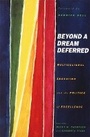
Beyond a Dream Deferred
Multicultural Education and the Politics of Excellence
Published on 1. January 1993
Book
Hardback
256 pages
978-0-8166-2267-2 (ISBN)
Description
"Beyond A Dream Deferred" is a multidisciplinary work that consolidates progressive perspectives on multicultural education, establishing it as a crucial sphere in a society charged with reimagining its national identity in all its increasing diversity. Fourteen essays offer moral and political visions of progressive education and institutional changes of the past 20 years. Drawing on the perspectives of faculty, administrators, and students - both activists and intellectuals - Thompson and Tyagi situate current controversies within larger issues of citizenship, the economy, demographic changes, and conflicts over the unequal distribution of power. The contributors, including Troy Duster, Evelyn Hu-Dehart, Earl Jackson Jr, Chandra Mohanty, and Cornel West, are recognized both as established spokespeople as well as new voices who work to promote progressive educational change. Adroitly gathering contemporary philosophical, theoretical and political examinations of multicultural education, "Beyond A Dream Deferred" offers a timely directive for scholars and students involved in change both within and outside the academy.
More details
Language
English
Place of publication
Minnesota
United States
Target group
College/higher education
Professional and scholarly
Dimensions
Height: 234 mm
Width: 156 mm
Weight
588 gr
ISBN-13
978-0-8166-2267-2 (9780816622672)
Copyright in bibliographic data is held by Nielsen Book Services Limited or its licensors: all rights reserved.
Schweitzer Classification
Other editions
New editions
Book
09/1993
University of Minnesota Press
€44.79
Article not available at the moment
Persons
Content
PART I Moral and political visions of multicultural education; PART II Multiple voices, ongoing struggles; PART III New directions for critical engagement