

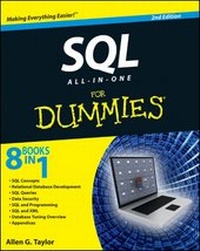
SQL All-in-One For Dummies
2nd Edition
Published on 1. April 2011
Book
Paperback/Softback
744 pages
978-0-470-92996-4 (ISBN)
Description
The soup-to-nuts guide on all things SQL!
SQL, or structured query language, is the international standard language for creating and maintaining relational databases. It is the basis of all major databases in use today and is essential for the storage and retrieval of database information. This fun and friendly guide takes SQL and all its related topics and breaks it down into easily digestible pieces for you to understand. You'll get the goods on relational database design, development, and maintenance, enabling you to start working with SQL right away!
* Provides an overview of the SQL language and examines how it is integral for the storage and retrieval of database information
* Includes updates to SQL standards as well as any new features
* Explores SQL concepts, relational database development, SQL queries, data security, database tuning, and more
* Addresses the relationship between SQL and programming as well as SQL and XML
If you're looking for an up-to-date sequel to the bestelling first edition of SQL All-in-One For Dummies, then this is the book for you!
SQL, or structured query language, is the international standard language for creating and maintaining relational databases. It is the basis of all major databases in use today and is essential for the storage and retrieval of database information. This fun and friendly guide takes SQL and all its related topics and breaks it down into easily digestible pieces for you to understand. You'll get the goods on relational database design, development, and maintenance, enabling you to start working with SQL right away!
* Provides an overview of the SQL language and examines how it is integral for the storage and retrieval of database information
* Includes updates to SQL standards as well as any new features
* Explores SQL concepts, relational database development, SQL queries, data security, database tuning, and more
* Addresses the relationship between SQL and programming as well as SQL and XML
If you're looking for an up-to-date sequel to the bestelling first edition of SQL All-in-One For Dummies, then this is the book for you!
More details
Product info
WebSite Associated w/Book
Edition
2. Auflage
Language
English
Place of publication
United States
Publishing group
John Wiley & Sons Inc
Target group
Professional and scholarly
Dimensions
Height: 23.3 cm
Width: 18.7 cm
Thickness: 3.5 cm
Weight
952 gr
ISBN-13
978-0-470-92996-4 (9780470929964)
Schweitzer Classification
Other editions
New editions
Allen G. Taylor
SQL All-In-One For Dummies
Book
04/2019
Wiley
€35.90
Article exhausted; check for reprint
Previous edition
Allen G. Taylor
SQL All-in-One Desk Reference For Dummies
Book
07/2007
1st Edition
Wiley
€29.90
Article exhausted; check for reprint
Person
Allen G. Taylor lectures nationally on databases, innovation, and entrepreneurship, and teaches database development internationally through a leading online education provider. Among his more than 20 books are all editions of SQL For Dummies and Database Development For Dummies.
Content
Introduction.
Book I: SQL Concepts.
Chapter 1: Understanding Relational Databases.
Chapter 2: Modeling a System.
Chapter 3: Getting to Know SQL.
Chapter 4: SQL and the Relational Model.
Chapter 5: Knowing the Major Components of SQL.
Chapter 6: Drilling Down to the SQL Nitty-Gritty.
Book II: Relational Database Development.
Chapter 1: System Development Overview.
Chapter 2: Building a Database Model.
Chapter 3: Balancing Performance and Correctness.
Chapter 4: Creating a Database with SQL.
Book III: SQL Queries.
Chapter 1: Values, Variables, Functions, and Expressions.
Chapter 2: SELECT Statements and Modifying Clauses.
Chapter 3: Querying Multiple Tables with Subqueries.
Chapter 4: Querying Multiple Tables with Relational Operators.
Chapter 5: Cursors.
Book IV: Data Security.
Chapter 1: Protecting Against Hardware Failure and External Threats.
Chapter 2: Protecting Against User Errors and Conflicts.
Chapter 3: Assigning Access Privileges.
Chapter 4: Error Handling.
Book V: SQL and Programming.
Chapter 1: Database Development Environments.
Chapter 2: Interfacing SQL to a Procedural Language.
Chapter 3: Using SQL in an Application Program.
Chapter 4: Designing a Sample Application.
Chapter 5: Building an Application.
Chapter 6: Understanding SQL's Procedural Capabilities.
Chapter 7: Connecting SQL to a Remote Database.
Book VI: SQL and XML.
Chapter 1: Using XML with SQL.
Chapter 2: Storing XML Data in SQL Tables.
Chapter 3: Retrieving Data from XML Documents.
Book VII: Database Tuning Overview.
Chapter 1: Tuning the Database.
Chapter 2: Tuning the Environment.
Chapter 3: Finding and Eliminating Bottlenecks.
Book VIII: Appendices.
Appendix A: SQL:2008 Reserved Words.
Appendix B: Glossary.
Index.
Book I: SQL Concepts.
Chapter 1: Understanding Relational Databases.
Chapter 2: Modeling a System.
Chapter 3: Getting to Know SQL.
Chapter 4: SQL and the Relational Model.
Chapter 5: Knowing the Major Components of SQL.
Chapter 6: Drilling Down to the SQL Nitty-Gritty.
Book II: Relational Database Development.
Chapter 1: System Development Overview.
Chapter 2: Building a Database Model.
Chapter 3: Balancing Performance and Correctness.
Chapter 4: Creating a Database with SQL.
Book III: SQL Queries.
Chapter 1: Values, Variables, Functions, and Expressions.
Chapter 2: SELECT Statements and Modifying Clauses.
Chapter 3: Querying Multiple Tables with Subqueries.
Chapter 4: Querying Multiple Tables with Relational Operators.
Chapter 5: Cursors.
Book IV: Data Security.
Chapter 1: Protecting Against Hardware Failure and External Threats.
Chapter 2: Protecting Against User Errors and Conflicts.
Chapter 3: Assigning Access Privileges.
Chapter 4: Error Handling.
Book V: SQL and Programming.
Chapter 1: Database Development Environments.
Chapter 2: Interfacing SQL to a Procedural Language.
Chapter 3: Using SQL in an Application Program.
Chapter 4: Designing a Sample Application.
Chapter 5: Building an Application.
Chapter 6: Understanding SQL's Procedural Capabilities.
Chapter 7: Connecting SQL to a Remote Database.
Book VI: SQL and XML.
Chapter 1: Using XML with SQL.
Chapter 2: Storing XML Data in SQL Tables.
Chapter 3: Retrieving Data from XML Documents.
Book VII: Database Tuning Overview.
Chapter 1: Tuning the Database.
Chapter 2: Tuning the Environment.
Chapter 3: Finding and Eliminating Bottlenecks.
Book VIII: Appendices.
Appendix A: SQL:2008 Reserved Words.
Appendix B: Glossary.
Index.