

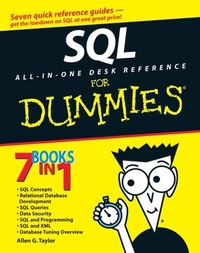
SQL All-in-One Desk Reference For Dummies
1st Edition
Published on 17. July 2007
Book
Paperback/Softback
720 pages
978-0-470-11928-0 (ISBN)
Description
Master queries for any SQL database!
Your one-stop guide to building and maintaining relational databases with SQL
If you're looking for a good general reference on SQL, look no further. This all-in-one guide delivers the goods on all major SQL topics, from basic concepts to the latest XML data-handling functions. Whether you're a database developer or DBA, you'll find fast answers to your SQL questions and savvy tips on building databases that are robust, secure, and efficient.
* Tackle a database development project
*
Formulate SQL queries
*
Build database applications
*
Secure your database
*
Handle XML data
*
Tune and optimize a database
Your one-stop guide to building and maintaining relational databases with SQL
If you're looking for a good general reference on SQL, look no further. This all-in-one guide delivers the goods on all major SQL topics, from basic concepts to the latest XML data-handling functions. Whether you're a database developer or DBA, you'll find fast answers to your SQL questions and savvy tips on building databases that are robust, secure, and efficient.
* Tackle a database development project
*
Formulate SQL queries
*
Build database applications
*
Secure your database
*
Handle XML data
*
Tune and optimize a database
More details
Other editions
New editions
Allen G. Taylor
SQL All-in-One For Dummies
Book
04/2011
2nd Edition
Wiley
€35.90
Article exhausted; check for reprint
Person
Allen G. Taylor is a 30-year veteran of the computer industry and the author of 25 books, including SQL For Dummies, Crystal Reports 10 For Dummies, Database Development For Dummies, Access 2003 Power Programming with VBA, and SQL Weekend Crash Course. He lectures internationally on databases, networks, innovation, and entrepreneurship. He also teaches database development through a leading online education provider and teaches microprocessor design at Portland State University. For the latest news on Allen's activities, check out www.DatabaseCentral.Info. You can contact Allen at allen.taylor@ieee.org.
Content
Introduction.
Book I: SQL Concepts.
Chapter 1: Relational Database Basics.
Chapter 2: Modeling a System.
Chapter 3: SQL Overview.
Chapter 4: SQL and the Relational Model.
Chapter 5: The Major Components of SQL.
Chapter 6: SQL Characteristics.
Book II: Relational Database Development.
Chapter 1: System Development Overview.
Chapter 2: Building a Database Model.
Chapter 3: Balancing Performance and Correctness.
Chapter 4: Creating a Database with SQL.
Book III: SQL Queries.
Chapter 1: Values, Variables, Functions, and Expressions.
Chapter 2: SELECT Statements and Modifying Clauses.
Chapter 3: Querying Multiple Tables with Subqueries.
Chapter 4: Querying Multiple Tables with Relational Operators.
Book IV: Data Security.
Chapter 1: Protecting Against Hardware Failure and External Threats.
Chapter 2: Protecting Against User Errors and Conflicts.
Chapter 3: Assigning Access Privileges.
Chapter 4: Error Handling.
Book V: SQL and Programming.
Chapter 1: Database Development Environments.
Chapter 2: Interfacing SQL to a Procedural Language.
Chapter 3: Using SQL in an Application Program.
Chapter 4: Designing a Sample Application.
Chapter 5: Building a Sample Application.
Chapter 6: SQL's Procedural Capabilities.
Chapter 7: Connecting to a Remote Database.
Book VI: SQL and XML.
Chapter 1: XML/SQL Basics.
Chapter 2: Storing XML Data in SQL Tables.
Chapter 3: Retrieving Data from XML Documents.
Book VII: Database Tuning Overview.
Chapter 1: Tuning the Database.
Chapter 2: Tuning the Environment.
Chapter 3: Finding and Eliminating Bottlenecks.
Book VIII: Appendixes.
Appendix A: SQL:2003 Reserved Words.
Appendix B: Glossary.
Index.
Book I: SQL Concepts.
Chapter 1: Relational Database Basics.
Chapter 2: Modeling a System.
Chapter 3: SQL Overview.
Chapter 4: SQL and the Relational Model.
Chapter 5: The Major Components of SQL.
Chapter 6: SQL Characteristics.
Book II: Relational Database Development.
Chapter 1: System Development Overview.
Chapter 2: Building a Database Model.
Chapter 3: Balancing Performance and Correctness.
Chapter 4: Creating a Database with SQL.
Book III: SQL Queries.
Chapter 1: Values, Variables, Functions, and Expressions.
Chapter 2: SELECT Statements and Modifying Clauses.
Chapter 3: Querying Multiple Tables with Subqueries.
Chapter 4: Querying Multiple Tables with Relational Operators.
Book IV: Data Security.
Chapter 1: Protecting Against Hardware Failure and External Threats.
Chapter 2: Protecting Against User Errors and Conflicts.
Chapter 3: Assigning Access Privileges.
Chapter 4: Error Handling.
Book V: SQL and Programming.
Chapter 1: Database Development Environments.
Chapter 2: Interfacing SQL to a Procedural Language.
Chapter 3: Using SQL in an Application Program.
Chapter 4: Designing a Sample Application.
Chapter 5: Building a Sample Application.
Chapter 6: SQL's Procedural Capabilities.
Chapter 7: Connecting to a Remote Database.
Book VI: SQL and XML.
Chapter 1: XML/SQL Basics.
Chapter 2: Storing XML Data in SQL Tables.
Chapter 3: Retrieving Data from XML Documents.
Book VII: Database Tuning Overview.
Chapter 1: Tuning the Database.
Chapter 2: Tuning the Environment.
Chapter 3: Finding and Eliminating Bottlenecks.
Book VIII: Appendixes.
Appendix A: SQL:2003 Reserved Words.
Appendix B: Glossary.
Index.