

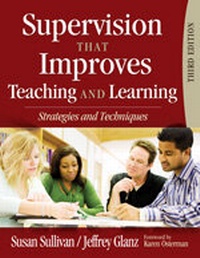
Supervision That Improves Teaching and Learning
Strategies and Techniques
3rd Edition
Published on 28. July 2009
Book
Paperback/Softback
232 pages
978-1-4129-6713-6 (ISBN)
Description
In this exciting, new edition of Supervision That Improves Teaching, the authors have taken their reflective clinical supervision process to a new level and focused on the demands that diversity and technology have placed on the supervision cycle. The authors recognize that if supervision of instruction is to be successful, we must address these needs. Therefore, they have built this third edition around the context of diversity within a technological environment. Our new scenarios describe teaching and learning dilemmas for English Language Learners. An additional case study also highlights English Language Learners within the context of "Critical Friends" groups and new observation tools center on the diversity of our schools. Finally, suggestions abound for use of the book within a technological environment - from blogs and wikis to strategies for teaching a hybrid or completely online course.
Sullivan and Glanz have also addressed the dilemmas of preserving meaningful supervision in an era of high-stakes testing and local, state, and national standards. The authors' reflective clinical supervision model encourages and prepares educators to be thoughtful collaborators in improving classroom instruction. And they have extended the options for teacher observation to a thorough but manageable set of tools for standards-based supervision.
Outstanding additions to the third edition include:
- New scenarios, cases and tools focus on the need for differentiated instruction for diverse and exceptional populations in the schools
- Use of this book to evaluate the technological environment in schools in areas such as distance learning, online training, blogging and research
- The authors draw a clearer distinction between evaluation and supervision in this 3rd edition
- The timeline for the Supervision cycle in Chapter 1 has been updated and revised
- Observation Instruments in Chapter 3 have been revised to be more reader and user friendly
- Strategies and observation tools for maintaining reflective supervision in a standards-based environment
This bestselling approach continues to offer interpersonal tools for initiating and providing feedback on classroom observations, alternative approaches to common supervision practices, and the tools necessary for present and future educational leaders to develop dynamic conversations about learning between and among educators-the essence of what effective supervision is really about.
Sullivan and Glanz have also addressed the dilemmas of preserving meaningful supervision in an era of high-stakes testing and local, state, and national standards. The authors' reflective clinical supervision model encourages and prepares educators to be thoughtful collaborators in improving classroom instruction. And they have extended the options for teacher observation to a thorough but manageable set of tools for standards-based supervision.
Outstanding additions to the third edition include:
- New scenarios, cases and tools focus on the need for differentiated instruction for diverse and exceptional populations in the schools
- Use of this book to evaluate the technological environment in schools in areas such as distance learning, online training, blogging and research
- The authors draw a clearer distinction between evaluation and supervision in this 3rd edition
- The timeline for the Supervision cycle in Chapter 1 has been updated and revised
- Observation Instruments in Chapter 3 have been revised to be more reader and user friendly
- Strategies and observation tools for maintaining reflective supervision in a standards-based environment
This bestselling approach continues to offer interpersonal tools for initiating and providing feedback on classroom observations, alternative approaches to common supervision practices, and the tools necessary for present and future educational leaders to develop dynamic conversations about learning between and among educators-the essence of what effective supervision is really about.
Reviews / Votes
"Sullivan and Glanz do an excellent job of presenting information in a format that is user friendly, succinct, practical, and applicable to the job of school supervision. This book provides critically important information for aspiring, newly appointed, or veteran school administrators." -- Judy Bruner, Author/Consultant "This is a great marriage of theory and practice." -- Christy M. Moroye, Assistant Professor of Curriculum and SupervisionMore details
Edition
3rd Revised edition
Language
English
Place of publication
Thousand Oaks
United States
Publishing group
SAGE Publications Inc
Target group
Professional and scholarly
Edition type
Revised edition
Dimensions
Height: 279 mm
Width: 216 mm
Weight
652 gr
ISBN-13
978-1-4129-6713-6 (9781412967136)
Copyright in bibliographic data and cover images is held by Nielsen Book Services Limited or by the publishers or by their respective licensors: all rights reserved.
Schweitzer Classification
Other editions
New editions
Susan S. Sullivan | Jeffrey G. Glanz
Supervision That Improves Teaching and Learning
Strategies and Techniques
Book
04/2013
4th Edition
Corwin Press Inc
€47.00
Shipment within 15-20 days
Previous edition
Book
09/2004
2nd Edition
Corwin Press Inc
€47.22
Article exhausted; check for reprint
Persons
Susan Sullivan is currently Chair of the Department of Education at the College of Staten Island (CSI), City University of New York (CUNY) where all undergraduate and graduate education programs are under the direction of the Chair. Previously, she was the Chair of the Education Department for six years. She continues to teach post master's courses in supervision of instruction and educational leadership in the Department leadership program. She is co-principal investigator on an NSF grant that supports the Teacher Education Honors Academy and is a founder of the CSI High School for International Studies. In addition, she is currently planning a leadership program for Chinese school administrators.
Her continued research interests center on supervision of instruction and its alternatives, reflective practice, and the role of leadership and supervision of instruction, in particular, in school transformation, themes on which she continues to write journal articles. In addition to the third edition of Supervision that Improves Teaching and Learning: Strategies and Techniques, she and Jeffrey Glanz have coauthored a staff development book, Supervision in Practice, and are the authors of Building Effective Learning Communities.
Jeffrey Glanz currently serves as a Senior Fellow at the Institute for University-School Partnership, Director of the Masters Program and the Raine and Stanley Silverstein Chair in Professional Ethics and Values at the Azrieli Graduate School of Jewish Education and Administration at Yeshiva University. Prior to coming to YU, Dr. Glanz served as Dean of Graduate Programs and Chair of the Department of Education at Wagner College in Staten Island, New York. He also coordinated the educational leadership program that led to New York State certification as a principal and assistant principal. Prior to arriving at Wagner, he served as executive assistant to the president of Kean University in Union, New Jersey. Dr. Glanz held faculty status as a tenured professor in the Department of Instruction and Educational Leadership at Kean University's College of Education. He was named Graduate Teacher of the Year in 1999 by the Student Graduate Association and was also that year's recipient of the Presidential Award for Outstanding Scholarship. He served as a teacher and assistant principal in the New York City public schools. He has conducted numerous workshops and seminars internationally. Dr. Glanz has authored, coauthored, and co-edited 20 books and has many peer-reviewed article publications.
Her continued research interests center on supervision of instruction and its alternatives, reflective practice, and the role of leadership and supervision of instruction, in particular, in school transformation, themes on which she continues to write journal articles. In addition to the third edition of Supervision that Improves Teaching and Learning: Strategies and Techniques, she and Jeffrey Glanz have coauthored a staff development book, Supervision in Practice, and are the authors of Building Effective Learning Communities.
Jeffrey Glanz currently serves as a Senior Fellow at the Institute for University-School Partnership, Director of the Masters Program and the Raine and Stanley Silverstein Chair in Professional Ethics and Values at the Azrieli Graduate School of Jewish Education and Administration at Yeshiva University. Prior to coming to YU, Dr. Glanz served as Dean of Graduate Programs and Chair of the Department of Education at Wagner College in Staten Island, New York. He also coordinated the educational leadership program that led to New York State certification as a principal and assistant principal. Prior to arriving at Wagner, he served as executive assistant to the president of Kean University in Union, New Jersey. Dr. Glanz held faculty status as a tenured professor in the Department of Instruction and Educational Leadership at Kean University's College of Education. He was named Graduate Teacher of the Year in 1999 by the Student Graduate Association and was also that year's recipient of the Presidential Award for Outstanding Scholarship. He served as a teacher and assistant principal in the New York City public schools. He has conducted numerous workshops and seminars internationally. Dr. Glanz has authored, coauthored, and co-edited 20 books and has many peer-reviewed article publications.
Content
Foreword to the Third Edition, by Karen Osterman
Preface to the Third Edition
Acknowledgments
About the Authors
A Brief Note to Instructors
1. The Changing Context of Supervision
What Is Supervision?
The Influence of History
Supervision in the Late 19th Century
Democratic Methods and Supervision
Standards-Based Supervision
Understanding the History of Supervision
Implications for the Practice of Supervision
Assessing Belief Systems
Examples of Personal Vision Statements
Conclusion
Notes
2. Three Interpersonal Approaches to Supervision
How We Learn
Listening, Reflecting, and Clarifying Techniques
Approaches to Providing Feedback
Guidelines for Reflective Practice
Summary
Notes
3. Observation Tools and Techniques
Supervision Scenario
Thirty-Two Tools and Techniques for Observation
Quantitative Observation Tools
Qualitative Observation Tools
Summary
Conclusion
Notes
4. An Introduction to Reflective Clinical Supervision
A Definition of Clinical Supervision
The Reflective Clinical Supervision Cycle
Conclusion
5. Alternative Approaches: Case Studies and Implementation Guidelines
Standards-Based Walk-Through
Mentoring
Peer Coaching
A Journey: From Peer Coaching to Critical Friends
Portfolios for Differentiated Supervision
Peer Assessment: Selection, Support, and Evaluation
Action Research
Conclusion
Notes
6. Supervision to Improve Classroom Instruction: Next Steps
Next Steps
Guidelines for Creating a Supervisory Platform
"For Me, Personally": My Supervisory Platform
Conclusion-or Just a Beginning?
Note
Resource A. Microlab Guidelines
Resource B. Fishbowl Guidelines
Resource C. Technology in the Classroom: Tips That Span the Traditional to the Virtual Classroom
Resource D. Observation Practice Sheets
References
Index
Preface to the Third Edition
Acknowledgments
About the Authors
A Brief Note to Instructors
1. The Changing Context of Supervision
What Is Supervision?
The Influence of History
Supervision in the Late 19th Century
Democratic Methods and Supervision
Standards-Based Supervision
Understanding the History of Supervision
Implications for the Practice of Supervision
Assessing Belief Systems
Examples of Personal Vision Statements
Conclusion
Notes
2. Three Interpersonal Approaches to Supervision
How We Learn
Listening, Reflecting, and Clarifying Techniques
Approaches to Providing Feedback
Guidelines for Reflective Practice
Summary
Notes
3. Observation Tools and Techniques
Supervision Scenario
Thirty-Two Tools and Techniques for Observation
Quantitative Observation Tools
Qualitative Observation Tools
Summary
Conclusion
Notes
4. An Introduction to Reflective Clinical Supervision
A Definition of Clinical Supervision
The Reflective Clinical Supervision Cycle
Conclusion
5. Alternative Approaches: Case Studies and Implementation Guidelines
Standards-Based Walk-Through
Mentoring
Peer Coaching
A Journey: From Peer Coaching to Critical Friends
Portfolios for Differentiated Supervision
Peer Assessment: Selection, Support, and Evaluation
Action Research
Conclusion
Notes
6. Supervision to Improve Classroom Instruction: Next Steps
Next Steps
Guidelines for Creating a Supervisory Platform
"For Me, Personally": My Supervisory Platform
Conclusion-or Just a Beginning?
Note
Resource A. Microlab Guidelines
Resource B. Fishbowl Guidelines
Resource C. Technology in the Classroom: Tips That Span the Traditional to the Virtual Classroom
Resource D. Observation Practice Sheets
References
Index