

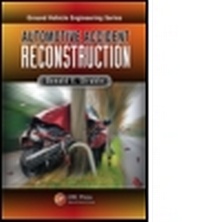
Automotive Accident Reconstruction
Practices and Principles
1st Edition
Published on 24. September 2013
Book
Hardback
498 pages
978-1-4665-8837-0 (ISBN)
Description
Automotive Accident Reconstruction: Practices and Principles introduces techniques for gathering information and interpreting evidence, and presents computer-based tools for analyzing crashes. This book provides theory, information and data sources, techniques of investigation, an interpretation of physical evidence, and practical tips for beginners. It also works as an ongoing reference for experienced reconstructionists. The book emphasizes three things: the theoretical foundation, the presentation of data sources, and the computer programs and spread sheets used to apply both theory and collected data in the reconstruction of actual crashes.
It discusses the specific requirements of reconstructing rollover crashes, offers background in structural mechanics, and describes how structural mechanics and impact mechanics are applied to automobiles that crash. The text explores the treatment of crush energy when vehicles collide with each other and with fixed objects. It delves into various classes of crashes, and simulation models. The framework of the book starts backward in time, beginning with the analysis of post-crash vehicle motions that occurred without driver control.
Applies time-reverse methods, in a detailed and rigorous way, to vehicle run-out trajectories, utilizing the available physical evidence
Walks the reader through a collection of digital crash test data from public sources, with detailed instructions on how to process and filter the information
Shows the reader how to build spread sheets detailing calculations involving crush energy and vehicle post-crash trajectory characteristics
Contains a comprehensive treatment of crush energy
This text can also serve as a resource for industry professionals, particularly with regard to the underlying physics.
It discusses the specific requirements of reconstructing rollover crashes, offers background in structural mechanics, and describes how structural mechanics and impact mechanics are applied to automobiles that crash. The text explores the treatment of crush energy when vehicles collide with each other and with fixed objects. It delves into various classes of crashes, and simulation models. The framework of the book starts backward in time, beginning with the analysis of post-crash vehicle motions that occurred without driver control.
Applies time-reverse methods, in a detailed and rigorous way, to vehicle run-out trajectories, utilizing the available physical evidence
Walks the reader through a collection of digital crash test data from public sources, with detailed instructions on how to process and filter the information
Shows the reader how to build spread sheets detailing calculations involving crush energy and vehicle post-crash trajectory characteristics
Contains a comprehensive treatment of crush energy
This text can also serve as a resource for industry professionals, particularly with regard to the underlying physics.
More details
Language
English
Place of publication
Bosa Roca
United States
Publishing group
Taylor & Francis Inc
Target group
College/higher education
Engineers working with simulation software, automotive engineers working in accident reconstruction, and law enforcement agencies working in accident analysis.
Illustrations
14 Color Figures - 8 Color Page Insert - follows page 242, 119 s/w Abbildungen, 14 farbige Abbildungen, 18 s/w Tabellen
14 Color Figures - 8 Color Page Insert - follows page 242; Approx. 340 to 360 equations; 18 Tables, black and white; 14 Illustrations, color; 119 Illustrations, black and white
Dimensions
Height: 234 mm
Width: 156 mm
Weight
839 gr
ISBN-13
978-1-4665-8837-0 (9781466588370)
Copyright in bibliographic data and cover images is held by Nielsen Book Services Limited or by the publishers or by their respective licensors: all rights reserved.
Schweitzer Classification
Other editions
New editions
Elizabeth Davis | Jocelyn Fitzgerald | Sherri Jacobs
Automotive Accident Reconstruction
Practices and Principles, Second Edition
Book
02/2020
2nd Edition
CRC Press
€160.94
Shipment within 15-20 days
Additional editions
Book
03/2017
1st Edition
CRC Press
€88.08
Article exhausted; check different version
Person
Donald E. Struble holds a BS, MS, and PhD from California Polytechnic State University, Stanford University, and Georgia Institute of Technology, respectively, all in engineering with an emphasis on structuralmechanics. Dr. Struble was assistant professor of aeronautical engineering at Cal Poly, manager of the Research Safety Vehicle program and senior vice president of Engineering and Research at Minicars, Inc., and president of Dynamic Science in Phoenix, Arizona. He is a member of SAE, AAAM, and Sigma Xi, the Scientific Research Society. Formerly senior engineer at Collision Safety Engineering in Phoenix, Arizona, and president of Struble-Welsh Engineering in San Luis Obispo, California, he is now retired.
Content
<P><STRONG>General Principles</STRONG></P>
<P>An Exact Science?</P>
<P>Units, Dimensions, Accuracy, Precision, and Significant Figures</P>
<P>Newton's Laws of Motion</P>
<P>Coordinate Systems</P>
<P>Accident Phases</P>
<P>Conservation Laws</P>
<P>Crush Zones</P>
<P>Acceleration, Velocity, and Displacement </P>
<P>Crash Severity Measures</P>
<P>The Concept of Equivalence </P>
<P>Objectives of Accident Reconstruction </P>
<P>Forward-Looking Models (Simulations) </P>
<P>Backward-Looking Methods </P>
<P>References </P><STRONG>
<P>Tire Models </P></STRONG>
<P>Rolling Resistance </P>
<P>Longitudinal Force Generation</P>
<P>Lateral Force Generation</P>
<P>Longitudinal and Lateral Forces Together</P>
<P>The Backward-Looking Approach </P>
<P>Effects of Crab Angle </P>
<P>References</P><STRONG>
<P>Subdividing Noncollision Trajectories with Splines</P></STRONG>
<P>Introduction</P>
<P>Selecting an Independent Variable</P>
<P>Finding a Smoothing Function </P>
<P>Properties of Splines</P>
<P>Example of Using a Spline for a Trajectory</P><STRONG>
<P>A Program for Reverse Trajectory Calculation Using Splines</P></STRONG>
<P>Introduction</P>
<P>Developing Velocity-Time Histories for Vehicle Run-Out Trajectories </P>
<P>Other Variables at Play in Reverse Trajectory Calculations</P>
<P>Vehicle Headings and Yaw Rates</P>
<P>Example Reverse Trajectory Calculation</P>
<P>Yaw Rates</P>
<P>Secondary Impacts with Fixed Objects</P>
<P>Verifying Methods of Analyzing Post-Crash Trajectories</P>
<P>The RICSAC Crash Tests</P>
<P>Documenting the Run-Out Motions</P>
<P>Data Acquisition and Processing Issues</P>
<P>Separation Positions for the RICSAC Run-Out Trajectories</P>
<P>Side Slap Impacts</P>
<P>Secondary Impacts and Controlled Rest</P>
<P>Surface Friction</P>
<P>Sample Validation Run </P>
<P>Results of Reverse Trajectory Validation</P>
<P>References </P><STRONG>
<P>Time-Distance Studies</P></STRONG>
<P>Purpose</P>
<P>Perception and Reaction </P>
<P>Constant Acceleration</P>
<P>Example of Constant Acceleration Time-Distance Study </P>
<P>Variable Acceleration</P>
<P>References</P><STRONG>
<P>Vehicle Data Sources for the Accident Reconstructionist </P></STRONG>
<P>Introduction </P>
<P>Nomenclature and Terminology </P>
<P>Vehicle Identification Numbers</P>
<P>Vehicle Specifications and Market Data</P>
<P>Vehicle Inertial Properties</P>
<P>Production Change-Overs and Model Runs</P>
<P>Sisters and Clones</P>
<P>Other Information Sources</P>
<P>People Sizes </P>
<P>References </P><STRONG>
<P>Accident Investigation </P></STRONG>
<P>Introduction </P>
<P>Information Gathering </P>
<P>Scene Inspection </P>
<P>Vehicle Inspection </P>
<P>Crush Measurement </P>
<P>References </P><STRONG>
<P>Getting Information from Photographs </P></STRONG>
<P>Introduction </P>
<P>Photographic Analysis </P>
<P>Mathematical Basis of Photogrammetry </P>
<P>Two-Dimensional Photogrammetry </P>
<P>Camera Reverse Projection Methods</P>
<P>Two-Photograph Camera Reverse Projection </P>
<P>Analytical Reverse Projection </P>
<P>Three-Dimensional Multiple-Image Photogrammetry </P>
<P>References </P><STRONG>
<P>Filtering Impulse Data </P></STRONG>
<P>Background and Theory </P>
<P>Analog Filters </P>
<P>Filter Order </P>
<P>Bode Plots </P>
<P>Filter Types </P>
<P>Digital Filters </P>
<P>FIR Filters </P>
<P>IIR Filters </P>
<P>Use of the Z-transform </P>
<P>Example of Finding the Difference Equation from the Transfer Function </P>
<P>Bilinear Transforms </P>
<P>References </P><STRONG>
<P>Digital Filters for Airbag Applications </P></STRONG>
<P>Introduction </P>
<P>Example of Digital Filter in Airbag Sensor </P>
<P>References </P><STRONG>
<P>Obtaining NHTSA Crash Test Data </P></STRONG>
<P>Contemplating Vehicle Crashes </P>
<P>The Crush Zone </P>
<P>Accelerometer Mount Strategy </P>
<P>Other Measurement Parameters and Transducers </P>
<P>Sign Conventions and Coordinate Systems </P>
<P>Processing NHTSA Crash Test Accelerometer Data </P>
<P>Summary of the Process </P>
<P>Downloading Data from NHTSA's Web Site </P>
<P>Identifying the Accelerometer Channels to be Downloaded </P>
<P>Downloading the Desired Channels </P>
<P>Parsing the Data File </P>
<P>Filtering the Data </P>
<P>References </P><STRONG>
<P>Processing NHTSA Crash Test Acceleration Data </P></STRONG>
<P>Background </P>
<P>Integrating the Accelerations </P>
<P>Filtering the Data </P>
<P>Filter( j) Subroutine </P>
<P>Parsing the Data File </P>
<P>NHTFiltr.bas Program Output </P>
<P>Averaging Two Acceleration Channels </P>
<P>Using the NHTSA Signal Browser </P>
<P>References </P><STRONG>
<P>Analyzing Crash Pulse Data </P></STRONG>
<P>Data from NHTSA </P>
<P>Repeatability of Digitizing Hardcopy Plots </P>
<P>Effects of Plotted Curve Quality </P>
<P>Accuracy of the Integration Process </P>
<P>Accuracy of the Filtering Process </P>
<P>Effects of Filtering on Acceleration and Velocity Data </P>
<P>Effect of Accelerometer Location on the Crash Pulse </P>
<P>Conclusions </P>
<P>Reference </P><STRONG>
<P>Downloading and Analyzing NHTSA Load Cell Barrier Data </P></STRONG>
<P>The Load Cell Barrier Face </P>
<P>Downloading NHTSA Load Cell Barrier Data </P>
<P>Crash Test Data Files </P>
<P>Grouping Load Cell Data Channels </P>
<P>Computational Burden of Load Cell Data Analysis </P>
<P>Aliasing </P>
<P>Example of Load Cell Barrier Data Analysis </P>
<P>Using the NHTSA Load Cell Analysis Software </P>
<P>References </P><STRONG>
<P>Rollover Forensics</P></STRONG>
<P>Introduction</P>
<P>Measurements of Severity</P>
<P>Evidence on the Vehicle </P>
<P>Evidence at the Scene </P>
<P>References </P><STRONG>
<P>Rollover Analysis</P></STRONG>
<P>Introduction</P>
<P>Use of an Overall Drag Factor</P>
<P>Laying Out the Rollover Trajectory</P>
<P>Setting Up a Reverse Trajectory Spreadsheet </P>
<P>Examining the Yaw and Roll Rates</P>
<P>Scratch Angle Directions </P>
<P>Soil and Curb Trips </P>
<P>References</P><STRONG>
<P>Vehicle Structure Crash Mechanics </P></STRONG>
<P>Introduction </P>
<P>Load Paths </P>
<P>Load-Deflection Curves </P>
<P>Energy Absorption </P>
<P>Restitution</P>
<P>Structural Dynamics </P>
<P>Restitution Revisited </P>
<P>Small Car Barrier Crashes</P>
<P>Large Car Barrier Crashes</P>
<P>Small Car/Large Car Comparisons</P>
<P>Narrow Fixed Object Collisions</P>
<P>Vehicle-to-Vehicle Collisions</P>
<P>Large Car Hits Small Car </P>
<P>Barrier Equivalence</P>
<P>Load-Deflection Curves from Crash Tests </P>
<P>Measures of Crash Severity </P>
<P>References </P><STRONG>
<P>Impact Mechanics</P></STRONG>
<P>Crash Phase Duration</P>
<P>Degrees of Freedom </P>
<P>Mass, Moment of Inertia, Impulse, and Momentum </P>
<P>General Principles of Impulse-Momentum-Based</P>
<P>Impact Mechanics</P>
<P>Eccentric Collisions and Effective Mass </P>
<P>Using Particle Mass Analysis for Eccentric Collisions</P>
<P>Momentum Conservation Using Each Body as a System</P>
<P>The Planar Impact Mechanics Approach </P>
<P>The Collision Safety Engineering Approach</P>
<P>Methods Utilizing the Conservation of Energy</P>
<P>References</P><STRONG>
<P>Uniaxial Collisions </P></STRONG>
<P>Introduction </P>
<P>Conservation of Momentum </P>
<P>Conservation of Energy </P><STRONG>
<P>Momentum Conservation for Central Collisions</P></STRONG>
<P>Reference </P><STRONG>
<P>Assessing the Crush Energy</P></STRONG>
<P>Introduction</P>
<P>Constant-Stiffness Models</P>
<P>Sample Form Factor Calculation: Half-Sine Wave Crush Profile</P>
<P>Sample Form Factor Calculation: Half-Sine Wave Squared</P>
<P>Crush Profile</P>
<P>Form Factors for Piecewise-Linear Crush Profiles </P>
<P>Sample Form Factor Calculation: Triangular Crush Profile </P>
<P>Constant-Stiffness Crash Plots </P>
<P>Example Constant-Stiffness Crash Plot </P>
<P>Constant-Stiffness Crash Plots for Uniaxial Impacts by Rigid</P>
<P>Moving Barriers </P>
<P>Segment-by-Segment Analysis of Accident Vehicle Crush</P>
<P>Profiles</P>
<P>Constant-Stiffness Crash Plots for Repeated Impacts </P>
<P>Constant Stiffness with Force Saturation </P>
<P>Constant Stiffness Model with Force Saturation, Using Piecewise</P>
<P>Linear Crush Profiles </P>
<P>Constant-Force Model</P>
<P>Constant-Force Model with Piecewise Linear Crush Profiles</P>
<P>Structural Stiffness Parameters: Make or Buy? </P>
<P>References</P><STRONG>
<P>Measuring Vehicle Crush</P></STRONG>
<P>Introduction</P>
<P>NASS Protocol</P>
<P>Full-Scale Mapping </P>
<P>Total Station Method</P>
<P>Loose Parts </P>
<P>Other Crush Measurement Issues in Coplanar Crashes </P>
<P>Rollover Roof Deformation Measurements</P>
<P>References</P><STRONG>
<P>Reconstructing Coplanar Collisions, Including</P></STRONG><B>
<P>Energy Dissipation</P></B>
<P>General Approach</P>
<P>Development of the Governing Equations</P>
<P>The Physical Meaning of Two Roots </P>
<P>Extra Information </P>
<P>Sample Reconstruction </P>
<P>References </P><STRONG>
<P>Checking the Results in Coplanar Collision Analysis </P></STRONG>
<P>Introduction </P>
<P>Sample Spreadsheet Calculations </P>
<P>Choice of Roots </P>
<P>Crash Duration </P>
<P>Selecting Which Vehicle is Number 1</P>
<P>Yaw Rate Degradation </P>
<P>Yaw Rates at Impact </P>
<P>Trajectory Data </P>
<P>Vehicle Center of Mass Positions </P>
<P>Impact Configuration Estimate</P>
<P>Vehicle Headings at Impact </P>
<P>Crab Angles at Impact</P>
<P>Approach Angles</P>
<P>Restitution Coefficient</P>
<P>Principal Directions of Force</P>
<P>Energy Conservation</P>
<P>Momentum Conservation</P>
<P>Direction of Momentum Vector</P>
<P>Momentum, Crush Energy, Closing Velocity, and</P>
<P>Impact Velocities</P>
<P>Angular Momentum</P>
<P>Force Balance</P>
<P>Vehicle Inputs</P>
<P>Final Remarks</P>
<P>References</P><STRONG>
<P>Narrow Fixed-Object Collisions</P></STRONG>
<P>Introduction</P>
<P>Wooden Utility Poles</P>
<P>Poles that Move</P>
<P>Crush Profiles and Vehicle Crush Energy</P>
<P>Maximum Crush and Impact Speed</P>
<P>Side Impacts</P>
<P>References</P><STRONG>
<P>Underride/Override Collisions</P></STRONG>
<P>Introduction</P>
<P>NHTSA Underride Guard Crash Testing</P>
<P>Synectics Bumper Underride Crash Tests</P>
<P>Analyzing Crush in Full-Width and Offset Override Tests</P>
<P>The NHTSA Tests Revisited</P>
<P>More Taurus Underride Tests</P>
<P>Using Load Cell Barrier Information</P>
<P>Shear Energy in Underride Crashes</P>
<P>Reconstructing Ford Taurus Underride Crashes</P>
<P>Reconstructing Honda Accord Underride Crashes</P>
<P>Reconstructing the Plymouth Reliant Underride Crash</P>
<P>Conclusions</P>
<P>References</P><STRONG>
<P>Simulations and Other Computer Programs</P></STRONG>
<P>Introduction</P>
<P>CRASH Family of Programs</P>
<P>SMAC Family of Programs</P>
<P>PC-CRASH</P>
<P>Noncollision Simulations </P>
<P>Occupant Models</P>
<P>References</P><STRONG>
<P>Index</P></STRONG>
<P></P>
<P><pr>Catalog no. K20381</P>
<P>October 2013</P>
<P>c. 488 pp.</P>
<P>ISBN: 978-1-4665-8837-0</P>
<P>$149.95 / GBP95.00</P>
<P></P>
<P>Shelving Guide/Bookshop Category: Automotive Engineering</P>
<P>Contact Editor: Jonathan Plant</P><B>
<P>Keywords</P></B>
<P>Reconstruction</P>
<P>Crush energy</P>
<P>Velocity change (delta-V)</P>
<P>Rollovers</P>
<P>Conservation of energy</P>
<P>Conservation of momentum</P>
<P>Newton's Second Law</P>
<P>Trajectory analysis</P>
<P>Structural stiffness</P>
<P>Restitution</P>
<P>Filters, digital</P>
<P>Planar impacts</P>
<P>Impact velocity</P>
<P>Vehicle crashes</P>
<P>Crash tests</P>
<P>Photogrammetry</P>
<P>Time-reverse</P>
<P>Drag factor</P>
<P>Pole impacts</P>
<P>Underride crashes</P>
<P>An Exact Science?</P>
<P>Units, Dimensions, Accuracy, Precision, and Significant Figures</P>
<P>Newton's Laws of Motion</P>
<P>Coordinate Systems</P>
<P>Accident Phases</P>
<P>Conservation Laws</P>
<P>Crush Zones</P>
<P>Acceleration, Velocity, and Displacement </P>
<P>Crash Severity Measures</P>
<P>The Concept of Equivalence </P>
<P>Objectives of Accident Reconstruction </P>
<P>Forward-Looking Models (Simulations) </P>
<P>Backward-Looking Methods </P>
<P>References </P><STRONG>
<P>Tire Models </P></STRONG>
<P>Rolling Resistance </P>
<P>Longitudinal Force Generation</P>
<P>Lateral Force Generation</P>
<P>Longitudinal and Lateral Forces Together</P>
<P>The Backward-Looking Approach </P>
<P>Effects of Crab Angle </P>
<P>References</P><STRONG>
<P>Subdividing Noncollision Trajectories with Splines</P></STRONG>
<P>Introduction</P>
<P>Selecting an Independent Variable</P>
<P>Finding a Smoothing Function </P>
<P>Properties of Splines</P>
<P>Example of Using a Spline for a Trajectory</P><STRONG>
<P>A Program for Reverse Trajectory Calculation Using Splines</P></STRONG>
<P>Introduction</P>
<P>Developing Velocity-Time Histories for Vehicle Run-Out Trajectories </P>
<P>Other Variables at Play in Reverse Trajectory Calculations</P>
<P>Vehicle Headings and Yaw Rates</P>
<P>Example Reverse Trajectory Calculation</P>
<P>Yaw Rates</P>
<P>Secondary Impacts with Fixed Objects</P>
<P>Verifying Methods of Analyzing Post-Crash Trajectories</P>
<P>The RICSAC Crash Tests</P>
<P>Documenting the Run-Out Motions</P>
<P>Data Acquisition and Processing Issues</P>
<P>Separation Positions for the RICSAC Run-Out Trajectories</P>
<P>Side Slap Impacts</P>
<P>Secondary Impacts and Controlled Rest</P>
<P>Surface Friction</P>
<P>Sample Validation Run </P>
<P>Results of Reverse Trajectory Validation</P>
<P>References </P><STRONG>
<P>Time-Distance Studies</P></STRONG>
<P>Purpose</P>
<P>Perception and Reaction </P>
<P>Constant Acceleration</P>
<P>Example of Constant Acceleration Time-Distance Study </P>
<P>Variable Acceleration</P>
<P>References</P><STRONG>
<P>Vehicle Data Sources for the Accident Reconstructionist </P></STRONG>
<P>Introduction </P>
<P>Nomenclature and Terminology </P>
<P>Vehicle Identification Numbers</P>
<P>Vehicle Specifications and Market Data</P>
<P>Vehicle Inertial Properties</P>
<P>Production Change-Overs and Model Runs</P>
<P>Sisters and Clones</P>
<P>Other Information Sources</P>
<P>People Sizes </P>
<P>References </P><STRONG>
<P>Accident Investigation </P></STRONG>
<P>Introduction </P>
<P>Information Gathering </P>
<P>Scene Inspection </P>
<P>Vehicle Inspection </P>
<P>Crush Measurement </P>
<P>References </P><STRONG>
<P>Getting Information from Photographs </P></STRONG>
<P>Introduction </P>
<P>Photographic Analysis </P>
<P>Mathematical Basis of Photogrammetry </P>
<P>Two-Dimensional Photogrammetry </P>
<P>Camera Reverse Projection Methods</P>
<P>Two-Photograph Camera Reverse Projection </P>
<P>Analytical Reverse Projection </P>
<P>Three-Dimensional Multiple-Image Photogrammetry </P>
<P>References </P><STRONG>
<P>Filtering Impulse Data </P></STRONG>
<P>Background and Theory </P>
<P>Analog Filters </P>
<P>Filter Order </P>
<P>Bode Plots </P>
<P>Filter Types </P>
<P>Digital Filters </P>
<P>FIR Filters </P>
<P>IIR Filters </P>
<P>Use of the Z-transform </P>
<P>Example of Finding the Difference Equation from the Transfer Function </P>
<P>Bilinear Transforms </P>
<P>References </P><STRONG>
<P>Digital Filters for Airbag Applications </P></STRONG>
<P>Introduction </P>
<P>Example of Digital Filter in Airbag Sensor </P>
<P>References </P><STRONG>
<P>Obtaining NHTSA Crash Test Data </P></STRONG>
<P>Contemplating Vehicle Crashes </P>
<P>The Crush Zone </P>
<P>Accelerometer Mount Strategy </P>
<P>Other Measurement Parameters and Transducers </P>
<P>Sign Conventions and Coordinate Systems </P>
<P>Processing NHTSA Crash Test Accelerometer Data </P>
<P>Summary of the Process </P>
<P>Downloading Data from NHTSA's Web Site </P>
<P>Identifying the Accelerometer Channels to be Downloaded </P>
<P>Downloading the Desired Channels </P>
<P>Parsing the Data File </P>
<P>Filtering the Data </P>
<P>References </P><STRONG>
<P>Processing NHTSA Crash Test Acceleration Data </P></STRONG>
<P>Background </P>
<P>Integrating the Accelerations </P>
<P>Filtering the Data </P>
<P>Filter( j) Subroutine </P>
<P>Parsing the Data File </P>
<P>NHTFiltr.bas Program Output </P>
<P>Averaging Two Acceleration Channels </P>
<P>Using the NHTSA Signal Browser </P>
<P>References </P><STRONG>
<P>Analyzing Crash Pulse Data </P></STRONG>
<P>Data from NHTSA </P>
<P>Repeatability of Digitizing Hardcopy Plots </P>
<P>Effects of Plotted Curve Quality </P>
<P>Accuracy of the Integration Process </P>
<P>Accuracy of the Filtering Process </P>
<P>Effects of Filtering on Acceleration and Velocity Data </P>
<P>Effect of Accelerometer Location on the Crash Pulse </P>
<P>Conclusions </P>
<P>Reference </P><STRONG>
<P>Downloading and Analyzing NHTSA Load Cell Barrier Data </P></STRONG>
<P>The Load Cell Barrier Face </P>
<P>Downloading NHTSA Load Cell Barrier Data </P>
<P>Crash Test Data Files </P>
<P>Grouping Load Cell Data Channels </P>
<P>Computational Burden of Load Cell Data Analysis </P>
<P>Aliasing </P>
<P>Example of Load Cell Barrier Data Analysis </P>
<P>Using the NHTSA Load Cell Analysis Software </P>
<P>References </P><STRONG>
<P>Rollover Forensics</P></STRONG>
<P>Introduction</P>
<P>Measurements of Severity</P>
<P>Evidence on the Vehicle </P>
<P>Evidence at the Scene </P>
<P>References </P><STRONG>
<P>Rollover Analysis</P></STRONG>
<P>Introduction</P>
<P>Use of an Overall Drag Factor</P>
<P>Laying Out the Rollover Trajectory</P>
<P>Setting Up a Reverse Trajectory Spreadsheet </P>
<P>Examining the Yaw and Roll Rates</P>
<P>Scratch Angle Directions </P>
<P>Soil and Curb Trips </P>
<P>References</P><STRONG>
<P>Vehicle Structure Crash Mechanics </P></STRONG>
<P>Introduction </P>
<P>Load Paths </P>
<P>Load-Deflection Curves </P>
<P>Energy Absorption </P>
<P>Restitution</P>
<P>Structural Dynamics </P>
<P>Restitution Revisited </P>
<P>Small Car Barrier Crashes</P>
<P>Large Car Barrier Crashes</P>
<P>Small Car/Large Car Comparisons</P>
<P>Narrow Fixed Object Collisions</P>
<P>Vehicle-to-Vehicle Collisions</P>
<P>Large Car Hits Small Car </P>
<P>Barrier Equivalence</P>
<P>Load-Deflection Curves from Crash Tests </P>
<P>Measures of Crash Severity </P>
<P>References </P><STRONG>
<P>Impact Mechanics</P></STRONG>
<P>Crash Phase Duration</P>
<P>Degrees of Freedom </P>
<P>Mass, Moment of Inertia, Impulse, and Momentum </P>
<P>General Principles of Impulse-Momentum-Based</P>
<P>Impact Mechanics</P>
<P>Eccentric Collisions and Effective Mass </P>
<P>Using Particle Mass Analysis for Eccentric Collisions</P>
<P>Momentum Conservation Using Each Body as a System</P>
<P>The Planar Impact Mechanics Approach </P>
<P>The Collision Safety Engineering Approach</P>
<P>Methods Utilizing the Conservation of Energy</P>
<P>References</P><STRONG>
<P>Uniaxial Collisions </P></STRONG>
<P>Introduction </P>
<P>Conservation of Momentum </P>
<P>Conservation of Energy </P><STRONG>
<P>Momentum Conservation for Central Collisions</P></STRONG>
<P>Reference </P><STRONG>
<P>Assessing the Crush Energy</P></STRONG>
<P>Introduction</P>
<P>Constant-Stiffness Models</P>
<P>Sample Form Factor Calculation: Half-Sine Wave Crush Profile</P>
<P>Sample Form Factor Calculation: Half-Sine Wave Squared</P>
<P>Crush Profile</P>
<P>Form Factors for Piecewise-Linear Crush Profiles </P>
<P>Sample Form Factor Calculation: Triangular Crush Profile </P>
<P>Constant-Stiffness Crash Plots </P>
<P>Example Constant-Stiffness Crash Plot </P>
<P>Constant-Stiffness Crash Plots for Uniaxial Impacts by Rigid</P>
<P>Moving Barriers </P>
<P>Segment-by-Segment Analysis of Accident Vehicle Crush</P>
<P>Profiles</P>
<P>Constant-Stiffness Crash Plots for Repeated Impacts </P>
<P>Constant Stiffness with Force Saturation </P>
<P>Constant Stiffness Model with Force Saturation, Using Piecewise</P>
<P>Linear Crush Profiles </P>
<P>Constant-Force Model</P>
<P>Constant-Force Model with Piecewise Linear Crush Profiles</P>
<P>Structural Stiffness Parameters: Make or Buy? </P>
<P>References</P><STRONG>
<P>Measuring Vehicle Crush</P></STRONG>
<P>Introduction</P>
<P>NASS Protocol</P>
<P>Full-Scale Mapping </P>
<P>Total Station Method</P>
<P>Loose Parts </P>
<P>Other Crush Measurement Issues in Coplanar Crashes </P>
<P>Rollover Roof Deformation Measurements</P>
<P>References</P><STRONG>
<P>Reconstructing Coplanar Collisions, Including</P></STRONG><B>
<P>Energy Dissipation</P></B>
<P>General Approach</P>
<P>Development of the Governing Equations</P>
<P>The Physical Meaning of Two Roots </P>
<P>Extra Information </P>
<P>Sample Reconstruction </P>
<P>References </P><STRONG>
<P>Checking the Results in Coplanar Collision Analysis </P></STRONG>
<P>Introduction </P>
<P>Sample Spreadsheet Calculations </P>
<P>Choice of Roots </P>
<P>Crash Duration </P>
<P>Selecting Which Vehicle is Number 1</P>
<P>Yaw Rate Degradation </P>
<P>Yaw Rates at Impact </P>
<P>Trajectory Data </P>
<P>Vehicle Center of Mass Positions </P>
<P>Impact Configuration Estimate</P>
<P>Vehicle Headings at Impact </P>
<P>Crab Angles at Impact</P>
<P>Approach Angles</P>
<P>Restitution Coefficient</P>
<P>Principal Directions of Force</P>
<P>Energy Conservation</P>
<P>Momentum Conservation</P>
<P>Direction of Momentum Vector</P>
<P>Momentum, Crush Energy, Closing Velocity, and</P>
<P>Impact Velocities</P>
<P>Angular Momentum</P>
<P>Force Balance</P>
<P>Vehicle Inputs</P>
<P>Final Remarks</P>
<P>References</P><STRONG>
<P>Narrow Fixed-Object Collisions</P></STRONG>
<P>Introduction</P>
<P>Wooden Utility Poles</P>
<P>Poles that Move</P>
<P>Crush Profiles and Vehicle Crush Energy</P>
<P>Maximum Crush and Impact Speed</P>
<P>Side Impacts</P>
<P>References</P><STRONG>
<P>Underride/Override Collisions</P></STRONG>
<P>Introduction</P>
<P>NHTSA Underride Guard Crash Testing</P>
<P>Synectics Bumper Underride Crash Tests</P>
<P>Analyzing Crush in Full-Width and Offset Override Tests</P>
<P>The NHTSA Tests Revisited</P>
<P>More Taurus Underride Tests</P>
<P>Using Load Cell Barrier Information</P>
<P>Shear Energy in Underride Crashes</P>
<P>Reconstructing Ford Taurus Underride Crashes</P>
<P>Reconstructing Honda Accord Underride Crashes</P>
<P>Reconstructing the Plymouth Reliant Underride Crash</P>
<P>Conclusions</P>
<P>References</P><STRONG>
<P>Simulations and Other Computer Programs</P></STRONG>
<P>Introduction</P>
<P>CRASH Family of Programs</P>
<P>SMAC Family of Programs</P>
<P>PC-CRASH</P>
<P>Noncollision Simulations </P>
<P>Occupant Models</P>
<P>References</P><STRONG>
<P>Index</P></STRONG>
<P></P>
<P><pr>Catalog no. K20381</P>
<P>October 2013</P>
<P>c. 488 pp.</P>
<P>ISBN: 978-1-4665-8837-0</P>
<P>$149.95 / GBP95.00</P>
<P></P>
<P>Shelving Guide/Bookshop Category: Automotive Engineering</P>
<P>Contact Editor: Jonathan Plant</P><B>
<P>Keywords</P></B>
<P>Reconstruction</P>
<P>Crush energy</P>
<P>Velocity change (delta-V)</P>
<P>Rollovers</P>
<P>Conservation of energy</P>
<P>Conservation of momentum</P>
<P>Newton's Second Law</P>
<P>Trajectory analysis</P>
<P>Structural stiffness</P>
<P>Restitution</P>
<P>Filters, digital</P>
<P>Planar impacts</P>
<P>Impact velocity</P>
<P>Vehicle crashes</P>
<P>Crash tests</P>
<P>Photogrammetry</P>
<P>Time-reverse</P>
<P>Drag factor</P>
<P>Pole impacts</P>
<P>Underride crashes</P>