

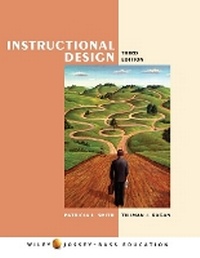
Instructional Design
3rd Edition
Published on 11. November 2004
Book
Paperback/Softback
383 pages
978-0-471-39353-5 (ISBN)
Description
Basic principles and practical strategies to promote learning in any setting! From K-12 to corporate training settings-the Third Edition of Patricia Smith and Tillman Ragan' s thorough, research-based text equips you with the solid foundation you need to design instruction and environments that really facilitate learning. Now updated to reflect the latest thinking in the field, this new edition offers not only extensive procedural assistance but also emphasizes the basic principles upon which most of the models and procedures in the instructional design field are built. The text presents a comprehensive treatment of the instructional design process, including analysis, strategy design, assessment, and evaluation.
More details
Other editions
Previous edition
Patricia L. Smith | Tillman J. Ragan
Instructional Design
Book
01/1999
2nd Edition
Wiley
€53.18
Article exhausted; check for reprint
Persons
Patricia L. Smith and Tillman J. Ragan are the authors of Instructional Design, 3rd Edition, published by Wiley.
Content
INTRODUCTION. One. Introduction to Instructional Design. Two. Foundations of Instructional Design. ANALYSIS AND ASSESSMENT. Three. Instructional Analysis: Analyzing the Learning Context. Four. Instructional Analysis: Analyzing the Learner. Five. Instructional Analysis: Analyzing the Learning Task. Six. Assessing Learning from Instruction. INSTRUCTIONAL STRATEGIES. Seven. A Framework for Instructional Strategy Design. Eight. Strategies for Declarative Knowledge Instruction. Nine. Strategies for Instruction Leading to Concept Learning. Ten. Strategies for Instruction Leading to Learning Procedures. Eleven. Strategies for Instruction Leading to Principle Learning. Tweleve. Strategies for Problem-Solving Instruction. Thirteen. Strategies for Cognitive Strategy Instruction. Fourteen. Strategies for Attitude Change, Motivation, and Interest. Fifteen. Strategies for Psychomotor Skill Learning. Sixteen. Marco Strategies: Integration of Types of Learning. IMPLEMENTATION, MANAGEMENT, AND EVALUATION. Seventeen. Implementation. Eighteen. Management of Instruction. Nineteen. Formative and Summative Evaluation. CONCLUSION. Twenty. Conclusions and Future Directions.