

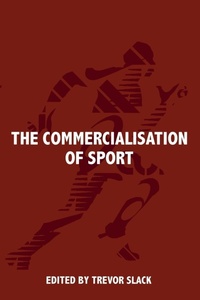
The Commercialisation of Sport
Published on 9. March 2005
Book
Paperback/Softback
368 pages
978-0-7146-8078-1 (ISBN)
Description
What does commercialisation mean for the future of sport?
Modern sports links to commerce are highly visible. Stadiums and arenas bear the names of businesses, while sponsors' logos appear on athletes' clothing and equipment, on the facilities in which they play, and in the titles of the events in which they compete. Media companies pay vast sums for the rights to broadcast sports events, and advertisers pay a premium to promote products during the screening of these events. Cities invest, at the expense of other social projects, in the staging of major sports events and to attract professional teams to their areas. Star athletes are transferred for multi-million fees and professional sport franchises are sold for sums higher than the gross domestic products of some countries. Even recreational athletes are subject to a constant barrage of commercial pressures to improve their game.
Sport's links to commerce have intensified over the past 30 years but have been subjected to little academic analysis. This book represents an attempt to fill that significant gap in the literature by examining five different aspects of the commercialisation of sport:
? The sports industry
? The public sector
? The commercialisation of 'amateur' sport
? Sport and television
? Sports sponsorship
There has been a rapid and widespread commercialisation of sport and it is vital that we now raise critical questions and analyse the changes that have taken place.
Modern sports links to commerce are highly visible. Stadiums and arenas bear the names of businesses, while sponsors' logos appear on athletes' clothing and equipment, on the facilities in which they play, and in the titles of the events in which they compete. Media companies pay vast sums for the rights to broadcast sports events, and advertisers pay a premium to promote products during the screening of these events. Cities invest, at the expense of other social projects, in the staging of major sports events and to attract professional teams to their areas. Star athletes are transferred for multi-million fees and professional sport franchises are sold for sums higher than the gross domestic products of some countries. Even recreational athletes are subject to a constant barrage of commercial pressures to improve their game.
Sport's links to commerce have intensified over the past 30 years but have been subjected to little academic analysis. This book represents an attempt to fill that significant gap in the literature by examining five different aspects of the commercialisation of sport:
? The sports industry
? The public sector
? The commercialisation of 'amateur' sport
? Sport and television
? Sports sponsorship
There has been a rapid and widespread commercialisation of sport and it is vital that we now raise critical questions and analyse the changes that have taken place.
More details
Series
Language
English
Place of publication
London
United Kingdom
Publishing group
Taylor & Francis Ltd
Target group
College/higher education
Dimensions
Height: 234 mm
Width: 156 mm
Thickness: 20 mm
Weight
562 gr
ISBN-13
978-0-7146-8078-1 (9780714680781)
Copyright in bibliographic data and cover images is held by Nielsen Book Services Limited or by the publishers or by their respective licensors: all rights reserved.
Schweitzer Classification
Other editions
Additional editions
Person
Trevor Slack is Professor and Canada Research Chair in Sport Management at the University of Alberta. He is the editor of the European Sport Management Quarterly and has research interests in the areas of organisational strategy and change.
Content
Notes on Contributors, Series Editor's Foreword, Foreword, Acknowledgements, Prologue, PART I: THE SPORTS INDUSTRY, PART II: THE PUBLIC SECTOR AND THE COMMERCIALISATION OF SPORT, PART III: THE COMMERCIALISATION OF 'AMATEUR' SPORT, PART IV: TELEVISION AND THE COMMERCIALISATION OF SPORT, PART V: SPORT SPONSORSHIP, Index