

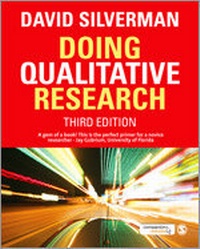
Doing Qualitative Research
3rd Edition
Published on 16. November 2009
Book
Paperback/Softback
472 pages
978-1-84860-034-8 (ISBN)
Description
Lecturers, click here to request an e-inspection copy of this text
Written in a lively, accessible style, Doing Qualitative Research, 3rd Edition provides a step-by-step guide to all the questions students ask when beginning their first research project. Silverman demonstrates how to learn the craft of qualitative research by applying knowledge about different methods to actual data. He provides practical advice on key issues such as: defining 'originality' and narrowing down a topic; keeping a research diary and writing a research report;and presenting research to different audiences.
Doing Qualitative Research, 3rd Edition, is substantially updated and revised. Among its new, attractive features are:
- problem-based format, making extensive use of statements and queries by recent research students
- two new chapters on data-gathering and ethical issues in student research
- material relevant for both Masters and PhD students
- examples from many social science disciplines and from Asia, Africa, the United States and Europe
- detailed discussion of different analytical models used in research
- additional material on the treatment of visual data
- an updated chapter on computer-aided qualitative data analysis
- boxed tips and links to websites throughout the text
- an expanded index and glossary
- a companion website which includes further readings and exercises
Each stage in the research process is grounded in worked examples based on the experiences of real students, with exercises designed both to test readers' knowledge and to encourage the development of practical skills.
This hugely popular textbook is essential reading for anyone planning their own research project.
David Silverman is Professor Emeritus, Sociology Department, Goldsmiths College and Visiting Professor, Management Department, Kings College, University of London.
Written in a lively, accessible style, Doing Qualitative Research, 3rd Edition provides a step-by-step guide to all the questions students ask when beginning their first research project. Silverman demonstrates how to learn the craft of qualitative research by applying knowledge about different methods to actual data. He provides practical advice on key issues such as: defining 'originality' and narrowing down a topic; keeping a research diary and writing a research report;and presenting research to different audiences.
Doing Qualitative Research, 3rd Edition, is substantially updated and revised. Among its new, attractive features are:
- problem-based format, making extensive use of statements and queries by recent research students
- two new chapters on data-gathering and ethical issues in student research
- material relevant for both Masters and PhD students
- examples from many social science disciplines and from Asia, Africa, the United States and Europe
- detailed discussion of different analytical models used in research
- additional material on the treatment of visual data
- an updated chapter on computer-aided qualitative data analysis
- boxed tips and links to websites throughout the text
- an expanded index and glossary
- a companion website which includes further readings and exercises
Each stage in the research process is grounded in worked examples based on the experiences of real students, with exercises designed both to test readers' knowledge and to encourage the development of practical skills.
This hugely popular textbook is essential reading for anyone planning their own research project.
David Silverman is Professor Emeritus, Sociology Department, Goldsmiths College and Visiting Professor, Management Department, Kings College, University of London.
Reviews / Votes
'A most welcome addition to his own corpus of works on qualitative research, in particular, and to the growing body of texts on the subject, in general...The strengths of this book are too many to mention. Students and seasoned researchers alike are surely well advised to get hold of this book...All in all, the book is a cutting-edge textbook on qualitative research and though it does not deal with all concepts discussed in a sustained manner (which is of course the usual drawback of books of this range and scope), Silverman raises the bar for future authors of textbooks on qualitative research' -Qualitative Research
'Earlier editions of this book have been highly regarded and well used by students and teachers of qualitative research...The text is certainly accessible to students from a range of disciplines, including education' -
British Journal of Sociology of Education
'David Silverman's new edition of Doing Qualitative Research is a cutting-edge compendium of what students want to know about conducting and completing a qualitative study. His book sets a new standard for an inclusive student-friendly manual that cuts across disciplines and methods, while systematically unveiling ordinary research practice. Silverman includes sage advice gained through his many years of research and dissertation supervision. He offers insider tips, shortcuts, and warnings that will keep students involved in their projects and guide them through each step of the process. Throughout the book, Silverman shares his students' stories of their research experience and the obstacles they encountered along the way. In short, Doing Qualitative Research is an accessible, engaging text that sparkles with ideas, insight, and information' - Kathy Charmaz, Department of Sociology, Sonoma State University, USA 'A most welcome addition to his own corpus of works on qualitative research, in particular, and to the growing body of texts on the subject, in general...The strengths of this book are too many to mention. Students and seasoned researchers alike are surely well advised to get hold of this book...All in all, the book is a cutting-edge textbook on qualitative research and though it does not deal with all concepts discussed in a sustained manner (which is of course the usual drawback of books of this range and scope), Silverman raises the bar for future authors of textbooks on qualitative research' -
Qualitative Research
'Earlier editions of this book have been highly regarded and well used by students and teachers of qualitative research...The text is certainly accessible to students from a range of disciplines, including education' -
British Journal of Sociology of Education
'David Silverman's new edition of Doing Qualitative Research is a cutting-edge compendium of what students want to know about conducting and completing a qualitative study. His book sets a new standard for an inclusive student-friendly manual that cuts across disciplines and methods, while systematically unveiling ordinary research practice. Silverman includes sage advice gained through his many years of research and dissertation supervision. He offers insider tips, shortcuts, and warnings that will keep students involved in their projects and guide them through each step of the process. Throughout the book, Silverman shares his students' stories of their research experience and the obstacles they encountered along the way. In short, Doing Qualitative Research is an accessible, engaging text that sparkles with ideas, insight, and information' - Kathy Charmaz, Department of Sociology, Sonoma State University, USA -- Anne Chartier
More details
Edition
3rd Revised edition
Language
English
Place of publication
London
United Kingdom
Target group
College/higher education
Edition type
Revised edition
Dimensions
Height: 232 mm
Width: 186 mm
Weight
840 gr
ISBN-13
978-1-84860-034-8 (9781848600348)
Copyright in bibliographic data and cover images is held by Nielsen Book Services Limited or by the publishers or by their respective licensors: all rights reserved.
Schweitzer Classification
Other editions
New editions
Book
04/2013
4th Edition
SAGE Publications Ltd
€59.67
Article exhausted; check for reprint
Previous edition
Book
11/2004
2nd Edition
SAGE Publications Inc
€57.19
Article exhausted; check for reprint
Person
David Silverman trained as a sociologist at the London School of Economics and the University of California, Los Angeles. He taught for 32 years at Goldsmiths, University of London, where he is now Emeritus Professor in the Sociology Department as well as Visiting Professor in the Business Schools, King's College, London, Leeds University and University of Technology Sydney and Adjunct Professor, Faculty of Education, Queensland University of Technology. He is interested in conversation and discourse analysis and he has researched medical consultations, shelters for homeless people and HIV-test counselling.
He is the author of Doing Qualitative Research (sixth edition, 2022) and A Very Short, Fairly Interesting, Reasonably Cheap Book about Qualitative Research (second edition, 2013c). He is the editor of Qualitative Research (fifth edition, 2021) and the Sage series Introducing Qualitative Methods. In recent years, he has offered short, hands-on workshops in qualitative research for universities in Europe, Asia, Africa and Australia.
Now retired from full-time work, he aims to watch 100 days of county cricket a year. He also enjoys spending time with his grandchildren and great-grandsons as well as voluntary work in an old people's home where he chats and sings with residents.
He is the author of Doing Qualitative Research (sixth edition, 2022) and A Very Short, Fairly Interesting, Reasonably Cheap Book about Qualitative Research (second edition, 2013c). He is the editor of Qualitative Research (fifth edition, 2021) and the Sage series Introducing Qualitative Methods. In recent years, he has offered short, hands-on workshops in qualitative research for universities in Europe, Asia, Africa and Australia.
Now retired from full-time work, he aims to watch 100 days of county cricket a year. He also enjoys spending time with his grandchildren and great-grandsons as well as voluntary work in an old people's home where he chats and sings with residents.
Content
PART ONE: INTRODUCTION
How to Use This Book
What You Can (and Can't) Do with Qualitative Research
Introduction
Why Do Students Use Qualitative Methods?
Are Qualitative Methods Always the Best?
Should You Use Qualitative Methods?
Concluding Remarks
The Research Experience I
Introduction
Moira's Research Diary
Sally's Research Diary
Simon's Research Diary
Concluding Remarks
The Research Experience II
Introduction
Interviews
Ethnographies
Texts
Audio Data
Visual Data
Multiple Methods
Concluding Remarks
What Counts as 'Originality'?
Introduction
Originality
Being a 'Professional'
Independent Critical Thought
Concluding Remarks
PART TWO: STARTING OUT
Selecting a Topic
Introduction
Workable Research Questions
Simplistic Inductivism
The 'Kitchen Sink' Gambit
The Grand Theorist
Strategies for Simplistic Inductivists
Strategies for 'Kitchen Sinkers'
Strategies for Grand Theorists
Strategies for All Researchers
Concluding Remarks
Using Theories
Introduction
How Theoretical Models Shape Research
The Different Languages of Qualitative Research
Theories, Models and Hypotheses
Examples
Concluding Remarks
Choosing a Methodology
Introduction
Qualitative or Quantitative?
Your Research Strategy
Choosing a Methodology: A Case Study
Naturally Occurring Data?
Multiple Methods?
Concluding Remarks
Selecting a Case
Introduction
What Is a Case Study?
Generalizing from Cases
Types of Case Studies
Combining Qualitative Research with Quantitative Measures of Populations
Purposive Sampling
Theoretical Sampling
Generalizability Is Present in a Single Case
Concluding Remarks
Ethical Research
Introduction
The Standards of Ethical Research
Why Ethics Matter for Your Research
Ethical Guidelines in Practice
Complex Ethical Issues
Research Governance
Conclusion: Managing Ethical Demands
Writing a Research Proposal
Introduction
Aim for Crystal Clarity
Plan before You Write
Be Persuasive
Be Practical
Make Broader Links
Concluding Remarks
PART THREE: COLLECTING AND ANALYZING YOUR DATA
Collecting Your Data
Collecting Interview Data
Collecting Ethnographic Data
Concluding Remarks
Developing Data Analysis
Introduction
Kick-Starting Data Analysis
A Case Study
Interviews
Fieldnotes
Transcripts
Visual Data
Concluding Remarks
Using Computers to Analyze Qualitative Data - Clive Seale
Introduction
What CAQDAS Software Can Do For You
Advantages of CAQDAS
Limitations and Disadvantages
Theory Building With CAQDAS
Keyword Analysis
Concluding Remarks
Quality in Qualitative Research
Introduction
Validity
Reliability
Concluding Remarks
Evaluating Qualitative Research
Introduction
Two Guides For Evaluating Research
Four Quality Criteria
Applying Quality Criteria
Four Quality Issues Revisited
Concluding Remarks
PART FOUR: WRITING UP
The First Few Pages
Introduction
The Title
The Abstract
The List of Contents
The Introduction
Concluding Remarks
The Literature Review Chapter
Recording Your Reading
Writing Your Literature Review
Practical Questions
Principles
Do You Need A Literature Review Chapter?
Concluding Remarks
The Methodology Chapter
Introduction
What Should The Methodology Chapter Contain?
A Natural History Chapter?
Concluding Remarks
Writing Your Data Chapters
Introduction
The Macrostructure
The Microstructure
Tightening Up
Concluding Remarks
Your Final Chapter
Introduction
The Final Chapter as Mutual Stimulation
What Exactly Should Your Final Chapter Contain?
Confessions And Trumpets
Theorizing As Thinking Through Data
Writing For Audiences
Why Your Final Chapter Can Be Fun
Concluding Remarks
PART FIVE: GETTING SUPPORT
Making Good Use of Your Supervisor
Introduction
Supervision Horror Stories
Student And Supervisor Expectations
The Early Stages
The Later Stages
Standards Of Good Practice
Concluding Remarks
Getting Feedback
Introduction
Writing
Speaking
The Art Of Presenting Research
Feedback From The People You Study
Concluding Remarks
PART SIX: REVIEW
Effective Qualitative Research
Introduction
Keep It Simple
Take Advantage Of Using Qualitative Data
Avoid Drowning In Data
Avoid Journalism
Concluding Remarks
PART SEVEN: THE AFTERMATH
Surviving an Oral Examination
Introduction
Viva Horror Stories
Preparing For Your Oral
Doing The Oral
Outcomes
Revising Your Thesis After The Oral
A Case Study
Concluding Remarks
Getting Published
Introduction
The Backstage Politics Of Publishing
Strategic Choices
What Journals Are Looking For
Reviewers' Comments
How To Write A Short Journal Article
Concluding Remarks
Audiences
Introduction
The Policy-Making Audience
The Practitioner Audience
The Lay Audience
Concluding Remarks
Finding a Job
Introduction
Learning About Vacancies
Getting On A Shortlist
The Job Interview
Concluding Remarks
How to Use This Book
What You Can (and Can't) Do with Qualitative Research
Introduction
Why Do Students Use Qualitative Methods?
Are Qualitative Methods Always the Best?
Should You Use Qualitative Methods?
Concluding Remarks
The Research Experience I
Introduction
Moira's Research Diary
Sally's Research Diary
Simon's Research Diary
Concluding Remarks
The Research Experience II
Introduction
Interviews
Ethnographies
Texts
Audio Data
Visual Data
Multiple Methods
Concluding Remarks
What Counts as 'Originality'?
Introduction
Originality
Being a 'Professional'
Independent Critical Thought
Concluding Remarks
PART TWO: STARTING OUT
Selecting a Topic
Introduction
Workable Research Questions
Simplistic Inductivism
The 'Kitchen Sink' Gambit
The Grand Theorist
Strategies for Simplistic Inductivists
Strategies for 'Kitchen Sinkers'
Strategies for Grand Theorists
Strategies for All Researchers
Concluding Remarks
Using Theories
Introduction
How Theoretical Models Shape Research
The Different Languages of Qualitative Research
Theories, Models and Hypotheses
Examples
Concluding Remarks
Choosing a Methodology
Introduction
Qualitative or Quantitative?
Your Research Strategy
Choosing a Methodology: A Case Study
Naturally Occurring Data?
Multiple Methods?
Concluding Remarks
Selecting a Case
Introduction
What Is a Case Study?
Generalizing from Cases
Types of Case Studies
Combining Qualitative Research with Quantitative Measures of Populations
Purposive Sampling
Theoretical Sampling
Generalizability Is Present in a Single Case
Concluding Remarks
Ethical Research
Introduction
The Standards of Ethical Research
Why Ethics Matter for Your Research
Ethical Guidelines in Practice
Complex Ethical Issues
Research Governance
Conclusion: Managing Ethical Demands
Writing a Research Proposal
Introduction
Aim for Crystal Clarity
Plan before You Write
Be Persuasive
Be Practical
Make Broader Links
Concluding Remarks
PART THREE: COLLECTING AND ANALYZING YOUR DATA
Collecting Your Data
Collecting Interview Data
Collecting Ethnographic Data
Concluding Remarks
Developing Data Analysis
Introduction
Kick-Starting Data Analysis
A Case Study
Interviews
Fieldnotes
Transcripts
Visual Data
Concluding Remarks
Using Computers to Analyze Qualitative Data - Clive Seale
Introduction
What CAQDAS Software Can Do For You
Advantages of CAQDAS
Limitations and Disadvantages
Theory Building With CAQDAS
Keyword Analysis
Concluding Remarks
Quality in Qualitative Research
Introduction
Validity
Reliability
Concluding Remarks
Evaluating Qualitative Research
Introduction
Two Guides For Evaluating Research
Four Quality Criteria
Applying Quality Criteria
Four Quality Issues Revisited
Concluding Remarks
PART FOUR: WRITING UP
The First Few Pages
Introduction
The Title
The Abstract
The List of Contents
The Introduction
Concluding Remarks
The Literature Review Chapter
Recording Your Reading
Writing Your Literature Review
Practical Questions
Principles
Do You Need A Literature Review Chapter?
Concluding Remarks
The Methodology Chapter
Introduction
What Should The Methodology Chapter Contain?
A Natural History Chapter?
Concluding Remarks
Writing Your Data Chapters
Introduction
The Macrostructure
The Microstructure
Tightening Up
Concluding Remarks
Your Final Chapter
Introduction
The Final Chapter as Mutual Stimulation
What Exactly Should Your Final Chapter Contain?
Confessions And Trumpets
Theorizing As Thinking Through Data
Writing For Audiences
Why Your Final Chapter Can Be Fun
Concluding Remarks
PART FIVE: GETTING SUPPORT
Making Good Use of Your Supervisor
Introduction
Supervision Horror Stories
Student And Supervisor Expectations
The Early Stages
The Later Stages
Standards Of Good Practice
Concluding Remarks
Getting Feedback
Introduction
Writing
Speaking
The Art Of Presenting Research
Feedback From The People You Study
Concluding Remarks
PART SIX: REVIEW
Effective Qualitative Research
Introduction
Keep It Simple
Take Advantage Of Using Qualitative Data
Avoid Drowning In Data
Avoid Journalism
Concluding Remarks
PART SEVEN: THE AFTERMATH
Surviving an Oral Examination
Introduction
Viva Horror Stories
Preparing For Your Oral
Doing The Oral
Outcomes
Revising Your Thesis After The Oral
A Case Study
Concluding Remarks
Getting Published
Introduction
The Backstage Politics Of Publishing
Strategic Choices
What Journals Are Looking For
Reviewers' Comments
How To Write A Short Journal Article
Concluding Remarks
Audiences
Introduction
The Policy-Making Audience
The Practitioner Audience
The Lay Audience
Concluding Remarks
Finding a Job
Introduction
Learning About Vacancies
Getting On A Shortlist
The Job Interview
Concluding Remarks