


Doing Qualitative Research
A Practical Handbook
2nd Edition
Published on 18. November 2004
Book
Paperback/Softback
416 pages
978-1-4129-0197-0 (ISBN)
Description
'Doing Qualitative Research has been the single most useful text in my academic learning and now my teaching. Barely a working day goes by without me drawing on one of [Silverman's] many practical pointers or examples of sound practice' - Dr Bridget Hamilton, University of Melbourne
David Silverman's seminal Doing Qualitative Research can justifiably claim to be `the supervisor in your pocket' for all PhD and Masters students embarking on their own qualitative research project.
This hugely popular textbook has been fully revised and updated and is one of the few books available that can claim to be essential reading for anyone planning their own research project.
Written in a lively, accessible style, this step-by-step guide provides answers to all the questions students ask when beginning their first research project. Silverman demonstrates how to learn the craft of qualitative research by applying knowledge about different methods to actual data. He provides practical advice on key issues, such as: defining `originality' and narrowing down a topic; keeping a research diary and writing a research report; and presenting research to different audiences.
Features of Doing Qualitative Research: Second Edition include:
- six new chapters
- case studies of students' own experiential accounts of doing research
- essential guidance on practical issues such as working with your supervisor or writing up your research
- end-of-chapter 'researcher's checklists'
- a range of examples from across the full range of social science disciplines, including sociology, education, health studies and business studies
- the latest discussions of CAQDAS and E-research
- an all new and extended methods glossary
Doing Qualitative Research: Second Edition retains Silverman's uniquely accessible, hands-on style, walking the student through every aspect of the process of actually doing a qualitative research project.
Packed with case studies and examples of students' experiences, the book has many features to aid study, including overviews, summaries of key skills and a glossary of terms. Each stage in the research process is grounded in worked examples based on the experiences of real students, with exercises designed both to test readers' knowledge and to encourage the development of practical skills.
David Silverman's seminal Doing Qualitative Research can justifiably claim to be `the supervisor in your pocket' for all PhD and Masters students embarking on their own qualitative research project.
This hugely popular textbook has been fully revised and updated and is one of the few books available that can claim to be essential reading for anyone planning their own research project.
Written in a lively, accessible style, this step-by-step guide provides answers to all the questions students ask when beginning their first research project. Silverman demonstrates how to learn the craft of qualitative research by applying knowledge about different methods to actual data. He provides practical advice on key issues, such as: defining `originality' and narrowing down a topic; keeping a research diary and writing a research report; and presenting research to different audiences.
Features of Doing Qualitative Research: Second Edition include:
- six new chapters
- case studies of students' own experiential accounts of doing research
- essential guidance on practical issues such as working with your supervisor or writing up your research
- end-of-chapter 'researcher's checklists'
- a range of examples from across the full range of social science disciplines, including sociology, education, health studies and business studies
- the latest discussions of CAQDAS and E-research
- an all new and extended methods glossary
Doing Qualitative Research: Second Edition retains Silverman's uniquely accessible, hands-on style, walking the student through every aspect of the process of actually doing a qualitative research project.
Packed with case studies and examples of students' experiences, the book has many features to aid study, including overviews, summaries of key skills and a glossary of terms. Each stage in the research process is grounded in worked examples based on the experiences of real students, with exercises designed both to test readers' knowledge and to encourage the development of practical skills.
Reviews / Votes
'Doing Qualitative Research has been the single most useful text in my academic learning and now my teaching. Barely a working day goes by without me drawing on one of [Silverman's] many practical pointers or examples of sound practice' - Dr Bridget Hamilton, University of MelbourneMore details
Edition
2nd Revised edition
Language
English
Place of publication
Thousand Oaks
United States
Target group
College/higher education
Edition type
Revised edition
Dimensions
Height: 242 mm
Width: 170 mm
Weight
690 gr
ISBN-13
978-1-4129-0197-0 (9781412901970)
Copyright in bibliographic data and cover images is held by Nielsen Book Services Limited or by the publishers or by their respective licensors: all rights reserved.
Schweitzer Classification
Other editions
New editions
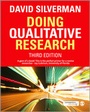
David Silverman
Doing Qualitative Research
Book
11/2009
3rd Edition
SAGE Publications Ltd
€59.67
Article exhausted; check for reprint
Previous edition
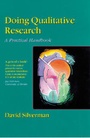
Book
11/1999
SAGE Publications Inc
€46.03
Article exhausted; check for reprint
Person
David Silverman trained as a sociologist at the London School of Economics and the University of California, Los Angeles. He taught for 32 years at Goldsmiths, University of London, where he is now Emeritus Professor in the Sociology Department as well as Visiting Professor in the Business Schools, King's College, London, Leeds University and University of Technology Sydney and Adjunct Professor, Faculty of Education, Queensland University of Technology. He is interested in conversation and discourse analysis and he has researched medical consultations, shelters for homeless people and HIV-test counselling.
He is the author of Doing Qualitative Research (sixth edition, 2022) and A Very Short, Fairly Interesting, Reasonably Cheap Book about Qualitative Research (second edition, 2013c). He is the editor of Qualitative Research (fifth edition, 2021) and the Sage series Introducing Qualitative Methods. In recent years, he has offered short, hands-on workshops in qualitative research for universities in Europe, Asia, Africa and Australia.
Now retired from full-time work, he aims to watch 100 days of county cricket a year. He also enjoys spending time with his grandchildren and great-grandsons as well as voluntary work in an old people's home where he chats and sings with residents.
He is the author of Doing Qualitative Research (sixth edition, 2022) and A Very Short, Fairly Interesting, Reasonably Cheap Book about Qualitative Research (second edition, 2013c). He is the editor of Qualitative Research (fifth edition, 2021) and the Sage series Introducing Qualitative Methods. In recent years, he has offered short, hands-on workshops in qualitative research for universities in Europe, Asia, Africa and Australia.
Now retired from full-time work, he aims to watch 100 days of county cricket a year. He also enjoys spending time with his grandchildren and great-grandsons as well as voluntary work in an old people's home where he chats and sings with residents.
Content
PART ONE: INTRODUCTION
How to Use This Book
What You Can (and Can't) do with Qualitative Research
The Research Experience I
The Research Experience II
What Counts as 'Originality'
PART TWO: STARTING OUT
Selecting a Topic
Using Theories
Choosing a Methodology
Selecting a Case
Writing a Research Proposal
PART THREE: ANALYSING YOUR DATA
Beginning Data Analysis
Developing Data Analysis
Using Computers to Analyse Qualitative Data - Clive Seale
Quality in Qualitative Research
Evaluating Qualitative Research
PART FOUR: KEEPING IN TOUCH
Keeping a Record
Relations in the Field
Making Good Use of Your Supervisor
Getting Feedback
PART FIVE: WRITING UP
The First Few Pages
The Literature Review Chapter
The Methodology Chapter
Writing your Data Chapters
The Final Chapter
PART SIX: THE PhD EXAMINATION
Surviving a PhD Oral
PART SEVEN: REVIEW
Effective Qualitative Research
PART EIGHT: THE AFTERMATH
Getting Published
Audiences
Finding a Job
How to Use This Book
What You Can (and Can't) do with Qualitative Research
The Research Experience I
The Research Experience II
What Counts as 'Originality'
PART TWO: STARTING OUT
Selecting a Topic
Using Theories
Choosing a Methodology
Selecting a Case
Writing a Research Proposal
PART THREE: ANALYSING YOUR DATA
Beginning Data Analysis
Developing Data Analysis
Using Computers to Analyse Qualitative Data - Clive Seale
Quality in Qualitative Research
Evaluating Qualitative Research
PART FOUR: KEEPING IN TOUCH
Keeping a Record
Relations in the Field
Making Good Use of Your Supervisor
Getting Feedback
PART FIVE: WRITING UP
The First Few Pages
The Literature Review Chapter
The Methodology Chapter
Writing your Data Chapters
The Final Chapter
PART SIX: THE PhD EXAMINATION
Surviving a PhD Oral
PART SEVEN: REVIEW
Effective Qualitative Research
PART EIGHT: THE AFTERMATH
Getting Published
Audiences
Finding a Job