

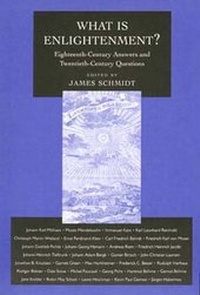
What Is Enlightenment?
Eighteenth-Century Answers and Twentieth-Century Questions
1st Edition
Published on 8. September 1996
Book
Paperback/Softback
500 pages
978-0-520-20226-9 (ISBN)
Description
This collection contains the first English translations of a group of important eighteenth-century German essays that address the question, 'What is Enlightenment?'. The book also includes newly translated and newly written interpretive essays by leading historians and philosophers, which examine the origins of eighteenth-century debate on Enlightenment and explore its significance for the present. In recent years, critics from across the political and philosophical spectrum have condemned the Enlightenment for its complicity with any number of present-day social and cultural maladies. It has rarely been noticed, however, that at the end of the Enlightenment, German thinkers had already begun a scrutiny of their age so wide-ranging that there are few subsequent criticisms that had not been considered by the close of the eighteenth century. Among the concerns these essays address are the importance of freedom of expression, the relationship between faith and reason, and the responsibility of the Enlightenment for revolutions.
Included are translations of works by such well-known figures as Immanuel Kant, Moses Mendelssohn, Johann Gottlieb Fichte, and Johann Georg Hamann, as well as essays by thinkers whose work is virtually unknown to American readers. These eighteenth-century texts are set against interpretive essays by such major twentieth-century figures as Max Horkheimer, Jurgen Habermas, and Michel Foucault.
Included are translations of works by such well-known figures as Immanuel Kant, Moses Mendelssohn, Johann Gottlieb Fichte, and Johann Georg Hamann, as well as essays by thinkers whose work is virtually unknown to American readers. These eighteenth-century texts are set against interpretive essays by such major twentieth-century figures as Max Horkheimer, Jurgen Habermas, and Michel Foucault.
More details
Series
Edition
First Edition
Language
English
Place of publication
Berkerley
United States
Target group
Professional and scholarly
Product notice
Paperback (trade)
Dimensions
Height: 229 mm
Width: 152 mm
Thickness: 36 mm
Weight
771 gr
ISBN-13
978-0-520-20226-9 (9780520202269)
Copyright in bibliographic data and cover images is held by Nielsen Book Services Limited or by the publishers or by their respective licensors: all rights reserved.
Schweitzer Classification
Other editions
Additional editions
E-Book
09/1996
1st Edition
Naval Institute Press
€40.99
Available for download
Person
James Schmidt is Chair of the Department of Political Science at Boston University. He is author of Maurice Merleau-Ponty: Between Phenomenology and Structuralism (1985).
Content
PREFACE I
Introduction: What Is Enlightenment?
A Question, Its Context, and Some Consequences
James Schmidt
Part I. THE EIGHTEENTH-CENTURY DEBATE
1. The Question and Some Answers
What Is to Be Done toward the Enlightenment of the Citizenry? (1783)
Johann Karl Mohsen
On the Question: What Is Enlightenment? (1784)
Moses Mendelssohn
An Answer to the Question: What Is Enlightenment? (1784)
Immanuel Kant
Thoughts on Enlightenment (1784)
Karl Leonhard Reinhold
A Couple of Gold Nuggets, from the ... Wastepaper,
or Six Answers to Six Questions (1789)
Christoph Martin Wieland
2. The Public Use of Reason
On Freedom of Thought and of the Press: For Princes, Ministers, and Writers (1784)
On Freedom of the Press and Its Limits: For Consideration by Rulers, Censors, and Writers.(l787)
Carl Friedrich Bahrdt
Publicity (1792)
Friedrich Karl von Moser
Reclamation of the Freedom of Thought from the Princes of Europe, Who Have Oppressed It Until Now (1793)
Johann Gottlieb Fichte
3. Faith and Enlightenment
Letter to ChristianJacob Kraus (18 December 1784) ?
Johann Georg Hamann
Metacritique on the Purism of Reason (1784)
Johann Georg Hamann
On Enlightenment: Is It and Could It Be Dangerous to the State, to Religion, or Dangerous in General? A Word to
Be Heeded by Princes, Statesmen, and Clergy (1788)
Andreas Riem
4. The Politics of Enlightenment
Something Lessing Said: A Commentary on Journeys of the Popes(I782)
Friedrich Heinrich Jacobi
True and False Political Enlightenment (1792)
Friedrich Karl von Moser
On the Influence of Enlightenment on Revolutions (1794)
Johann Heinrich Tuftrunk
Does Enlightenment Cause Revolutions? (1795)
Johann Adam Bergk
Part II. HISTORICAL REFLECTIONS
The Berlin Wednesday Society
Gunter Birtsch
The Subversive Kant: The Vocabulary of "Public" and "Publicity"
John Christian Laursen
On Enlightenment for the Common Man
Jonathan B. Knudsen
Modern Culture Comes of Age: Hamann versus Kant on the Root Metaphor of Enlightenment
Garrett Green
Jacobi's Critique of the Enlightenment
Dale E. Snow
Early Romanticism and the Aujkliirung
Frederick C. Beiser
Progress: Ideas, Skepticism, and CritiqueThe
Heritage of the Enlightenment
Rudolph Vierhaus
Part III. TWENTIETH-CENTURY QUESTIONS
What Is Enlightenment?
Rudiger Bittner
Reason Against Itself: Some Remarks on Enlightenment
Max Horkheimer
What Is Enlightened Thinking?
Georg Picht
What Is Critique?
Michel Foucault
The Unity of Reason in the Diversity oflts Voices
]iirgen Habermas
The Battle of Reason with the Imagination
Hartmut Bohme and Gernot Bohme
The Failure of Kant's Imagination
Jane Kneller
The Gender of Enlightenment
Robin May Schott
Autonomy, Individuality, and Self-Determination
Lewis Hinchman
Enlightened Cosmopolitanism: The Political Perspective
of the Kantian "Sublime"
Kevin Paul Geiman
CONTRIBUTORS TO PARTS II AND III
SELECT BIBLIOGRAPHY
INDEX
Introduction: What Is Enlightenment?
A Question, Its Context, and Some Consequences
James Schmidt
Part I. THE EIGHTEENTH-CENTURY DEBATE
1. The Question and Some Answers
What Is to Be Done toward the Enlightenment of the Citizenry? (1783)
Johann Karl Mohsen
On the Question: What Is Enlightenment? (1784)
Moses Mendelssohn
An Answer to the Question: What Is Enlightenment? (1784)
Immanuel Kant
Thoughts on Enlightenment (1784)
Karl Leonhard Reinhold
A Couple of Gold Nuggets, from the ... Wastepaper,
or Six Answers to Six Questions (1789)
Christoph Martin Wieland
2. The Public Use of Reason
On Freedom of Thought and of the Press: For Princes, Ministers, and Writers (1784)
On Freedom of the Press and Its Limits: For Consideration by Rulers, Censors, and Writers.(l787)
Carl Friedrich Bahrdt
Publicity (1792)
Friedrich Karl von Moser
Reclamation of the Freedom of Thought from the Princes of Europe, Who Have Oppressed It Until Now (1793)
Johann Gottlieb Fichte
3. Faith and Enlightenment
Letter to ChristianJacob Kraus (18 December 1784) ?
Johann Georg Hamann
Metacritique on the Purism of Reason (1784)
Johann Georg Hamann
On Enlightenment: Is It and Could It Be Dangerous to the State, to Religion, or Dangerous in General? A Word to
Be Heeded by Princes, Statesmen, and Clergy (1788)
Andreas Riem
4. The Politics of Enlightenment
Something Lessing Said: A Commentary on Journeys of the Popes(I782)
Friedrich Heinrich Jacobi
True and False Political Enlightenment (1792)
Friedrich Karl von Moser
On the Influence of Enlightenment on Revolutions (1794)
Johann Heinrich Tuftrunk
Does Enlightenment Cause Revolutions? (1795)
Johann Adam Bergk
Part II. HISTORICAL REFLECTIONS
The Berlin Wednesday Society
Gunter Birtsch
The Subversive Kant: The Vocabulary of "Public" and "Publicity"
John Christian Laursen
On Enlightenment for the Common Man
Jonathan B. Knudsen
Modern Culture Comes of Age: Hamann versus Kant on the Root Metaphor of Enlightenment
Garrett Green
Jacobi's Critique of the Enlightenment
Dale E. Snow
Early Romanticism and the Aujkliirung
Frederick C. Beiser
Progress: Ideas, Skepticism, and CritiqueThe
Heritage of the Enlightenment
Rudolph Vierhaus
Part III. TWENTIETH-CENTURY QUESTIONS
What Is Enlightenment?
Rudiger Bittner
Reason Against Itself: Some Remarks on Enlightenment
Max Horkheimer
What Is Enlightened Thinking?
Georg Picht
What Is Critique?
Michel Foucault
The Unity of Reason in the Diversity oflts Voices
]iirgen Habermas
The Battle of Reason with the Imagination
Hartmut Bohme and Gernot Bohme
The Failure of Kant's Imagination
Jane Kneller
The Gender of Enlightenment
Robin May Schott
Autonomy, Individuality, and Self-Determination
Lewis Hinchman
Enlightened Cosmopolitanism: The Political Perspective
of the Kantian "Sublime"
Kevin Paul Geiman
CONTRIBUTORS TO PARTS II AND III
SELECT BIBLIOGRAPHY
INDEX