

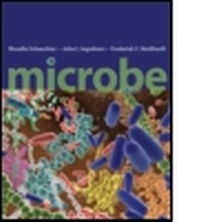
Microbe
Published on 15. December 2005
Book
Hardback
558 pages
978-1-55581-320-8 (ISBN)
Description
An exciting introduction to the world of microbes Covers the most pertinent information related to the study of microbes, including microbial activity; structure and function; growth, inheritance, physiology, and diversity; and biological interactions Engages students in the learning process with a clear style and unique perspective Serves as a textbook for upper level undergraduate courses in general microbiology.
This title is published by the American Society for Microbiology Press and distributed by Taylor and Francis in rest of world territories.
This title is published by the American Society for Microbiology Press and distributed by Taylor and Francis in rest of world territories.
More details
Language
English
Place of publication
Washington DC
United States
Target group
Professional and scholarly
Weight
1660 gr
ISBN-13
978-1-55581-320-8 (9781555813208)
Copyright in bibliographic data and cover images is held by Nielsen Book Services Limited or by the publishers or by their respective licensors: all rights reserved.
Schweitzer Classification
Other editions
New editions
Michele Swanson | Gemma Reguera | Moselio Schaechter
Microbe
Book
06/2016
American Society for Microbiology
Unfortunately, price unknown
Article exhausted; check for reprint
Content
Table of Contents
Preface
About the Authors
Study Aids
Section I. Microbial Activity
1. The World of Microbes
· Introduction
· What is a microbe?
· Having a long past
· Being small
· Being many
· Growing and persisting
· Colonizing every niche and making Earth inhabitable
· Shaping the planet
· Making a living
· Cooperating for complex endeavors
· Conclusions
· Study questions
Section II. Structure and Function
2. Prokaryotic Cell Structure and Function: Envelopes and Appendages
· Prokaryotic cells
· Microscopes
o Newer microscopes
§ Scanned-proximity probe microscopes
§ Molecular stains
· Prokaryotes have complex envelopes and appendages
· The cell membrane
· How the cell membrane is protected
o The gram-positive solution
o The gram-negative solution
o The acid-fast solution
o Crystalline surface layers
o Bacteria without cell walls: the mycoplasmas
o Cell envelopes of the Archaea
· Capsules, flagella, and pili: how prokaryotes cope in certain environments
o Capsules and slime layers
o Flagella
o Pili
· Study questions
3. Prokaryotic Cell Structure and Function: the Cell Interior
· General observations
· The nucleoid
· The cytoplasm
· Inclusions and vesicles
o Gas vesicles
o Organelles for photosynthesis and chemosynthesis
o Carboxysomes
o Enterosomes
o Storage granules and others
· Conclusions
· Study questions
Section III. Growth
4. Growth of Microbial Populations
· Introduction
· How to measure growth of a bacterial culture
· When should the growth rate be determined?
· The law of growth
· Balanced growth
· Continuous culture
· How is the physiology of the cells affected by the growth rate?
· Effects of temperature, hydrostatic pressure, osmotic strength, and pH
o Temperature
§ Effect on growth rate
§ Classifying the temperature responses of microbes
§ Growth limits at temperature extremes
§ Lethal effects
o Hydrostatic pressure
o Osmotic pressure
o pH
· Conclusions
· Study questions
5. Making a Cell
· Introduction
· Growth metabolism: making life from nonlife
· Framework of growth metabolism
o Making two from one
o Assembling cell structures
o Making macromolecules
o Synthesizing building blocks
o Fueling
· Global effects of growth metabolism
o Earth's chemical cycles
o Bioremediation
· Summary and plan
· Study questions
6. Fueling
· Overview of fueling reactions
· Getting energy and reducing power
o Driving force and its generation
o Substrate level phosphorylation and fermentation
o Transmembrane ion gradients
§ Respiration
§ Photosynthesis
§ Enzyme pumps
§ Scalar reactions
o Oxygen and life
· Making precursor metabolites: heterotrophy
o Acquiring nutrients
§ Transport through the OM of gram-negative bacteria
§ Transport through the cell membrane
o Feeder pathways
o Central metabolism
§ Common pathways of central metabolism
§ Auxiliary pathways of central metabolism
§ Diversity and flexibility of central metabolism
· Making precursor metabolites: autotrophy
o The Calvin cycle
o Other CO2-fixing cycles
· Summary
· Study questions
7. Biosynthesis
· Some general observations
o Biosynthesis and nutrition
o Bacterial studies and biosynthetic pathways
o The concept of a biosynthetic pathway
· Assimilation of nitrogen
o Central actors: glutamate and glutamine
o Synthesis of glutamate and glutamine
o Getting ammonia
o Ammonia from dinitrogen
· Assimilation of sulfur
· Assimilation of phosphorus
· Pathways to building blocks
o Amino acids
o Nucleotides
o Sugars and sugar-like derivatives
o Fatty acids and lipids
· Summary
· Study questions
8. Building Macromolecules
· Introduction
· DNA
o Overview of replication
o Initiation of replication
o DNA strand elongation
o Repair of errors in replication
o Termination of replication
o Protecting the DNA
o Assembly of the nucleoid
· RNA
Preface
About the Authors
Study Aids
Section I. Microbial Activity
1. The World of Microbes
· Introduction
· What is a microbe?
· Having a long past
· Being small
· Being many
· Growing and persisting
· Colonizing every niche and making Earth inhabitable
· Shaping the planet
· Making a living
· Cooperating for complex endeavors
· Conclusions
· Study questions
Section II. Structure and Function
2. Prokaryotic Cell Structure and Function: Envelopes and Appendages
· Prokaryotic cells
· Microscopes
o Newer microscopes
§ Scanned-proximity probe microscopes
§ Molecular stains
· Prokaryotes have complex envelopes and appendages
· The cell membrane
· How the cell membrane is protected
o The gram-positive solution
o The gram-negative solution
o The acid-fast solution
o Crystalline surface layers
o Bacteria without cell walls: the mycoplasmas
o Cell envelopes of the Archaea
· Capsules, flagella, and pili: how prokaryotes cope in certain environments
o Capsules and slime layers
o Flagella
o Pili
· Study questions
3. Prokaryotic Cell Structure and Function: the Cell Interior
· General observations
· The nucleoid
· The cytoplasm
· Inclusions and vesicles
o Gas vesicles
o Organelles for photosynthesis and chemosynthesis
o Carboxysomes
o Enterosomes
o Storage granules and others
· Conclusions
· Study questions
Section III. Growth
4. Growth of Microbial Populations
· Introduction
· How to measure growth of a bacterial culture
· When should the growth rate be determined?
· The law of growth
· Balanced growth
· Continuous culture
· How is the physiology of the cells affected by the growth rate?
· Effects of temperature, hydrostatic pressure, osmotic strength, and pH
o Temperature
§ Effect on growth rate
§ Classifying the temperature responses of microbes
§ Growth limits at temperature extremes
§ Lethal effects
o Hydrostatic pressure
o Osmotic pressure
o pH
· Conclusions
· Study questions
5. Making a Cell
· Introduction
· Growth metabolism: making life from nonlife
· Framework of growth metabolism
o Making two from one
o Assembling cell structures
o Making macromolecules
o Synthesizing building blocks
o Fueling
· Global effects of growth metabolism
o Earth's chemical cycles
o Bioremediation
· Summary and plan
· Study questions
6. Fueling
· Overview of fueling reactions
· Getting energy and reducing power
o Driving force and its generation
o Substrate level phosphorylation and fermentation
o Transmembrane ion gradients
§ Respiration
§ Photosynthesis
§ Enzyme pumps
§ Scalar reactions
o Oxygen and life
· Making precursor metabolites: heterotrophy
o Acquiring nutrients
§ Transport through the OM of gram-negative bacteria
§ Transport through the cell membrane
o Feeder pathways
o Central metabolism
§ Common pathways of central metabolism
§ Auxiliary pathways of central metabolism
§ Diversity and flexibility of central metabolism
· Making precursor metabolites: autotrophy
o The Calvin cycle
o Other CO2-fixing cycles
· Summary
· Study questions
7. Biosynthesis
· Some general observations
o Biosynthesis and nutrition
o Bacterial studies and biosynthetic pathways
o The concept of a biosynthetic pathway
· Assimilation of nitrogen
o Central actors: glutamate and glutamine
o Synthesis of glutamate and glutamine
o Getting ammonia
o Ammonia from dinitrogen
· Assimilation of sulfur
· Assimilation of phosphorus
· Pathways to building blocks
o Amino acids
o Nucleotides
o Sugars and sugar-like derivatives
o Fatty acids and lipids
· Summary
· Study questions
8. Building Macromolecules
· Introduction
· DNA
o Overview of replication
o Initiation of replication
o DNA strand elongation
o Repair of errors in replication
o Termination of replication
o Protecting the DNA
o Assembly of the nucleoid
· RNA