

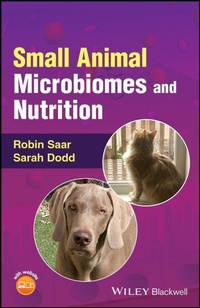
Veterinary Small Animal Microbiomes and Nutrition
Description
Small Animal Microbiomes and Nutrition offers new perspective on the prevention and treatment of common health conditions in dogs and cats that arise from or result in dysbiosis of the body's microbiomes, along with providing alternative first-line solutions of utilizing nutrients-less invasive procedures in comparison to prescription drugs to treat dysbiosis in the body's microbiomes. This practical manual guides the reader through body systems that are commonly influenced by the microbiota in the microbiomes as well as accompanying dietary recommendations.
Initially, an overview of the body's microbiome including common terminology and functions of microbiomes precede the chapters on development of the body's microbiomes and factors influencing their diversity and density. The following three sections provide readers with a different perspective of commonly observed health conditions by focusing on the state of the microbiome and how the condition may be prevented and/or treated with the use of nutrients.
Written by a highly qualified author with significant experience in the field, Small Animal Microbiomes and Nutrition includes information on sample topics such as:
Results of research on alternative diets and emerging ingredients' effect on the microbiomes and how to have the discussions with pet parents
Nutrition focused calculations, feeding directions, and templates for history, and recommendation for follow-up conversations with pet parents
Factors affecting the diversity and density of the microbiomes, such as genetics, age, sex, environment, stress, antibiotic therapy, and nutrition
Integumentary microbiomes, covering the skin's microbiome, dysfunctional barrier syndrome, atopy (atopic dermatitis), and key nutritional factors
Small Animal Microbiomes and Nutrition is an essential resource for students completing companion animal health courses in two- and four-year programs, particularly those in veterinary technology, veterinary technician, and animal health technology diplomas and degrees, and it is also highly useful for students in other veterinary and animal science focused programs. Additionally, this book is essential in veterinary practices as a reference guide to support the transition into the utilization of microbiome medicine.
<b>Comprehensive resource providing holistic coverage of the effect of body microbiomes on the health status of dogs and cats</b>
<i>Small Animal Microbiomes and Nutrition</i> offers new perspective on the prevention and treatment of common health conditions in dogs and cats that arise from or result in dysbiosis of the body's microbiomes, along with providing alternative first-line solutions of utilizing nutrients-less invasive procedures in comparison to prescription drugs to treat dysbiosis in the body's microbiomes. This practical manual guides the reader through body systems that are commonly influenced by the microbiota in the microbiomes as well as accompanying dietary recommendations.
Initially, an overview of the body's microbiome including common terminology and functions of microbiomes precede the chapters on development of the body's microbiomes and factors influencing their diversity and density. The following three sections provide readers with a different perspective of commonly observed health conditions by focusing on the state of the microbiome and how the condition may be prevented and/or treated with the use of nutrients.
Written by a highly qualified author with significant experience in the field, <i>Small Animal Microbiomes and Nutrition</i> includes information on sample topics such as:
<ul><li>Results of research on alternative diets and emerging ingredients' effect on the microbiomes and how to have the discussions with pet parents</li><li>Nutrition focused calculations, feeding directions, and templates for history, and recommendation for follow-up conversations with pet parents</li><li>Factors affecting the diversity and density of the microbiomes, such as genetics, age, sex, environment, stress, antibiotic therapy, and nutrition</li><li>Integumentary microbiomes, covering the skin's microbiome, dysfunctional barrier syndrome, atopy (atopic dermatitis), and key nutritional factors</li></ul><i>Small Animal Microbiomes and Nutrition</i> is an essential resource for students completing companion animal health courses in two- and four-year programs, particularly those in veterinary technology, veterinary technician, and animal health technology diplomas and degrees, and it is also highly useful for students in other veterinary and animal science focused programs. Additionally, this book is essential in veterinary practices as a reference guide to support the transition into the utilization of microbiome medicine.
More details
Other editions
Additional editions
Persons
Dr Sarah Dodd, BVSc, MSc, PhD, DECVCN, EBVS (R) European Specialist in Veterinary and Comparative Nutrition, member of European College of Veterinary and Comparative Nutrition. Dr. Dodd received her veterinary degree from Massey University, New Zealand, in 2016. This was followed by an MSc and a PhD in Clinical Studies and Population Medicine at the University of Guelph in 2018 and 2022, respectively. Whilst completing the academic degrees, Dr. Dodd simultaneously undertook first an internship then a residency with the European College of Veterinary and Comparative Nutrition and became board certified in 2022. She has authored a number of peer-reviewed publications (articles, abstracts and textbook chapters), co-authored a textbook on Small Animal Microbiomes and Nutrition and reviews manuscripts for a number of journals. Dr. Dodd is a founding member and active fellow of the Canadian Academy of Veterinary Nutrition.
Robin Saar, RVT, VTS (NUTRITION), Canada. Robin became a Registered Animal Health Technologist in 1996 and obtained her Veterinary Technician Specialty in Nutrition in 2019. Robin's professional experience includes working in small and mixed animal practices as an RVT, and a Practice Manager, and she developed a nutrition program for a veterinary corporation. Robin has written multiple peer reviewed articles and chapters about nutrition and this is her first dedicated textbook. Her current role with AnimalBiome in the veterinary department, meets her interest in nutrition and microbiome health. Currently, Robin is the Education Director for the Canadian Academy of Veterinary Nutrition, is the President-Elect for the Academy of Veterinary Nutrition Technicians, and is a Member at Large at the American Academy of Veterinary Nutrition. She is currently completing her MSc in Animal Nutrition through Glasgow University. "Her principle is "Nutrition is a part of every pet, every day".
Dr Sarah Dodd, BVSc, MSc, PhD, DECVCN, EBVS (R) European Specialist in Veterinary and Comparative Nutrition, member of European College of Veterinary and Comparative Nutrition. Dr. Dodd received her veterinary degree from Massey University, New Zealand, in 2016. This was followed by an MSc and a PhD in Clinical Studies and Population Medicine at the University of Guelph in 2018 and 2022, respectively. Whilst completing the academic degrees, Dr. Dodd simultaneously undertook first an internship then a residency with the European College of Veterinary and Comparative Nutrition and became board certified in 2022. She has authored a number of peer-reviewed publications (articles, abstracts and textbook chapters), co-authored a textbook on Small Animal Microbiomes and Nutrition and reviews manuscripts for a number of journals. Dr. Dodd is a founding member and active fellow of the Canadian Academy of Veterinary Nutrition.
Content
Preface
About the Companion Website
Section I: Understanding a Microbiome
1. Chapter 1 Common Definitions
1.1. Microbiome
1.2. Microbiota
1.3. Pathogens
1.4. Symbiosis
1.5. Dysbiosis
1.6. Probiotic
1.7. Prebiotics
1.8. Synbiotic
1.9. Metabolites
1.10. Metabolome
1.11. Genome
1.12. Proteome
1.13. Biological marker (biomarker) Platforms
1.14. Chapter Summary
2. Functions of the Microbiome
2.1. Metabolic Functions
2.2. Structural Functions
2.3. Protective Functions
2.4. Participation in Bi-Directional Axis Communication
2.5 Chapter Summary
3. The Origin and Development of the Microbiome
3.1. In utero to Adult
3.2. Dysbiosis During Growth
3.3. Key Nutritional Factors
3.4. Chapter Summary
4. Factors Affecting the Diversity and Density of the Microbiomes
4.1. Genetics
4.2. Age
4.3. Sex
4.4. Environment
4.5. Stress
4.6. Antibiotic therapy
4.7. Nutrition
4.8. Chapter Summary
5. Essential Nutrients and the Microbiota
5.1. Protein
5.2. Carbohydrates
5.3. Fat
5.4. Vitamins and Minerals
5.5. Digestibility of Nutrients
5.6. Chapter Summary
6. Methods For Microbial Analysis
6.1. The Importance of Characterizing the Microbiome
6.2. Sample Collection And Preservtion Methods
6.3. Current Methods For Microbiome
6.4. Chapter Summary
7. Current Natural Focused Treatments For Dysbiosis
7.1. Key Nutritional Factors
7.2. Bacteriophages
7.3. Probiotics
7.4. Fecal Microbiota Transplants
7.5. Oral Fecal Microbiota Treatments
Section II: The Microbiome's Involvement In Body Systems
8. The Immune System
8.1. Innate And Adaptive Immunity
8.2. The Microbiome's Involvement In Immunity
8.3. Supportive Nutrients
8.4. Chapter Summary
9. The Endocannabinoid System
9.1. Endocannabinoid System
9.2. Endocannabinoidome Axis
9.3. Chapter Summary
10. Respiratory System Microbiome
10.1. The Respiratory System Microbiome
10.2. Factors Affecting Diversity And Density.
10.3. Diseases Associated With Dysbiosis.
10.4. Key Nutritional Factors
10.5. Chapter Summary
11. Oral Microbiomes
11.1. The Oral Microbiome
11.2. Factors Affecting Diversity And Density.
11.3. Disease Associated With Dysbiosis and Inflammation.
11.4. Key Nutritional Factors
11.5. Chapter Summary
12. Aural Microbiome
12.1. The Aural Microbiome
12.2. Factors Affecting Diversity And Density.
12.3. Diseases Associated With Dysbiosis.
12.4. Key Nutritional Factors
12.5. Chapter Summary
13. Integumentary Microbiomes
13.1. The Skin's Microbiome
13.2. Factors Affecting The Diversity And Density.
13.3. Diseases Associated With Dysbiosis.
13.4. Dysfunctional Barrier Syndrome
13.5. Atopy - Atopic Dermatitis
13.6. Key Nutritional Factors
14. Hepatic Circulation And Bile Acid Involvement With Microbiomes
14.1. Hepatic Circulation and Bile Acid Metabolism
14.2. Microbiota's Role in Bile Acid Metabolism
14.3. Bile And Bile Acids Fundamental Roles in The Regulation of Various Physiological Systems
14.4. Nutrients in Bile
14.5. Liver - Gut - Brain Axis
14.6. Bile Acid Dysmetabolism
14.7. Key Nutritional Factors
14.8. Chapter Summary
15. Gastrointestinal Microbiomes
15.1. The GI Microbiome
15.2. Diseases Affected By The GI Microbiome.
15.3. Vitamin And Mineral Deficiencies
16. Neurological Interactions With Microbiomes
16.1. The Nervous System
16.2. The Gut-Brain Communication Axis
16.3. Anxiety
16.4. Cognitive Dysfunction
16.5. Psychobiotics
16.6. Nutrients
16.7. Chapter Summary
17. Urinary System
17.1. GI-Renal Axis
17.2. Urobiome
17.3. Defenses Against Urinary Tract Infections
17.4. Key Nutritional Factors
17.5. Chapter Summary
Section III: Emerging Ingredients And Alternative Diets
18. Raw Ingredients
18.1. Raw vs Cooking
18.2. Comparing Extruded, Canned, And Raw
18.3. Antimicrobial Resistance
18.4. Fermented Products
18.5. Chapter Summary
19. Grain And Gluten Free
19.1. Grains
19.2. Gluten
19.3. Chapter Summary
20. Cannabinoids
20.1. Regulations on Cannabis Products
20.2. By-products of The Plant As an Ingredient Source
20.3. Concerns About The Heath And Safety of Cannabis Products in Animal Feed
20.4. Cannabidiol Supplementation Affects on The Microbiome
20.5. Antimicroial Effects of Cannabis
20.6. Current Diets on The World Pet Food Market
20.7. Chapter Summary
21. Insects
21.1. Black Soldier Fly Larvae
21.2. Heavy Metal And Mycotoxin Accumulation in Insects
21.3. Chitin
21.4. The Effects on The Host GI Microbiome
21.5. Chapter Summary
Section IV: Communication And Nutrition Plans For Pet Parents
22. Communicating With Pet Parents
22.1. From The Pet Parent Perspective
22.2. How The Brain Processes New Information.
22.3. Improving Action Results
22.4. Supporting Pet Parents Through The Decision-Making Process
22.5. Improving Conversations
22.6. Providing Continuing Support To Pet Parents
22.7. Chapter Summary
23. Documenting A Nutrition History
23.1. How to Ask The Right Questions
23.2. Nutrition Questionnaire
23.3. Chapter Summary
24. Dietary Treatment Plans
24.1. Pet Parents Want Veterinary Nutrition Recommendations
24.2. Increasing The Value of Nutrition Plans
24.3. Components of a Nutrition Plan
24.4. Chapter Summary
25. Calculations For The Nutrition Consultation
25.1. Energy Requirements
25.2. Calculating kcal/cup or kcal/can from Energy Requirement
25.3. Calculating kcal Per Day by Weight (grams)
25.4. Calculating Calories From Nutrients And Metabolizable Energy
25.5. Calculating Percentae of Body Weight Loss
25.6. Calculating Energy Requirements For a Critical Care Patient
25.7. Calculating Water Requirements
25.8. Calculating Metabolic Water
25.9. Feeding and Transition Plan Formulations
25.10. Creaating a Feeding Plan
25.11. Chapter Summary