

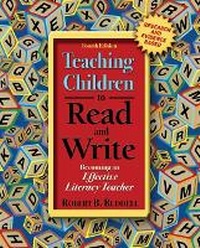
Teaching Children to Read and Write
Becoming an Effective Literacy Teacher
4th Edition
Published on 15. April 2005
Book
Hardback
608 pages
978-0-205-43555-5 (ISBN)
Description
Teaching Children to Read and Write takes an evidence-based approach to the theories and methods needed to become an effective literacy teacher. The fourth edition emphasizes the characteristics of the effective literacy teacher, one who engages, motivates, and helps his/her students. The effective literacy teacher also relies on teaching strategies that are up-to-date and proven by research to work. The effective literacy teacher must also understand the essential foundations of literacy teaching, and Teaching Children to Read and Write presents comprehensive information about the theories, approaches, data, and standards needed to ensure that students are well-prepared to teach literacy in today?s educational environment!
More details
Edition
4th edition
Language
English
Place of publication
United States
Publishing group
Pearson Education (US)
Target group
Professional and scholarly
Dimensions
Height: 236 mm
Width: 194 mm
Thickness: 28 mm
Weight
955 gr
ISBN-13
978-0-205-43555-5 (9780205435555)
Copyright in bibliographic data and cover images is held by Nielsen Book Services Limited or by the publishers or by their respective licensors: all rights reserved.
Schweitzer Classification
Other editions
Previous edition
Robert B. Ruddell
Teaching Children to Read and Write
Becoming an Effective Literacy Teacher, MyLabSchool Edition
Book
02/2005
3rd Edition
Pearson
€100.65
Article exhausted; check for reprint
Person
Robert Ruddell is Professor Emeritus of the Language, Literacy, and Culture Faculty Group at the University of California at Berkeley. He has taught a wide range of courses in reading and language development and directed the Advanced Reading-Language Leadership Program.
Professor Ruddell has successfully combined his work in public schools with his university teaching and research. He has worked with teachers in schools both in the inner city and in rural areas. He has lectured and conducted workshops for teachers in each of the fifty states, as well as in England, Sweden, Germany, Australia, Canada, and the Ivory Coast.
Professor Ruddell is the recipient of the International Reading Association's William S. Gray Citation of Merit, recognizing lifetime achievement and leadership contributions to the field of reading and literacy development. He also received the Oscar S. Causey Research Award from the National Reading Conference recognizing his research on effective and influential literacy teachers. He has received the Crystal Apple award from the California Reading Association for his teaching and research work, has been President of the International Reading Association's Reading Hall of Fame and has served on the IRA Board of Directors.
Professor Ruddell is author of the fourth edition of the widely used literacy methods text Teaching Children to Read and Write: Becoming an Effective Literacy Teacher (2006). He is senior editor (with Normal Unrau) of Theoretical Models and Processes of Reading, now in its fifth edition (2004). His articles have appeared in The Reading Teacher and Language Arts as well as in a variety of research journals and yearbooks. Dr. Ruddell's research and teaching interests are focused on the development of children's word identification skills, comprehension and critical thinking, reader engagement and motivation, and the study of effective and influential teachers. He can be contacted at rruddell@berkeley.edu .
Professor Ruddell has successfully combined his work in public schools with his university teaching and research. He has worked with teachers in schools both in the inner city and in rural areas. He has lectured and conducted workshops for teachers in each of the fifty states, as well as in England, Sweden, Germany, Australia, Canada, and the Ivory Coast.
Professor Ruddell is the recipient of the International Reading Association's William S. Gray Citation of Merit, recognizing lifetime achievement and leadership contributions to the field of reading and literacy development. He also received the Oscar S. Causey Research Award from the National Reading Conference recognizing his research on effective and influential literacy teachers. He has received the Crystal Apple award from the California Reading Association for his teaching and research work, has been President of the International Reading Association's Reading Hall of Fame and has served on the IRA Board of Directors.
Professor Ruddell is author of the fourth edition of the widely used literacy methods text Teaching Children to Read and Write: Becoming an Effective Literacy Teacher (2006). He is senior editor (with Normal Unrau) of Theoretical Models and Processes of Reading, now in its fifth edition (2004). His articles have appeared in The Reading Teacher and Language Arts as well as in a variety of research journals and yearbooks. Dr. Ruddell's research and teaching interests are focused on the development of children's word identification skills, comprehension and critical thinking, reader engagement and motivation, and the study of effective and influential teachers. He can be contacted at rruddell@berkeley.edu .
Content
1. Becoming an Effective and Influential Literacy Teacher. Characteristics of Influential Teachers.
An Overview of Effective Instructional Approaches.
A Historical Context for Literacy Instruction in the United States.
The Challenge of Becoming an Effective and Influential Literacy Teacher.
2. Understanding Meaning Making and the Reading and Writing Process. Expert Reader Competencies.
Children's Oral Language Development.
Children's Emergent Literacy and Literacy Development in the School Years.
Factors That Influence Oral and Written Language Development.
The Sociocognitive Theory of Language and Literacy Development.
The Reading Comprehension Process-A Synthesis.
3. Understanding Early Reading and Writing Development. Types of Meaning in Meaning Negotiation.
Ambiguity and Risk in Meaning Negotiation.
Optimal Conditions for Literacy Learning.
Children's Early Reading Development.
Instructional Concepts and Strategies for Early Reading and Writing.
Organizing Early Literacy Classrooms.
4. Using Instructional Strategies to Develop Reading Comprehension. Children's Comprehension Development.
Comprehension Instruction in the Classroom.
Group Reading Approaches for Comprehension.
Strategies That Target Specific Comprehension Processes.
5. Building Vocabulary and Comprehension Connections. Vocabulary Acquisition.
Goals and Objectives of Vocabulary Instruction.
Active Learning in Vocabulary Learning Contexts.
Before-Reading Vocabulary Instruction: Teaching Vocabulary in Context (TVC).
During-Reading Vocabulary Instruction: The Context-Structure-Sound-Resource (CSSR) System.
After-Reading Vocabulary Instruction: Semantic Development and Enrichment Instruction Strategy (SDEI).
Instruction to Support Word Learning and Build Meaning Connections.
6. Building Word Analysis Strategies and Skills. Phonics and Word Identification: A History of Controversy.
Developmental Stages in Word Recognition.
Goals and Objectives for Teaching Word Identification Skills.
Instructional Strategies for Teaching Phonics.
Instructional Strategies for Teaching Syllable Identification.
Instructional Strategies for Teaching Compound Words.
Instructional Strategies for Teaching Affixes and Roots.
Instructional Strategies for Teaching Context Clues.
Instructional Strategies for Developing Reading Fluency.
Skill Application through Wide Reading.
7. Using Literature, Reader Response, and Engagement to Enhance Motivation and Comprehension.
Goals of a Literature Program.
Three Steps in the Reader Motivation and Response Process.
Influence of Instructional Stances on Reader Response.
Sources of Reader Motivation.
Types of Children's Literature .
Selecting Literature.
Developing the Classroom Reading Center.
Instructional Strategies for Teaching Literature.
Evaluating Children's Progress in Responding to Literature.
8. Developing Children's Reading and Writing in Content Areas.
Relationships among Reading, Writing, and Learning.
Content Area Literacy in Perspective.
Guiding Children's Reading in Content Area Instruction.
Guiding Children's Writing in Content Area Instruction.
Developing Children's Handwriting.
Integrating Reading and Writing across the Curriculum.
9. Assessing Children's Progress in Literacy Development.
Principles of Assessment.
Assessment and Classroom Observations.
Portfolio Assessment.
Formal Assessment.
Communicating Student Progress to Parents.
10. Instructing Delayed Readers in a Regular Classroom Setting.
Understanding Delayed Readers.
Meeting the Needs of Delayed Readers.
Final Thoughts.
11. Understanding Language and Cultural Diversity and Special Needs.
Understanding the Impact of Diversity.
Children's Language Acquisition Strategies.
Children's Language and Culture.
Programs for Students with Limited English Proficiency.
Specific Classroom Strategies for Teaching Bilingual Learners.
Understanding Students with Special Needs.
Your Role in Planning and Adapting Instruction for Students with Special Needs.
Using Tutors to Assist in Meeting Student Needs.
12. Examining Instructional Approaches and the Organization and Management of Literacy Learning. The Basal Reader Approach.
The Literature-Based Approach.
The Language-Based Approach.
Evaluation of Instructional and Supplementary Programs.
Technology-Based Instruction.
13. Continuing Your Professional Growth as an Effective and Influential Literacy Teacher.
Process of Professional Development.
Your Personal and Professional Support Network.
Professional Connections for Reading and Writing Teachers.
The Role of Professional Reflection.
Appendix A
Newbery Medal Books.
Appendix B
Caldecott Medal Books.
Appendix C
IRA Standards for Reading Professionals.
An Overview of Effective Instructional Approaches.
A Historical Context for Literacy Instruction in the United States.
The Challenge of Becoming an Effective and Influential Literacy Teacher.
2. Understanding Meaning Making and the Reading and Writing Process. Expert Reader Competencies.
Children's Oral Language Development.
Children's Emergent Literacy and Literacy Development in the School Years.
Factors That Influence Oral and Written Language Development.
The Sociocognitive Theory of Language and Literacy Development.
The Reading Comprehension Process-A Synthesis.
3. Understanding Early Reading and Writing Development. Types of Meaning in Meaning Negotiation.
Ambiguity and Risk in Meaning Negotiation.
Optimal Conditions for Literacy Learning.
Children's Early Reading Development.
Instructional Concepts and Strategies for Early Reading and Writing.
Organizing Early Literacy Classrooms.
4. Using Instructional Strategies to Develop Reading Comprehension. Children's Comprehension Development.
Comprehension Instruction in the Classroom.
Group Reading Approaches for Comprehension.
Strategies That Target Specific Comprehension Processes.
5. Building Vocabulary and Comprehension Connections. Vocabulary Acquisition.
Goals and Objectives of Vocabulary Instruction.
Active Learning in Vocabulary Learning Contexts.
Before-Reading Vocabulary Instruction: Teaching Vocabulary in Context (TVC).
During-Reading Vocabulary Instruction: The Context-Structure-Sound-Resource (CSSR) System.
After-Reading Vocabulary Instruction: Semantic Development and Enrichment Instruction Strategy (SDEI).
Instruction to Support Word Learning and Build Meaning Connections.
6. Building Word Analysis Strategies and Skills. Phonics and Word Identification: A History of Controversy.
Developmental Stages in Word Recognition.
Goals and Objectives for Teaching Word Identification Skills.
Instructional Strategies for Teaching Phonics.
Instructional Strategies for Teaching Syllable Identification.
Instructional Strategies for Teaching Compound Words.
Instructional Strategies for Teaching Affixes and Roots.
Instructional Strategies for Teaching Context Clues.
Instructional Strategies for Developing Reading Fluency.
Skill Application through Wide Reading.
7. Using Literature, Reader Response, and Engagement to Enhance Motivation and Comprehension.
Goals of a Literature Program.
Three Steps in the Reader Motivation and Response Process.
Influence of Instructional Stances on Reader Response.
Sources of Reader Motivation.
Types of Children's Literature .
Selecting Literature.
Developing the Classroom Reading Center.
Instructional Strategies for Teaching Literature.
Evaluating Children's Progress in Responding to Literature.
8. Developing Children's Reading and Writing in Content Areas.
Relationships among Reading, Writing, and Learning.
Content Area Literacy in Perspective.
Guiding Children's Reading in Content Area Instruction.
Guiding Children's Writing in Content Area Instruction.
Developing Children's Handwriting.
Integrating Reading and Writing across the Curriculum.
9. Assessing Children's Progress in Literacy Development.
Principles of Assessment.
Assessment and Classroom Observations.
Portfolio Assessment.
Formal Assessment.
Communicating Student Progress to Parents.
10. Instructing Delayed Readers in a Regular Classroom Setting.
Understanding Delayed Readers.
Meeting the Needs of Delayed Readers.
Final Thoughts.
11. Understanding Language and Cultural Diversity and Special Needs.
Understanding the Impact of Diversity.
Children's Language Acquisition Strategies.
Children's Language and Culture.
Programs for Students with Limited English Proficiency.
Specific Classroom Strategies for Teaching Bilingual Learners.
Understanding Students with Special Needs.
Your Role in Planning and Adapting Instruction for Students with Special Needs.
Using Tutors to Assist in Meeting Student Needs.
12. Examining Instructional Approaches and the Organization and Management of Literacy Learning. The Basal Reader Approach.
The Literature-Based Approach.
The Language-Based Approach.
Evaluation of Instructional and Supplementary Programs.
Technology-Based Instruction.
13. Continuing Your Professional Growth as an Effective and Influential Literacy Teacher.
Process of Professional Development.
Your Personal and Professional Support Network.
Professional Connections for Reading and Writing Teachers.
The Role of Professional Reflection.
Appendix A
Newbery Medal Books.
Appendix B
Caldecott Medal Books.
Appendix C
IRA Standards for Reading Professionals.