

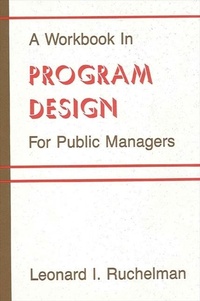
A Workbook in Program Design for Public Managers
Published on 30. June 1985
Book
Paperback/Softback
123 pages
978-0-88706-025-0 (ISBN)
Description
This is the first practical, step-by-step guide to a key management technique-the design of efficient, cost-effective programs. With social programs succumbing to the pressures of budgetary cutbacks and taxpayer opposition, it gives public administrators the skills to design programs that will endure even as resources decline.
The author begins to bridge the gap between what is needed by society and what can be provided by government by assisting public managers in identifying and surmounting obstacles in the way of program change. He does so by synthesizing what is known about program planning as a body of knowledge with the application of programs under real life conditions. His how-to approach covers such tasks as selecting a problem for analysis, diagnosing the organizational setting, preparing a work plan, developing alternatives, collecting data, communicating results, and preparing for implementation. The exercises and exhibits included in this workbook are applicable to all areas of public service, including health and human services, social services, criminal justice, and education.
The author begins to bridge the gap between what is needed by society and what can be provided by government by assisting public managers in identifying and surmounting obstacles in the way of program change. He does so by synthesizing what is known about program planning as a body of knowledge with the application of programs under real life conditions. His how-to approach covers such tasks as selecting a problem for analysis, diagnosing the organizational setting, preparing a work plan, developing alternatives, collecting data, communicating results, and preparing for implementation. The exercises and exhibits included in this workbook are applicable to all areas of public service, including health and human services, social services, criminal justice, and education.
More details
Series
Language
English
Place of publication
Albany, NY
United States
Target group
College/higher education
Professional and scholarly
US School Grade: College Graduate Student and over
Edition type
Annotated edition
Product notice
Paperback (trade)
Dimensions
Height: 229 mm
Width: 152 mm
Thickness: 8 mm
Weight
336 gr
ISBN-13
978-0-88706-025-0 (9780887060250)
Copyright in bibliographic data and cover images is held by Nielsen Book Services Limited or by the publishers or by their respective licensors: all rights reserved.
Schweitzer Classification
Other editions
Additional editions
Leonard Ruchelman
A Workbook in Program Design for Public Managers
E-Book
06/1985
1st Edition
State University of New York Press
€32.99
Available for download
Person
Leonard I. Ruchelman is Professor of Urban Studies and Public Administration at Old Dominion University.
Content
Preface
1. Introduction
What is Program Design
Program Design as Planned Change
Approaches for Understanding the Process of Change
The Program Design Process
2. Getting Started
Step 1-Selecting a Problem Area for Analysis
Step 2-Organizing for Program Design
Summary
3. Diagnosing the Organizational Setting
Step 1-Describing the Performance Gap
Step 2-Rating Individual Factors
Step 3-Rating Organizational Factors
Step 4-Identifying Environmental Factors
Step 5- the Feasibility of a program Design Project
Summary
4. Generating Public Support
Step 1-Restating the Problem as an Issue
Step 2-Identifying the Likely Actors
Step 3-Estimating the Issue Position, Power and Salience of Each Actor
Step 4-Calculating Weights and Probabilities
Step 5-Identifying Strategies
Summary
5. Preparing a Workplan
Step 1-Defining the Problem
Step 2-Describing the Current Program
Step 3-Establishing the Project Scope
Step 4-Describing the Program Design Methodology
Step 5-Establishing and Assigning Work Tasks
Step 6-Approving the Workplan
Summary
6. Establishing Goals, Objectives and Performance Criteria
Step 1-Reviewing Program Material
Step 2-Defining Program Goals
Step 3-Defining Program Objectives
Step 4-Establishing Performance Criteria
Summary
7. Developing Program Alternatives
Step 1-Generating Program Alternatives
Step 2-Screening Program Alternatives
Step 3-Forecasting
Step 4-Categorizing Alternatives
Summary
8. Data Collection
Step 1-Estimating Service Demand
Step 2-Estimating Costs
Step 3-Collecting Effectiveness Data
Step 4-Collecting Feasibility information
Summary
9. Synthesizing the Data
Step 1-Organizing the Data
Step 2-Comparing the Data
Step 3-Drawing Conclusions
Summary
10. Communicating the Results
Step 1-Preparing the Draft Report
Step 2-Reviewing the Draft Report
Step 3- Transmitting the Final Report
Summary
11. Preparing for Implementation
Step 1-Forming an Implementation Team
Step 2-Preparing an Implementation Workplan
Step 3-Methods for Monitoring Implementation Progress
Step 4-Follow-up Strategies
Summary and Conclusions
Appendix A. Guide to Information Sources in Public Services
Appendix B. Guide to Information Sources in Human Services
Appendix C. Search Services
Appendix D. Sample Program Design Report
Glossary
Annotated Bibliography
1. Introduction
What is Program Design
Program Design as Planned Change
Approaches for Understanding the Process of Change
The Program Design Process
2. Getting Started
Step 1-Selecting a Problem Area for Analysis
Step 2-Organizing for Program Design
Summary
3. Diagnosing the Organizational Setting
Step 1-Describing the Performance Gap
Step 2-Rating Individual Factors
Step 3-Rating Organizational Factors
Step 4-Identifying Environmental Factors
Step 5- the Feasibility of a program Design Project
Summary
4. Generating Public Support
Step 1-Restating the Problem as an Issue
Step 2-Identifying the Likely Actors
Step 3-Estimating the Issue Position, Power and Salience of Each Actor
Step 4-Calculating Weights and Probabilities
Step 5-Identifying Strategies
Summary
5. Preparing a Workplan
Step 1-Defining the Problem
Step 2-Describing the Current Program
Step 3-Establishing the Project Scope
Step 4-Describing the Program Design Methodology
Step 5-Establishing and Assigning Work Tasks
Step 6-Approving the Workplan
Summary
6. Establishing Goals, Objectives and Performance Criteria
Step 1-Reviewing Program Material
Step 2-Defining Program Goals
Step 3-Defining Program Objectives
Step 4-Establishing Performance Criteria
Summary
7. Developing Program Alternatives
Step 1-Generating Program Alternatives
Step 2-Screening Program Alternatives
Step 3-Forecasting
Step 4-Categorizing Alternatives
Summary
8. Data Collection
Step 1-Estimating Service Demand
Step 2-Estimating Costs
Step 3-Collecting Effectiveness Data
Step 4-Collecting Feasibility information
Summary
9. Synthesizing the Data
Step 1-Organizing the Data
Step 2-Comparing the Data
Step 3-Drawing Conclusions
Summary
10. Communicating the Results
Step 1-Preparing the Draft Report
Step 2-Reviewing the Draft Report
Step 3- Transmitting the Final Report
Summary
11. Preparing for Implementation
Step 1-Forming an Implementation Team
Step 2-Preparing an Implementation Workplan
Step 3-Methods for Monitoring Implementation Progress
Step 4-Follow-up Strategies
Summary and Conclusions
Appendix A. Guide to Information Sources in Public Services
Appendix B. Guide to Information Sources in Human Services
Appendix C. Search Services
Appendix D. Sample Program Design Report
Glossary
Annotated Bibliography