


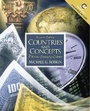
Countries and Concepts
An Introduction to Comparative Politics
6th Edition
Published on 19. August 1997
Book
Hardback
504 pages
978-0-13-625245-0 (ISBN)
Description
This book introduces Comparative Politics through a country-by-country analysis and recent case studies. By demonstrating that political life is universal, it proves that no country is really "alien." KEY TOPICS: The book provides the relevant historical background for current political events. It employs a critical approach demonstrating that every country has problems and breakdowns in a system are always political. This sixth edition has been revised to include a new chapter on Iran exploring the politics of the Islamic revolution. In addition, sections on Japan, Russia, France, China, and Britain have all been updated to reflect the latest political events in those countries as well as the implications of those events. MARKET: An essential resource book for any reader who needs to understand current political events and their meaning.
More details
Edition
6th edition
Language
English
Place of publication
Upper Saddle River
United States
Target group
Primary & secondary/elementary & high school
Illustrations
Illustrations, maps, ports.
Dimensions
Height: 241 mm
Width: 243 mm
Thickness: 29 mm
Weight
976 gr
ISBN-13
978-0-13-625245-0 (9780136252450)
Copyright in bibliographic data is held by Nielsen Book Services Limited or its licensors: all rights reserved.
Schweitzer Classification
Other editions
New editions
Book
08/2000
7th Edition
Pearson
€38.43
Article exhausted; check for reprint
Previous edition
Book
12/1994
5th Edition
Prentice-Hall
€29.70
Article exhausted; check for reprint
Content
1. What to Look For.
I. GREAT BRITAIN.
2. Britain: The Impact of the Past.
3. Britain: The Key Institutions.
4. British Political Attitudes.
5. Britain: Patterns of Interaction.
6. What Britons Quarrel About.
II. FRANCE.
7. France: The Impact of the Past.
8. France: The Key Institutions.
9. French Political Attitudes.
10. France: Patterns of Interaction.
11. What the French Quarrel About.
III. GERMANY.
12. Germany: The Impact of the Past.
13. Germany: The Key Institutions.
14. German Political Attitudes.
15. Germany: Patterns of Interaction.
16. What Germans Quarrel About.
IV. RUSSIA.
17. Russia: The Impact of the Past.
18. Russia: The Key Institutions.
19. Russian Political Attitudes.
20. Russia: Patterns of Interaction.
21. What Russians Quarrel About.
V. JAPAN.
22. Japan: The Impact of the Past.
23. Japan: The Key Institutions.
24. Japanese Political Attitudes.
25. Japan: Patterns of Interaction.
26. What Japanese Quarrel About.
VI. THE THIRD WORLD.
27. China.
28. Brazil.
29. South Africa.
30. Iran.
31. Lessons of Nine Countries.
Glossary.
Index.
I. GREAT BRITAIN.
2. Britain: The Impact of the Past.
3. Britain: The Key Institutions.
4. British Political Attitudes.
5. Britain: Patterns of Interaction.
6. What Britons Quarrel About.
II. FRANCE.
7. France: The Impact of the Past.
8. France: The Key Institutions.
9. French Political Attitudes.
10. France: Patterns of Interaction.
11. What the French Quarrel About.
III. GERMANY.
12. Germany: The Impact of the Past.
13. Germany: The Key Institutions.
14. German Political Attitudes.
15. Germany: Patterns of Interaction.
16. What Germans Quarrel About.
IV. RUSSIA.
17. Russia: The Impact of the Past.
18. Russia: The Key Institutions.
19. Russian Political Attitudes.
20. Russia: Patterns of Interaction.
21. What Russians Quarrel About.
V. JAPAN.
22. Japan: The Impact of the Past.
23. Japan: The Key Institutions.
24. Japanese Political Attitudes.
25. Japan: Patterns of Interaction.
26. What Japanese Quarrel About.
VI. THE THIRD WORLD.
27. China.
28. Brazil.
29. South Africa.
30. Iran.
31. Lessons of Nine Countries.
Glossary.
Index.