

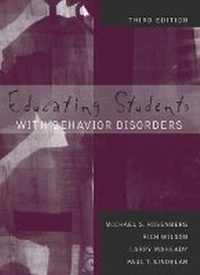
Educating Students with Behavior Disorders
3rd Edition
Published on 1. October 2003
Book
Hardback
456 pages
978-0-205-34075-0 (ISBN)
Description
This text emphasizes proven, classroom-based strategies for the assessment, management, and resolution of problem behaviors, better preparing preservice teachers for working with these students.
Geared to the practical concerns of educators of students with behavior disorders, this text provides a balanced, data-based presentation of the best practices in the field. The authors identify specific problem behaviors as the primary points of reference to set the stage for a discussion of intervention alternatives, giving students detailed, targeted strategies for working with students. A brief review of the nature and characteristics of students with behavior disorders and a clear link between assessment and intervention offers students a classroom-friendly introduction to the subject.
Geared to the practical concerns of educators of students with behavior disorders, this text provides a balanced, data-based presentation of the best practices in the field. The authors identify specific problem behaviors as the primary points of reference to set the stage for a discussion of intervention alternatives, giving students detailed, targeted strategies for working with students. A brief review of the nature and characteristics of students with behavior disorders and a clear link between assessment and intervention offers students a classroom-friendly introduction to the subject.
More details
Edition
3rd edition
Language
English
Place of publication
United States
Publishing group
Pearson Education (US)
Target group
Professional and scholarly
Dimensions
Height: 235 mm
Width: 178 mm
Weight
889 gr
ISBN-13
978-0-205-34075-0 (9780205340750)
Copyright in bibliographic data and cover images is held by Nielsen Book Services Limited or by the publishers or by their respective licensors: all rights reserved.
Schweitzer Classification
Other editions
Previous edition
Michael S. Rosenberg | Rich Wilson | Larry Maheady
Educating Students with Behavior Disorders
Book
07/1997
2nd Edition
Pearson
€75.70
Article exhausted; check for reprint
Content
Each chapter concludes with "Summary," "Discussion Questions," and "References."
Preface.
1. Defining Behavior Disorders.
Definition.
Measurement.
Deviant Behavior of Normal Individuals.
The Diversity of Theoretical Explanations of Behavior Disorders.
Biophysical Explanations of Disturbed Behavior.
Psychodynamic Explanations of Disturbed Behavior.
Behavioral Explanations of Disturbed Behavior.
Cognitive-Behavioral Explanations of Disturbed Behavior.
Sociological Explanations of Disturbed Behavior.
Ecological Explanations of Disturbed Behavior.
An Alternative Approach.
Prevalence of Behavior Disorders.
2. High-Incidence Behavior Disorders.
Hyperactive Behavior.
Primary Behavioral Characteristics.
Secondary Behavioral Characteristics.
Prevalence.
Etiology.
Course, Prognosis, and Outcome.
Aggressive Behavior.
Primary Behavioral Characteristics.
Secondary Behavioral Characteristics.
Prevalence.
Etiology.
Prognosis.
Rule-Breaking and Juvenile Delinquency.
Characteristics of Rule-Breaking Behavior.
The Legal Definition of Delinquency.
Descriptive Classifications of Delinquency.
Prevalence.
Correlates.
Etiology.
Prognosis.
Social Withdrawal.
Primary Behavioral Characteristics.
Secondary Behavioral Characteristics.
Prevalence.
Identification.
Etiology.
Prognosis.
3. Low-Incidence Behavior Disorders.
Early Perspectives on Severe Behavior Problems of Childhood and Youth.
Pervasive Developmental Disorder.
Autistic Disorder.
Aspergers Disorder.
Childhood Disintegrative Disorder.
Pervasive Developmental Disorder Not Otherwise Specified.
Early-Onset Schizophrenia.
Primary Characteristics.
Secondary Characteristics.
Etiology.
Course and Prognosis.
4. Standardized Instruments for Assessment and Classification.
Purposes of Assessment.
Identification and Classification of Disordered Behavior.
Clinically Derived Classification Systems.
Statistically Derived Classification Systems.
Procedures for Identifying and Classifying Disordered Behavior.
Screening Methods.
Methods of Identification.
Interpreting Assessment Outcomes.
Assessment Needs of Teachers.
Technical Adequacy.
Assumptions Underlying Psychoeducational Assessment.
5. Functional Assessment.
The Purpose and Steps in Functional Assessment
Functional Assessment Methods.
Screening.
Functional Analysis.
Pinpointing.
Recording.
Baseline Measurement.
Goal Selection.
Treatment Selection.
Measurement during Treatment.
Data-Reactive Decision Making.
Summative Treatment Evaluation.
6. Developing Individual Education Programs For Students With Behavior Disorders.
Legally Mandated IEP Requirements.
IEPs for Students with Behavior Disorders.
Present Educational Levels.
Annual Goals.
Other IEP Requirements.
Involving Parents in the IEP Process.
IEP-Based Parent Involvement.
Parent Involvement in Treatment.
7. Managing Hyperactive Behavior.
Biophysical Interventions.
Drug Therapy.
Dietary and Nutritional Approaches.
Behavioral Interventions.
Behavioral Control of ADHD.
Managing Hyperactivity Through the Control of Antecedent Events.
Cognitive-Behavior Modification.
Applications of Cognitive Self-Instruction with Hyperactive Children.
Self-Control Procedures.
Combined Approaches.
Other Therapies for Hyperactivity.
Progressive Relaxation and Biofeedback.
Reducing Exposure to Fluorescent Lights.
Minimum Stimulation.
8. Managing Aggressive Behavior.
Psychodynamic Interventions.
The Role of Anxiety.
Milieu Therapy.
Individual Psychotherapy.
Psychodynamic Programs That Treat Aggressive Children.
Empirical and Practical Considerations.
Behavioral Interventions.
Positive Treatments to Reduce Aggression.
Positive Reinforcement Treatments.
Self-Control and Cognitive-Behavioral Treatments.
Self-Instructional Training (SIT).
Multiple-Component Treatments.
Punishment Treatments to Reduce Aggression.
Comprehensive Behavioral Programs.
Other Treatments for Aggressive Behavior.
9. Managing Socially Withdrawn Behavior.
The Nature of Social Withdrawal.
Prevalence and Etiology.
Identification of Social Withdrawal.
Intervention Options.
Teacher-Directed Interventions.
Peer-Assisted Interventions.
Student-Managed Interventions.
General Guidelines for Selecting Intervention Strategies.
10. Managing Rule-Breaking and Delinquency.
Major Approaches.
Traditional Medical Model/Psychodynamic Approaches.
Behavioral Approaches.
Cognitive-Behavioral Approaches.
Combined Approaches: Aggression Replacement Training and Second Step.
Ecological Approaches.
Intervention Strategies for Specific Rule-Breaking Behavior.
Reducing Instances of Theft.
Reducing School Vandalism.
Managing Substance Abuse.
Managing Smoking.
Preventing and Remediating Truancy.
Large-Scale Programs to Manage and Remediate Rule-Breaking and Delinquency.
Suspension from School.
Expulsion.
Day-School Alternatives.
Residential Alternatives.
11. Teaching Students With Mild and Moderate Behavior Disorders.
Effective Teaching.
Organizing for Successful Instruction.
Management of Instructional Time.
Group Size Considerations.
Task Targeting.
Climate Setting.
Delivering Instructional Content.
Lesson Introduction and Review.
Presentation of New Material.
Guided or Controlled Practice.
Academic Feedback and Error Correction.
Independent Practice.
Reviewing Subject Matter.
Instruction in Learning Strategies.
12. Comprehensive School-Wide Behavior Management Systems.
The Need for Comprehensive Behavior Management.
Breadth and Depth of Problem Behaviors.
School-Wide Behavior Management Systems.
A Three-Tiered Approach.
Comprehensive School-Wide Programs: Descriptions and Outcomes.
Common Elements of Comprehensive Behavior Management Plans.
Statement of Purpose.
School-Wide Behavior Expectations.
Teaching the Expected Behavior.
Encouraging Expected Behaviors.
Supporting Students Who Display Problem Behaviors.
Record Keeping and Decision Making.
Implementation of Plans.
13. Educating Students With Behavior Disorders: Prevailing Issues and Future Challenges.
A National Agenda for Achieving Better Results.
Service Delivery Alternatives.
Assessment Practices with Culturally Diverse Students.
Transition to Postsecondary Alternatives.
Concern for Self: Reducing Stress and Burnout.
The Maturation of a Skilled Profession.
Index.
Preface.
1. Defining Behavior Disorders.
Definition.
Measurement.
Deviant Behavior of Normal Individuals.
The Diversity of Theoretical Explanations of Behavior Disorders.
Biophysical Explanations of Disturbed Behavior.
Psychodynamic Explanations of Disturbed Behavior.
Behavioral Explanations of Disturbed Behavior.
Cognitive-Behavioral Explanations of Disturbed Behavior.
Sociological Explanations of Disturbed Behavior.
Ecological Explanations of Disturbed Behavior.
An Alternative Approach.
Prevalence of Behavior Disorders.
2. High-Incidence Behavior Disorders.
Hyperactive Behavior.
Primary Behavioral Characteristics.
Secondary Behavioral Characteristics.
Prevalence.
Etiology.
Course, Prognosis, and Outcome.
Aggressive Behavior.
Primary Behavioral Characteristics.
Secondary Behavioral Characteristics.
Prevalence.
Etiology.
Prognosis.
Rule-Breaking and Juvenile Delinquency.
Characteristics of Rule-Breaking Behavior.
The Legal Definition of Delinquency.
Descriptive Classifications of Delinquency.
Prevalence.
Correlates.
Etiology.
Prognosis.
Social Withdrawal.
Primary Behavioral Characteristics.
Secondary Behavioral Characteristics.
Prevalence.
Identification.
Etiology.
Prognosis.
3. Low-Incidence Behavior Disorders.
Early Perspectives on Severe Behavior Problems of Childhood and Youth.
Pervasive Developmental Disorder.
Autistic Disorder.
Aspergers Disorder.
Childhood Disintegrative Disorder.
Pervasive Developmental Disorder Not Otherwise Specified.
Early-Onset Schizophrenia.
Primary Characteristics.
Secondary Characteristics.
Etiology.
Course and Prognosis.
4. Standardized Instruments for Assessment and Classification.
Purposes of Assessment.
Identification and Classification of Disordered Behavior.
Clinically Derived Classification Systems.
Statistically Derived Classification Systems.
Procedures for Identifying and Classifying Disordered Behavior.
Screening Methods.
Methods of Identification.
Interpreting Assessment Outcomes.
Assessment Needs of Teachers.
Technical Adequacy.
Assumptions Underlying Psychoeducational Assessment.
5. Functional Assessment.
The Purpose and Steps in Functional Assessment
Functional Assessment Methods.
Screening.
Functional Analysis.
Pinpointing.
Recording.
Baseline Measurement.
Goal Selection.
Treatment Selection.
Measurement during Treatment.
Data-Reactive Decision Making.
Summative Treatment Evaluation.
6. Developing Individual Education Programs For Students With Behavior Disorders.
Legally Mandated IEP Requirements.
IEPs for Students with Behavior Disorders.
Present Educational Levels.
Annual Goals.
Other IEP Requirements.
Involving Parents in the IEP Process.
IEP-Based Parent Involvement.
Parent Involvement in Treatment.
7. Managing Hyperactive Behavior.
Biophysical Interventions.
Drug Therapy.
Dietary and Nutritional Approaches.
Behavioral Interventions.
Behavioral Control of ADHD.
Managing Hyperactivity Through the Control of Antecedent Events.
Cognitive-Behavior Modification.
Applications of Cognitive Self-Instruction with Hyperactive Children.
Self-Control Procedures.
Combined Approaches.
Other Therapies for Hyperactivity.
Progressive Relaxation and Biofeedback.
Reducing Exposure to Fluorescent Lights.
Minimum Stimulation.
8. Managing Aggressive Behavior.
Psychodynamic Interventions.
The Role of Anxiety.
Milieu Therapy.
Individual Psychotherapy.
Psychodynamic Programs That Treat Aggressive Children.
Empirical and Practical Considerations.
Behavioral Interventions.
Positive Treatments to Reduce Aggression.
Positive Reinforcement Treatments.
Self-Control and Cognitive-Behavioral Treatments.
Self-Instructional Training (SIT).
Multiple-Component Treatments.
Punishment Treatments to Reduce Aggression.
Comprehensive Behavioral Programs.
Other Treatments for Aggressive Behavior.
9. Managing Socially Withdrawn Behavior.
The Nature of Social Withdrawal.
Prevalence and Etiology.
Identification of Social Withdrawal.
Intervention Options.
Teacher-Directed Interventions.
Peer-Assisted Interventions.
Student-Managed Interventions.
General Guidelines for Selecting Intervention Strategies.
10. Managing Rule-Breaking and Delinquency.
Major Approaches.
Traditional Medical Model/Psychodynamic Approaches.
Behavioral Approaches.
Cognitive-Behavioral Approaches.
Combined Approaches: Aggression Replacement Training and Second Step.
Ecological Approaches.
Intervention Strategies for Specific Rule-Breaking Behavior.
Reducing Instances of Theft.
Reducing School Vandalism.
Managing Substance Abuse.
Managing Smoking.
Preventing and Remediating Truancy.
Large-Scale Programs to Manage and Remediate Rule-Breaking and Delinquency.
Suspension from School.
Expulsion.
Day-School Alternatives.
Residential Alternatives.
11. Teaching Students With Mild and Moderate Behavior Disorders.
Effective Teaching.
Organizing for Successful Instruction.
Management of Instructional Time.
Group Size Considerations.
Task Targeting.
Climate Setting.
Delivering Instructional Content.
Lesson Introduction and Review.
Presentation of New Material.
Guided or Controlled Practice.
Academic Feedback and Error Correction.
Independent Practice.
Reviewing Subject Matter.
Instruction in Learning Strategies.
12. Comprehensive School-Wide Behavior Management Systems.
The Need for Comprehensive Behavior Management.
Breadth and Depth of Problem Behaviors.
School-Wide Behavior Management Systems.
A Three-Tiered Approach.
Comprehensive School-Wide Programs: Descriptions and Outcomes.
Common Elements of Comprehensive Behavior Management Plans.
Statement of Purpose.
School-Wide Behavior Expectations.
Teaching the Expected Behavior.
Encouraging Expected Behaviors.
Supporting Students Who Display Problem Behaviors.
Record Keeping and Decision Making.
Implementation of Plans.
13. Educating Students With Behavior Disorders: Prevailing Issues and Future Challenges.
A National Agenda for Achieving Better Results.
Service Delivery Alternatives.
Assessment Practices with Culturally Diverse Students.
Transition to Postsecondary Alternatives.
Concern for Self: Reducing Stress and Burnout.
The Maturation of a Skilled Profession.
Index.