

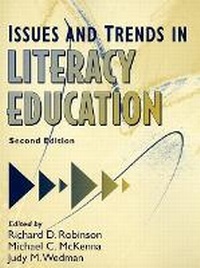
Issues and Trends in Literacy Education
2nd Edition
Published on 17. October 2000
Book
Paperback/Softback
342 pages
978-0-205-29651-4 (ISBN)
Description
Issues and Trends in Literacy Education, Second Edition, is a unique, friendly reference designed to provide information needed by both pre-service and in-service educators to better understand the various viewpoints in the ever-changing field of literacy education. Current topics of interest are identified with articles, related references, discussion questions, application ideas and an annotated bibliography of related resources. After using this book, students will be well versed in reading education and will be able to decide upon - and articulate - their own informed approach to reading education.
More details
Edition
2nd edition
Language
English
Place of publication
United States
Publishing group
Pearson Education (US)
Target group
Professional and scholarly
Dimensions
Height: 235 mm
Width: 178 mm
Weight
680 gr
ISBN-13
978-0-205-29651-4 (9780205296514)
Copyright in bibliographic data and cover images is held by Nielsen Book Services Limited or by the publishers or by their respective licensors: all rights reserved.
Schweitzer Classification
Other editions
New editions
Richard D. Robinson | Judy M. Wedman
Issues and Trends in Literacy Education
Book
02/2004
3rd Edition
Pearson
€67.01
Article exhausted; check for reprint
Previous edition

ROBINSON MCKENN | A WEDMAN
Issues & Trends Literacy Education
Book
01/1996
Allyn & Bacon
€49.75
Article exhausted; check different version
Content
Preface.
Introduction to the Field of Literacy Education.
1.Balance.
Michael Pressley, Joan Rankin, and Linda Yokoi, A Survey of Instructional Practices of Primary Teachers Nominated as Effective in Promoting Literacy.
K. Au, J. Caroll, and J. Scheu, The Six Aspects of Literacy: A Curriculum Framework.
2.Phonics.
Steven A. Stahl, Ann M. Duffy-Hester, and Katherine Anne Dougherty Stahl, Everything You Wanted to Know about Phonics (But Were Afraid to Ask).
International Reading Association, Phonemic Awareness and the Teaching of Reading: A Position Statement from the Board of Directors of the International Reading Association.
3.Multicultural Diversity.
Jim Anderson and Lee Gunderson, Literacy Learning from a Multicultural Perspective.
Sandy Kaser and Kathy G. Short, Exploring Culture through Children's Connections.
4.Reading Assessment.
Robert J. Tierney, Literacy Assessment Reform: Shifting Beliefs, Principled Possibilities, and Emerging Practices.
D. Monty Neill, Transforming Student Assessment.
5.Literacy Materials.
The Commission on Reading, National Council of Teachers of English, Basal Readers and the State of American Reading Instruction: A Call for Action.
Constance Weaver, The Basalization of America: A Cause for Concern.
Patrick Groff, An Attack on Basal Readers for the Wrong Reasons.
6.Spelling.
Edward Miller, The Case of Invented Spelling: How Theory Becomes Target Practice.
Marcia A. Invernizzi, Mary P. Abouzeid, and Janet W. Bloodgood, Integrated Word Study: Spelling, Grammar, and Meaning in the Language Arts Classroom.
7.Emergent Literacy.
Linda Teran Strommen and Barbara Fowles Mates, What Readers Do: Young Children's Ideas about the Nature of Reading.
Judi Lucas Lesiak, Research Based Answers to Questions about Emergent Literacy in Kindergarten.
8.Content Literacy.
Richard T. Vacca, Let's Not Marginalize Adolescent Literacy.
Andrea M. Guillaume, Learning with Text in the Primary Grades.
9.Early Intervention.
Barbara M. Taylor, Barbara E. Hanson, Karen Justice-Swanson, and Susan M. Watts, Helping Struggling Readers: Linking Small-Group Intervention with Cross-Age Tutoring.
Billie J. Askew, Irene C. Fountas, Carol A. Lyons, Gay Su Pinnell, and Maribeth C. Schmitt, A Review of Reading Recovery.
10.Writing.
James V. Hoffman, Process Writing and the Writer's Workshop - Excerpt from When Bad Things Happen to Good Ideas in Literacy Education: Professional Dilemmas, Personal Decisions, and Political Traps.
Barbara Carney, Process Writing and the Secondary School Reality: A Compromise.
Jane Hansen, Evaluation: The Center of Writing Instruction.
Index.
Introduction to the Field of Literacy Education.
1.Balance.
Michael Pressley, Joan Rankin, and Linda Yokoi, A Survey of Instructional Practices of Primary Teachers Nominated as Effective in Promoting Literacy.
K. Au, J. Caroll, and J. Scheu, The Six Aspects of Literacy: A Curriculum Framework.
2.Phonics.
Steven A. Stahl, Ann M. Duffy-Hester, and Katherine Anne Dougherty Stahl, Everything You Wanted to Know about Phonics (But Were Afraid to Ask).
International Reading Association, Phonemic Awareness and the Teaching of Reading: A Position Statement from the Board of Directors of the International Reading Association.
3.Multicultural Diversity.
Jim Anderson and Lee Gunderson, Literacy Learning from a Multicultural Perspective.
Sandy Kaser and Kathy G. Short, Exploring Culture through Children's Connections.
4.Reading Assessment.
Robert J. Tierney, Literacy Assessment Reform: Shifting Beliefs, Principled Possibilities, and Emerging Practices.
D. Monty Neill, Transforming Student Assessment.
5.Literacy Materials.
The Commission on Reading, National Council of Teachers of English, Basal Readers and the State of American Reading Instruction: A Call for Action.
Constance Weaver, The Basalization of America: A Cause for Concern.
Patrick Groff, An Attack on Basal Readers for the Wrong Reasons.
6.Spelling.
Edward Miller, The Case of Invented Spelling: How Theory Becomes Target Practice.
Marcia A. Invernizzi, Mary P. Abouzeid, and Janet W. Bloodgood, Integrated Word Study: Spelling, Grammar, and Meaning in the Language Arts Classroom.
7.Emergent Literacy.
Linda Teran Strommen and Barbara Fowles Mates, What Readers Do: Young Children's Ideas about the Nature of Reading.
Judi Lucas Lesiak, Research Based Answers to Questions about Emergent Literacy in Kindergarten.
8.Content Literacy.
Richard T. Vacca, Let's Not Marginalize Adolescent Literacy.
Andrea M. Guillaume, Learning with Text in the Primary Grades.
9.Early Intervention.
Barbara M. Taylor, Barbara E. Hanson, Karen Justice-Swanson, and Susan M. Watts, Helping Struggling Readers: Linking Small-Group Intervention with Cross-Age Tutoring.
Billie J. Askew, Irene C. Fountas, Carol A. Lyons, Gay Su Pinnell, and Maribeth C. Schmitt, A Review of Reading Recovery.
10.Writing.
James V. Hoffman, Process Writing and the Writer's Workshop - Excerpt from When Bad Things Happen to Good Ideas in Literacy Education: Professional Dilemmas, Personal Decisions, and Political Traps.
Barbara Carney, Process Writing and the Secondary School Reality: A Compromise.
Jane Hansen, Evaluation: The Center of Writing Instruction.
Index.