

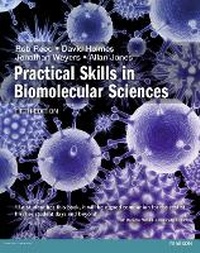
Practical Skills in Biomolecular Science
5th Edition
Published on 5. August 2016
Book
Paperback/Softback
576 pages
978-1-292-10073-9 (ISBN)
Description
If you are studying the biomolecular sciences - including biochemistry, biomedical sciences, biotechnology, genetics, microbiology and molecular biology - then this book will be an indispensable companion throughout the whole of your degree programme. It provides effective explanation and support for the development of a wide range of laboratory and data analysis skills that you will use time and again during the practical aspects of your studies. This book also gives you a solid grounding in the broader transferable skills, which are increasingly necessary to achieve a high level of academic success.
More details
Series
Edition
5th edition
Language
English
Place of publication
Harlow
United Kingdom
Target group
College/higher education
Professional and scholarly
Dimensions
Height: 275 mm
Width: 220 mm
Thickness: 23 mm
Weight
1226 gr
ISBN-13
978-1-292-10073-9 (9781292100739)
Copyright in bibliographic data and cover images is held by Nielsen Book Services Limited or by the publishers or by their respective licensors: all rights reserved.
Schweitzer Classification
Other editions
New editions
Rob Reed | David Holmes | Jonathan Weyers
Practical Skills in Biomolecular Science
Book
12/2021
6th Edition
Pearson Education Limited
€62.00
Shipment within 10-20 days
Additional editions
Rob Reed | Jonathan Weyers | Allan Jones
Practical Skills in Biomolecular Science 5th edn
E-Book
08/2016
1st Edition
Pearson Education Limited
€50.59
Available for download
Previous edition
Jonathan Weyers | Rob Reed | Allan Jones
Practical Skills in Biomolecular Sciences
Book
08/2012
4th Edition
Pearson Education
€84.40
Article exhausted; check for reprint
Persons
Rob Reed is Adjunct Professor (Education and Science) at Central Queensland University, Australia
David Holmes is Associate Dean of the Keith B.Taylor Global Scholars Programme, St George's University School of Medicine (Grenada), based at Northumbria University, UK.
Jonathan Weyers is Honorary Senior Lecturer at the University of Dundee, UK.
Allan Jones is Chancellor's Award Fellow in Ecology, Environmental Science and Zoology at the University of Dundee, UK.
David Holmes is Associate Dean of the Keith B.Taylor Global Scholars Programme, St George's University School of Medicine (Grenada), based at Northumbria University, UK.
Jonathan Weyers is Honorary Senior Lecturer at the University of Dundee, UK.
Allan Jones is Chancellor's Award Fellow in Ecology, Environmental Science and Zoology at the University of Dundee, UK.
Content
Study and examination skills
1. The importance of transferable skills
2. Managing your time
3. Working with others
4. Taking notes from lectures and texts
5. Learning effectively
6. Revision strategies
7. Assignments and exams
8. Preparing your curriculum vitae
Information technology and learning resources
9. Finding and citing published information
10. Evaluating information
11. Using online resources
12. Bioinformatics- Internet resources
13. Using spreadsheets
14. using word processors, databases and other packages
Communicating information
15. Organising a poster display
16. Giving a spoken presentation
17. General aspects of scientific writing
18. Writing essays
19. Reporting practical and project work
20. Writing literature surveys and reviews
Fundamental laboratory techniques
21. Essentials of practical work
22. Bioethics
23. Health and safety
24. Working with liquids
25. Basic laboratory procedures
26. Principles of solution chemistry
27. pH and buffer solutions
28. Introduction to microscopy
29. Setting up and using a light microscope
The investigative approach
30. Making measurements
31. SI units and their use
32. Scientific method and design of experiments
33. Making notes of practical work
34. Project work
Working with cells and tissues
35. Sterile technique
36. Culture systems and growth measurement
37. Collecting and isolating microbes
38. Identifying microbes
39. Naming microbes and other organisms
40. Working with animal and plant tissues and cells
41. Homogenisation and fractionation of cells and tissues
Analytical techniques
42. Calibration and its application to quantitative analysis
43. Immunological methods
44. Using stable isotopes
45. Using radioisotopes
46. Measuring light
47. Basic spectroscopy
48. Advanced spectroscopy and spectrometry
49. Centrifugation
50. Chromatography- separation methods
51. Chromatography- detection and analysis
52. Principles and practice of electrophoresis
53. Advanced electrophoretic techniques
54. Electroanalytical techniques
Assaying biomolecules and studying metabolism
55. Analysis of biomolecules: fundamental principles
56. Assaying amino acids, peptides and proteins
57. Assaying lipids
58. Assaying carbohydrates
59. Assaying nucleic acids and nucleotides
60. Protein purification
61. Enzyme studies
62. Membrane transport processes
63. Photosynthesis and respiration
Genetics
64. Mendelian genetics
65. Bacterial and phage genetics
66. Molecular genetics I- fundamental principles
67. Molecular genetics II- PCR and related applications
68. Molecular genetics III- genetic manipulation techniques
Analysis and presentation of data
69. Manipulating and transforming raw data
70. Using graphs
71. Presenting data in tables
72. Hints for solving numerical problems
73. Descriptive statistics
74. Choosing and using statistical tests
1. The importance of transferable skills
2. Managing your time
3. Working with others
4. Taking notes from lectures and texts
5. Learning effectively
6. Revision strategies
7. Assignments and exams
8. Preparing your curriculum vitae
Information technology and learning resources
9. Finding and citing published information
10. Evaluating information
11. Using online resources
12. Bioinformatics- Internet resources
13. Using spreadsheets
14. using word processors, databases and other packages
Communicating information
15. Organising a poster display
16. Giving a spoken presentation
17. General aspects of scientific writing
18. Writing essays
19. Reporting practical and project work
20. Writing literature surveys and reviews
Fundamental laboratory techniques
21. Essentials of practical work
22. Bioethics
23. Health and safety
24. Working with liquids
25. Basic laboratory procedures
26. Principles of solution chemistry
27. pH and buffer solutions
28. Introduction to microscopy
29. Setting up and using a light microscope
The investigative approach
30. Making measurements
31. SI units and their use
32. Scientific method and design of experiments
33. Making notes of practical work
34. Project work
Working with cells and tissues
35. Sterile technique
36. Culture systems and growth measurement
37. Collecting and isolating microbes
38. Identifying microbes
39. Naming microbes and other organisms
40. Working with animal and plant tissues and cells
41. Homogenisation and fractionation of cells and tissues
Analytical techniques
42. Calibration and its application to quantitative analysis
43. Immunological methods
44. Using stable isotopes
45. Using radioisotopes
46. Measuring light
47. Basic spectroscopy
48. Advanced spectroscopy and spectrometry
49. Centrifugation
50. Chromatography- separation methods
51. Chromatography- detection and analysis
52. Principles and practice of electrophoresis
53. Advanced electrophoretic techniques
54. Electroanalytical techniques
Assaying biomolecules and studying metabolism
55. Analysis of biomolecules: fundamental principles
56. Assaying amino acids, peptides and proteins
57. Assaying lipids
58. Assaying carbohydrates
59. Assaying nucleic acids and nucleotides
60. Protein purification
61. Enzyme studies
62. Membrane transport processes
63. Photosynthesis and respiration
Genetics
64. Mendelian genetics
65. Bacterial and phage genetics
66. Molecular genetics I- fundamental principles
67. Molecular genetics II- PCR and related applications
68. Molecular genetics III- genetic manipulation techniques
Analysis and presentation of data
69. Manipulating and transforming raw data
70. Using graphs
71. Presenting data in tables
72. Hints for solving numerical problems
73. Descriptive statistics
74. Choosing and using statistical tests