

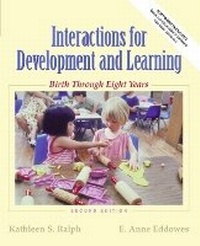
Interactive Curriculum for Development and Learning
Birth Through Eight Years
2nd Edition
Published on 7. March 2002
Book
Paperback/Softback
332 pages
978-0-13-094134-3 (ISBN)
Description
For undergraduate courses in General Methods in Early Childhood Development, Development of the Young Child, and Early Childhood Curriculum.
This unique text stresses a positive interactive curriculum for development and learning based on five developmental areas: personal-social, physical, cognitive, communication, and creative. The revised edition ties developmental theory to real-life situations in a variety of settings. This helpful text provides methods of planning, program implementation, and evaluation for those who wish to enhance the quality of interaction with children from birth through age eight.
This unique text stresses a positive interactive curriculum for development and learning based on five developmental areas: personal-social, physical, cognitive, communication, and creative. The revised edition ties developmental theory to real-life situations in a variety of settings. This helpful text provides methods of planning, program implementation, and evaluation for those who wish to enhance the quality of interaction with children from birth through age eight.
More details
Edition
2nd edition
Language
English
Place of publication
United States
Publishing group
Pearson Education (US)
Target group
Professional and scholarly
Dimensions
Height: 235 mm
Width: 191 mm
ISBN-13
978-0-13-094134-3 (9780130941343)
Copyright in bibliographic data and cover images is held by Nielsen Book Services Limited or by the publishers or by their respective licensors: all rights reserved.
Schweitzer Classification
Other editions
Previous edition

E. Anne Eddowes | Kathleen S. Ralph
Interactions for Development and Learning
Birth Through Eight Years
Book
07/1997
Pearson
€53.47
Article exhausted; check for reprint
Content
I. FOUNDATIONS OF AN INTERACTIVE CURRICULUM.
1. Theoretical Perspective for an Interactive Curriculum.
2. Developing an Understanding of Young Children.
3. Supporting an Interactive Curriculum with Physical Environments.
4. Planning for an Interactive Curriculum.
II. ACTIVITIES FOR INTERACTION.
5. Types of Interaction.
6. Personal-Social Development.
7. Physical Development.
8. Cognitive Development.
9. Communication Development.
10. Creative Development.
III. RESOURCES FOR INTERACTION.
Appendix A: Matrix of Activities by Age.
Appendix B: Child Development Associate Competency Goals and Functional Areas: Information Locator Guide.
Appendix C: Directions for Activities.
Appendix D: Directions for Making Equipment.
Appendix E: Professional Resources.
1. Theoretical Perspective for an Interactive Curriculum.
2. Developing an Understanding of Young Children.
3. Supporting an Interactive Curriculum with Physical Environments.
4. Planning for an Interactive Curriculum.
II. ACTIVITIES FOR INTERACTION.
5. Types of Interaction.
6. Personal-Social Development.
7. Physical Development.
8. Cognitive Development.
9. Communication Development.
10. Creative Development.
III. RESOURCES FOR INTERACTION.
Appendix A: Matrix of Activities by Age.
Appendix B: Child Development Associate Competency Goals and Functional Areas: Information Locator Guide.
Appendix C: Directions for Activities.
Appendix D: Directions for Making Equipment.
Appendix E: Professional Resources.