

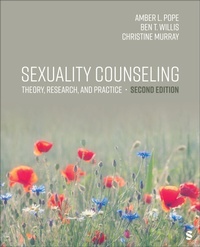
Sexuality Counseling
Theory, Research, and Practice
2nd Edition
Will be published approx. on 14. December 2026
Book
Paperback/Softback
519 pages
978-1-0719-6815-4 (ISBN)
Description
Sexuality Counseling: Theory, Research, and Practice equips professionals with an integrative framework, actionable strategies, and interactive tools to build competence and confidence in addressing sexuality across diverse contexts.
More details
Edition
2nd Revised edition
Language
English
Place of publication
Thousand Oaks
United States
Publishing group
Sage Publications Inc Ebooks
Target group
College/higher education
Edition type
Revised edition
Dimensions
Height: 231 mm
Width: 187 mm
ISBN-13
978-1-0719-6815-4 (9781071968154)
Copyright in bibliographic data and cover images is held by Nielsen Book Services Limited or by the publishers or by their respective licensors: all rights reserved.
Schweitzer Classification
Other editions
Previous edition
Christine E. (Elizabeth) Murray | Amber L. Pope | Benjamin T. (Tinsley) Willis
Sexuality Counseling
Theory, Research, and Practice
Book
03/2016
1st Edition
SAGE Publications Inc
€157.00
Shipment within 10-20 days
Persons
Amber L. Pope, PhD, LPC, LMHC is an Assistant Professor of Counselor Education and the Relationship, Marriage, and Family Counseling Area Lead at William and Mary in Williamsburg, VA. She earned her graduate degrees in Counselor Education and Supervision at the University of North Carolina at Greensboro. Currently, she is the President for the Association of Counseling Sexology and Sexual Wellness and the Supervision Representative for the Virginia Association of Counselor Education and Supervision. She also serves on the editorial boards for the Journal of LGBTQ Issues in Counseling and the Journal of Counseling Sexology and Sexual Wellness. Dr. Pope's research interests focus on culturally sustaining counselor education and supervision, primarily improving training in LGBTQ+ affirmative counseling and sexuality counseling. She has over 25 peer-reviewed publications, and her previous books include LGBTQ+ Affirmative Counseling: An Evidenced Based Guide for Student and Practitioners and Diagnosis and Treatment Planning Skills: A Popular Culture Casebook Approach (3rd ed.). Dr. Pope's clinical expertise is in relationship and family counseling, sexuality counseling, and LGBTQ+ affirming counseling. She has received advanced training in Emotionally Focused Therapy and Emotionally Focused Family Therapy, Dialectical Behavior Therapy, and trauma-informed counseling approaches. She lives in Williamsburg, Virginia with her husband and dog.
Christine E. Murray, Ph.D., has over two decades of experience working in the mental health field. Based in Greensboro, North Carolina, Dr. Murray is a Licensed Marriage and Family Therapist (LMFT) and Licensed Clinical Mental Health Counselor (LCMHC) in North Carolina, as well as a Licensed Marriage and Family Therapist (LMFT) and Licensed Professional Counselor (LPC) in her home state of Pennsylvania.
Dr. Murray is a Professor of Counseling in the Townsend Institute at Concordia University, as well as the Founder of Start Here Counseling & Consulting, PLLC. She is also a Professor Emerita at The University of North Carolina at Greensboro (UNCG). She retired from UNCG during the summer of 2024 after 19 years of service as a faculty member in the Department of Counseling and Educational Development. From 2019 to 2023, she also served as the Director of the UNCG Center for Youth, Family, and Community Partnerships.
Throughout her career, much of Dr. Murray's work has focused on supporting survivors of domestic violence in the long-term recovery process and strengthening community response systems to better support victims and survivors as they move toward safety and healing. As a survivor of past abuse herself, Dr. Murray brings her own lived experience to this work, including as Founder of The Source for Survivors resource and her most recent book, "Financial Abuse Recovery: Financial Healing and Empowerment After Surviving an Abusive Relationship." To learn more about Dr. Murray's work, please visit https://www.starthereandnow.com/christine.html.
Ben T. Willis is a full professor and program director of the Clinical Mental Health Counseling program at the University of Scranton in Pennsylvania. He has worked as a counselor educator, supervisor, and program director for over a dozen years. Dr. Willis earned his M.S. with a specialization in Couples and Family Counseling and his Ph.D. in Counseling and Counselor Education from the University of North Carolina at Greensboro. He earned his B.S. degree in Biology from the University of North Carolina at Chapel Hill. He is a National Certified Counselor and an Approved Clinical Supervisor. He has completed an externship in Emotionally Focused Couples Therapy and utilizes a developmental and wellness approach in his professional work. He has counseled in college counseling center, community agency, and private practice settings. His research focuses on how people develop and change their self-conceptualization of specific identities as well as their general sense of self. He has over 12 publications and 40 presentations.
Christine E. Murray, Ph.D., has over two decades of experience working in the mental health field. Based in Greensboro, North Carolina, Dr. Murray is a Licensed Marriage and Family Therapist (LMFT) and Licensed Clinical Mental Health Counselor (LCMHC) in North Carolina, as well as a Licensed Marriage and Family Therapist (LMFT) and Licensed Professional Counselor (LPC) in her home state of Pennsylvania.
Dr. Murray is a Professor of Counseling in the Townsend Institute at Concordia University, as well as the Founder of Start Here Counseling & Consulting, PLLC. She is also a Professor Emerita at The University of North Carolina at Greensboro (UNCG). She retired from UNCG during the summer of 2024 after 19 years of service as a faculty member in the Department of Counseling and Educational Development. From 2019 to 2023, she also served as the Director of the UNCG Center for Youth, Family, and Community Partnerships.
Throughout her career, much of Dr. Murray's work has focused on supporting survivors of domestic violence in the long-term recovery process and strengthening community response systems to better support victims and survivors as they move toward safety and healing. As a survivor of past abuse herself, Dr. Murray brings her own lived experience to this work, including as Founder of The Source for Survivors resource and her most recent book, "Financial Abuse Recovery: Financial Healing and Empowerment After Surviving an Abusive Relationship." To learn more about Dr. Murray's work, please visit https://www.starthereandnow.com/christine.html.
Ben T. Willis is a full professor and program director of the Clinical Mental Health Counseling program at the University of Scranton in Pennsylvania. He has worked as a counselor educator, supervisor, and program director for over a dozen years. Dr. Willis earned his M.S. with a specialization in Couples and Family Counseling and his Ph.D. in Counseling and Counselor Education from the University of North Carolina at Greensboro. He earned his B.S. degree in Biology from the University of North Carolina at Chapel Hill. He is a National Certified Counselor and an Approved Clinical Supervisor. He has completed an externship in Emotionally Focused Couples Therapy and utilizes a developmental and wellness approach in his professional work. He has counseled in college counseling center, community agency, and private practice settings. His research focuses on how people develop and change their self-conceptualization of specific identities as well as their general sense of self. He has over 12 publications and 40 presentations.
Content
Preface
Acknowledgments
About the Authors
Chapter 1: Addressing Sexuality in Professional Counseling
Introduction
Defining Sexuality
A Contextual Model for Understanding Sexuality
Professional Issues in Sexuality Counseling
Professional Competence in Sexuality Counseling
Ethical Considerations for Sexuality Counseling
Interdisciplinary Collaborations for Sexuality Counseling
Overview of the Remainder of this Book
Keystones
Additional Resources
Chapter 2: General Assessment and Interventions in Sexuality Counseling
Introduction
General Assessment Strategies
General Guidelines for Sexuality Counseling
Review of Treatment Approaches to Sexuality Counseling
Summary
Keystones
Additional Resources
References
Chapter 3: Cultural and Contextual Influences on Sexuality
Introduction
The Importance of Cultural Humility in Sexuality Counseling
A Multi-Layered Approach to Understanding Culture, Context, and Sexuality
Religion, Spirituality, and Sexuality
Cultural Influences--Including Race, Ethnicity, and Nationality-On Sexuality
Socioeconomic Status and Sexuality
Sexuality and Geographic and Regional Variations
Sexuality and the Media
Counseling Strategies for Addressing Cultural and Contextual Influences on Sexuality
Keystones
Additional Resources
References
Chapter 4: Lifespan Development and Sexuality
Introduction
Sexuality across the Life Cycle
Sexuality Assessment
Sexuality in Childhood
Sexuality in Adolescence
Sexuality in Adulthood
Summary
Keystones
Additional Resources
References
Chapter 5: Gender Identity
Introduction
Gender Identity, Expression, and Sex Assigned at Birth
Historical, Societal, and Cultural Context
Gender Dysphoria in the DSM
Counseling Considerations with TGD Clients
Counseling Strategies
Summary
Keystones
Additional Resources
References
Chapter 6: Affectional and Sexual Orientation
Introduction
Affectional and Sexual Orientation
Historical, Societal, and Cultural Context
Affectional and Sexual Orientation Identity Development
Counseling Considerations with LGBQA+ Clients
Counseling Strategies
Summary
Keystones
Additional Resources
References
Chapter 7: Diverse Sexual Expressions and Communities
Introduction
Historical, Societal, and Cultural Context
Consensual Non-Monogamy
Kink Communities
Systemic Advocacy
Summary
Keystones
Additional Resources
References
Chapter 8: Sexuality and Intimate Relationships
Introduction
The Dynamics of Intimate Relationships
Counseling Considerations with Intimate Partners
Counseling Strategies
Summary
Keystones
Additional Resources
References
Chapter 9: Counseling to Support Clients' Recovery from Sexual Trauma
Introduction
Definitions and Types of Sexual Trauma
Prevalence of Sexual Trauma
Potential Impacts of Sexual Trauma
Counseling Considerations for Working with Clients Impacted by Sexual Trauma
Summary
Keystones
References
Chapter 10: Sexuality and Mental Health
Introduction
General Assessment Strategies
Sexual Implications of Mental Health Disorders
Sexual Side Effects of Psychotropic Medications
Sexual Dysfunctions in the DSM-5-TR
Paraphilic Disorders in the DSM-5-TR
Compulsive Sexual Behavior
Sexual Offending
Summary
Keystones
Additional Resources
References
Chapter 11: Physiology and Sexual Health
Introduction
Overview of Physiology as Related to Sexual Functioning
General Assessment Strategies
Healthy Sexual Practices
Common Physiological Issues that Impact Sexual Health
Reproductive Health
Sexually Transmitted Infections (STIs)
Summary
Keystones
Additional Resources
References
Chapter 12: Positive Sexuality
Introduction
Revisiting the Definition of Positive Sexuality
Revisiting the Contextualized Sexuality Model: Identifying Factors that Support Positive Sexuality
Benefits of Positive Sexuality
Counseling Strategies to Foster Positive Sexuality
Summary
Keystones
Additional Resources
References
Acknowledgments
About the Authors
Chapter 1: Addressing Sexuality in Professional Counseling
Introduction
Defining Sexuality
A Contextual Model for Understanding Sexuality
Professional Issues in Sexuality Counseling
Professional Competence in Sexuality Counseling
Ethical Considerations for Sexuality Counseling
Interdisciplinary Collaborations for Sexuality Counseling
Overview of the Remainder of this Book
Keystones
Additional Resources
Chapter 2: General Assessment and Interventions in Sexuality Counseling
Introduction
General Assessment Strategies
General Guidelines for Sexuality Counseling
Review of Treatment Approaches to Sexuality Counseling
Summary
Keystones
Additional Resources
References
Chapter 3: Cultural and Contextual Influences on Sexuality
Introduction
The Importance of Cultural Humility in Sexuality Counseling
A Multi-Layered Approach to Understanding Culture, Context, and Sexuality
Religion, Spirituality, and Sexuality
Cultural Influences--Including Race, Ethnicity, and Nationality-On Sexuality
Socioeconomic Status and Sexuality
Sexuality and Geographic and Regional Variations
Sexuality and the Media
Counseling Strategies for Addressing Cultural and Contextual Influences on Sexuality
Keystones
Additional Resources
References
Chapter 4: Lifespan Development and Sexuality
Introduction
Sexuality across the Life Cycle
Sexuality Assessment
Sexuality in Childhood
Sexuality in Adolescence
Sexuality in Adulthood
Summary
Keystones
Additional Resources
References
Chapter 5: Gender Identity
Introduction
Gender Identity, Expression, and Sex Assigned at Birth
Historical, Societal, and Cultural Context
Gender Dysphoria in the DSM
Counseling Considerations with TGD Clients
Counseling Strategies
Summary
Keystones
Additional Resources
References
Chapter 6: Affectional and Sexual Orientation
Introduction
Affectional and Sexual Orientation
Historical, Societal, and Cultural Context
Affectional and Sexual Orientation Identity Development
Counseling Considerations with LGBQA+ Clients
Counseling Strategies
Summary
Keystones
Additional Resources
References
Chapter 7: Diverse Sexual Expressions and Communities
Introduction
Historical, Societal, and Cultural Context
Consensual Non-Monogamy
Kink Communities
Systemic Advocacy
Summary
Keystones
Additional Resources
References
Chapter 8: Sexuality and Intimate Relationships
Introduction
The Dynamics of Intimate Relationships
Counseling Considerations with Intimate Partners
Counseling Strategies
Summary
Keystones
Additional Resources
References
Chapter 9: Counseling to Support Clients' Recovery from Sexual Trauma
Introduction
Definitions and Types of Sexual Trauma
Prevalence of Sexual Trauma
Potential Impacts of Sexual Trauma
Counseling Considerations for Working with Clients Impacted by Sexual Trauma
Summary
Keystones
References
Chapter 10: Sexuality and Mental Health
Introduction
General Assessment Strategies
Sexual Implications of Mental Health Disorders
Sexual Side Effects of Psychotropic Medications
Sexual Dysfunctions in the DSM-5-TR
Paraphilic Disorders in the DSM-5-TR
Compulsive Sexual Behavior
Sexual Offending
Summary
Keystones
Additional Resources
References
Chapter 11: Physiology and Sexual Health
Introduction
Overview of Physiology as Related to Sexual Functioning
General Assessment Strategies
Healthy Sexual Practices
Common Physiological Issues that Impact Sexual Health
Reproductive Health
Sexually Transmitted Infections (STIs)
Summary
Keystones
Additional Resources
References
Chapter 12: Positive Sexuality
Introduction
Revisiting the Definition of Positive Sexuality
Revisiting the Contextualized Sexuality Model: Identifying Factors that Support Positive Sexuality
Benefits of Positive Sexuality
Counseling Strategies to Foster Positive Sexuality
Summary
Keystones
Additional Resources
References