

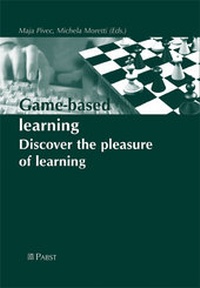
Game-based learning
Discover the pleasure of learning
2nd Edition
Published in December 2008
Book
148 pages
978-3-89967-521-4 (ISBN)
Description
The primary target-group of these guidelines is practitioners i.e. all pedagogues, teachers and trainers that teach children age 10 - 15 and wants to implement game-based learning in their classes. Various educational games for children are outlined to spark the ideas and present the possibilities of applying games for learning. The chapter reflections support the reader's focus on the conditions, pre-requisites and constraints related to her/ his specific educational setting. Many of the activities presented in the different chapters can be taken to the classroom environment.
In chapter one introductory thoughts are given to games as educational experience and possible additional activities to motivate students. With help of short reflection within the chapter, the reader is encouraged to think about his/her personal experiences with and about game-based learning and how to establish a dialogue about the games in the class.
Chapter two presents learning through time and culture. The key characteristics of game-based learning are described, as well as different types of learning while playing games.
The substantial part of chapter three is focused on quality perspectives of games, outlining pedagogical and context criteria, content criteria and technical criteria that practitioners can consider when selecting a game.
By defining steps for educational game design, providing guidelines for gender appropriate design, software tools for implementation of ideas and how to evaluate player enjoyment, chapter four sparks ideas on how to use game design as a motivating classroom activity and how to modify the activities for your class.
In chapter one introductory thoughts are given to games as educational experience and possible additional activities to motivate students. With help of short reflection within the chapter, the reader is encouraged to think about his/her personal experiences with and about game-based learning and how to establish a dialogue about the games in the class.
Chapter two presents learning through time and culture. The key characteristics of game-based learning are described, as well as different types of learning while playing games.
The substantial part of chapter three is focused on quality perspectives of games, outlining pedagogical and context criteria, content criteria and technical criteria that practitioners can consider when selecting a game.
By defining steps for educational game design, providing guidelines for gender appropriate design, software tools for implementation of ideas and how to evaluate player enjoyment, chapter four sparks ideas on how to use game design as a motivating classroom activity and how to modify the activities for your class.
More details
Other editions
Additional editions
E-Book
01/2008
2nd Edition
Pabst Science Publishers
€11.99
Available for download