

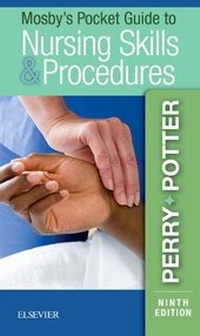
Mosby's Pocket Guide to Nursing Skills & Procedures
9th Edition
Published on 19. February 2018
Book
Spiral bound
680 pages
978-0-323-52910-5 (ISBN)
Description
Mosby's Pocket Guide to Nursing Skills & Procedures, 9th Edition, is a concise, pocket-sized study tool and clinical reference based on the best-selling textbook Clinical Nursing Skills & Techniques, 9th Edition! This spiral-bound presents 85 key nursing skills in a convenient, A-to-Z format. Step-by-step instructions include full-color photos plus rationales explaining why and how to use specific techniques to help you troubleshoot potential problems and take appropriate actions to address them. With the latest in evidence-based practice this essential guide is a great tool to help you safely and effectively perform core nursing skills.
Clear, two-column format shows you how to perform skills, with rationales for each step explaining the reason behind the practice and the benefit to patients.
Alphabetical organization of skills makes it easy to find information quickly, with each skill beginning on a new page.
A convenient pocket size and spiral binding allow the book to fit easily into your coat pocket and to stay open on the page you want.
Safety alerts highlight important information for patient safety and effective performance of skills.
Special Considerations address teaching, the home care setting, and care modifications for pediatric and geriatric patients.
Documentation guidelines include a bulleted list of what should be reported and recorded in the patient records.
Unexpected outcomes and related interventions help you to troubleshoot potential problems and take appropriate actions to address them.
NEW! Additional nursing skills cover Obtaining a 12-lead Electrocardiogram (ECG) and Applying a Cardiac Monitor to address these vital elements of cardiac care
NEW! Up-to-date content is based on the most recent edition of Perry & Potter's Clinical Nursing Skills & Techniques, the bestselling nursing skills text
Clear, two-column format shows you how to perform skills, with rationales for each step explaining the reason behind the practice and the benefit to patients.
Alphabetical organization of skills makes it easy to find information quickly, with each skill beginning on a new page.
A convenient pocket size and spiral binding allow the book to fit easily into your coat pocket and to stay open on the page you want.
Safety alerts highlight important information for patient safety and effective performance of skills.
Special Considerations address teaching, the home care setting, and care modifications for pediatric and geriatric patients.
Documentation guidelines include a bulleted list of what should be reported and recorded in the patient records.
Unexpected outcomes and related interventions help you to troubleshoot potential problems and take appropriate actions to address them.
NEW! Additional nursing skills cover Obtaining a 12-lead Electrocardiogram (ECG) and Applying a Cardiac Monitor to address these vital elements of cardiac care
NEW! Up-to-date content is based on the most recent edition of Perry & Potter's Clinical Nursing Skills & Techniques, the bestselling nursing skills text
More details
Series
Edition
9th edition
Language
English
Place of publication
St Louis
United States
Publishing group
Elsevier - Health Sciences Division
Target group
College/higher education
Illustrations
Approx. 450 illustrations (450 in full color)
Dimensions
Height: 187 mm
Width: 111 mm
Weight
680 gr
ISBN-13
978-0-323-52910-5 (9780323529105)
Copyright in bibliographic data and cover images is held by Nielsen Book Services Limited or by the publishers or by their respective licensors: all rights reserved.
Schweitzer Classification
Other editions
New editions
Patricia A. Potter | Anne G. Perry
Potter & Perry's Pocket Guide to Nursing Skills & Procedures
Book
08/2023
10th Edition
Elsevier
€60.00
Shipment within 10-15 days
Previous edition
Anne Griffin Perry | Patricia A. Potter
Mosby's Pocket Guide to Nursing Skills & Procedures
Book
04/2014
8th Edition
Mosby
€38.37
Article exhausted; check for reprint
Persons
Anne Griffin Perry, RN, MSN, EdD, FAAN is a Professor Emerita, School of Nursing, Southern Illinois University, Edwardsville, Illinois. Patricia A. Potter, RN, MSN, PhD, FAAN is a Former Director of Research, Patient Care Services Barnes-Jewish Hospital St. Louis, Missouri.
Content
A
1. Acapella Device
2. Aquathermia and Heating Pads
3. Aspiration Precautions
4. Assistive Device Ambulation (Use of Crutches, Cane, and Walker)
5. Automated External Defibrillator
B
6. Bladder Volume Measurement
7. Blood Administration
8. Blood Pressure by Auscultation: Upper extremities, Lower extremities, Palpation
9. Blood Glucose Testing
10. Blood Pressure: Automatic
C
11. Cardiac Monitor: Applying
12. Central Venous Access Device Care: Central Venous Catheter, Ports
13. Chest Tube Care
14. Cold Applications
15. Condom Catheter
16. Continuous Passive Motion Machine
17. Continuous Subcutaneous Infusion
D
18. Dressings: Dry and Moist-to-Dry,
29. Dressings: Hydrocolloid, Hydrogel, Foam, or Alginate
20. Dressings: Transparent
E
21. Ear Drop Administration
22. Ear Irrigations
23. Electrocardiogram: Obtaining a 12-Lead
24. Enemas
25. Enteral Nutrition via Gastrostomy or Jejunostomy Tube
26. Enteral Nutrition via a Nasoenteric Feeding Tube
27. Epidural Analgesia
28. Eye Irrigation
29. Eye Medications: Drops and Ointment
F
30. Fall Prevention in a Health Care Facility
31. Fecal Impaction: Removing Digitally
H
32. Hypothermia and Hyperthermia Blankets
I
33. Incentive Spirometery
34. Intradermal Injections
35. Intramuscular Injections
36. Intravenous Medications: Intermittent Infusion Sets and Mini-Infusion Pumps
37. Intravenous Medications: Intravenous Bolus
38. Isolation Precautions
M
39. Mechanical Lifts
40. Metered-Dose Inhalers
41. Moist Heat (Compress and Sitz Bath)
42. Mouth Care: Unconscious or Debilitated Patients
N
43. Nail and Foot Care
44. Nasoenteral Tube: Placement and Irrigation
45. Nasogastric Tube for Gastric Decompression: Insertion and Removal
46. Negative-Pressure Wound Therapy
O
47. Oral Medications
48. Oral Medications: Nasogastric Tube Administration
49. Ostomy Care (Pouching)
50. Oxygen Therapy: Nasal Cannula, Oxygen Mask, T Tube, or Tracheostomy Collar
P
51. Parenteral Medication Preparation: Ampules and Vials
52. Parenteral Medications: Mixing Medications in One Syringe
53. Patient-Controlled Analgesia
54. Peripheral Intravenous Care: Dressing Care, Discontinuation
55. Peripheral Intravenous Care: Regulating Intravenous Flow Rate, Changing Tubing and Solution
56. Peripheral Intravenous Insertion
57. Peripherally Inserted Central Catheter Care
58. Postoperative Exercises
59. Pressure Bandages (Applying)
60. Pressure Ulcer Risk Assessment
61. Pressure Ulcer Treatment
62. Pulse Oximetry
R
63. Rectal Suppository Insertion
64. Respiration Assessment
65. Restraint Application
66. Restraint-Free Environment
S
67. Seizure Precautions
68. Sequential Compression Device and Elastic Stockings
69. Specialty Beds: Air-Fluidized, Air Suspension, and Rotokenetic
70. Sterile Gloving
71. Sterile Technique: Donning and Removing Cap, Mask, and Protective Eyewear
72. Subcutaneous Injections
73. Suctioning: Closed (In-line)
74. Suctioning: Nasopharyngeal, Nasotracheal, and Artificial Airway
75. Suprapubic Catheter Care
76. Suture and Staple Removal
T
77. Topical Skin Applications
78. Tracheostomy Care
U
79. Urinary Catheter Insertion
80. Urinary Catheter Care and Removal
81. Urinary Catheter Irrigation
82. Urinary Diversion: Pouching an Incontinent Urinary Diversion
V
83. Vaginal Instillations
84. Venipuncture: Collecting Blood Specimens and Cultures by Syringe and Vacutainer Method
W
85. Wound Drainage Devices: Jackson-Pratt, Hemovac
86. Wound Irrigation
1. Acapella Device
2. Aquathermia and Heating Pads
3. Aspiration Precautions
4. Assistive Device Ambulation (Use of Crutches, Cane, and Walker)
5. Automated External Defibrillator
B
6. Bladder Volume Measurement
7. Blood Administration
8. Blood Pressure by Auscultation: Upper extremities, Lower extremities, Palpation
9. Blood Glucose Testing
10. Blood Pressure: Automatic
C
11. Cardiac Monitor: Applying
12. Central Venous Access Device Care: Central Venous Catheter, Ports
13. Chest Tube Care
14. Cold Applications
15. Condom Catheter
16. Continuous Passive Motion Machine
17. Continuous Subcutaneous Infusion
D
18. Dressings: Dry and Moist-to-Dry,
29. Dressings: Hydrocolloid, Hydrogel, Foam, or Alginate
20. Dressings: Transparent
E
21. Ear Drop Administration
22. Ear Irrigations
23. Electrocardiogram: Obtaining a 12-Lead
24. Enemas
25. Enteral Nutrition via Gastrostomy or Jejunostomy Tube
26. Enteral Nutrition via a Nasoenteric Feeding Tube
27. Epidural Analgesia
28. Eye Irrigation
29. Eye Medications: Drops and Ointment
F
30. Fall Prevention in a Health Care Facility
31. Fecal Impaction: Removing Digitally
H
32. Hypothermia and Hyperthermia Blankets
I
33. Incentive Spirometery
34. Intradermal Injections
35. Intramuscular Injections
36. Intravenous Medications: Intermittent Infusion Sets and Mini-Infusion Pumps
37. Intravenous Medications: Intravenous Bolus
38. Isolation Precautions
M
39. Mechanical Lifts
40. Metered-Dose Inhalers
41. Moist Heat (Compress and Sitz Bath)
42. Mouth Care: Unconscious or Debilitated Patients
N
43. Nail and Foot Care
44. Nasoenteral Tube: Placement and Irrigation
45. Nasogastric Tube for Gastric Decompression: Insertion and Removal
46. Negative-Pressure Wound Therapy
O
47. Oral Medications
48. Oral Medications: Nasogastric Tube Administration
49. Ostomy Care (Pouching)
50. Oxygen Therapy: Nasal Cannula, Oxygen Mask, T Tube, or Tracheostomy Collar
P
51. Parenteral Medication Preparation: Ampules and Vials
52. Parenteral Medications: Mixing Medications in One Syringe
53. Patient-Controlled Analgesia
54. Peripheral Intravenous Care: Dressing Care, Discontinuation
55. Peripheral Intravenous Care: Regulating Intravenous Flow Rate, Changing Tubing and Solution
56. Peripheral Intravenous Insertion
57. Peripherally Inserted Central Catheter Care
58. Postoperative Exercises
59. Pressure Bandages (Applying)
60. Pressure Ulcer Risk Assessment
61. Pressure Ulcer Treatment
62. Pulse Oximetry
R
63. Rectal Suppository Insertion
64. Respiration Assessment
65. Restraint Application
66. Restraint-Free Environment
S
67. Seizure Precautions
68. Sequential Compression Device and Elastic Stockings
69. Specialty Beds: Air-Fluidized, Air Suspension, and Rotokenetic
70. Sterile Gloving
71. Sterile Technique: Donning and Removing Cap, Mask, and Protective Eyewear
72. Subcutaneous Injections
73. Suctioning: Closed (In-line)
74. Suctioning: Nasopharyngeal, Nasotracheal, and Artificial Airway
75. Suprapubic Catheter Care
76. Suture and Staple Removal
T
77. Topical Skin Applications
78. Tracheostomy Care
U
79. Urinary Catheter Insertion
80. Urinary Catheter Care and Removal
81. Urinary Catheter Irrigation
82. Urinary Diversion: Pouching an Incontinent Urinary Diversion
V
83. Vaginal Instillations
84. Venipuncture: Collecting Blood Specimens and Cultures by Syringe and Vacutainer Method
W
85. Wound Drainage Devices: Jackson-Pratt, Hemovac
86. Wound Irrigation