

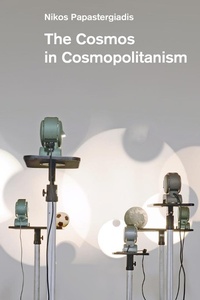
The Cosmos in Cosmopolitanism
Published on 20. October 2023
Book
Hardback
256 pages
978-1-5095-5931-2 (ISBN)
Description
Cosmopolitanism is commonly associated today with the idea that the forces of globalization could be tempered by new forms of cosmopolitan governance, an idea that was popular among some political theorists in the late 20th century but seems increasingly unrealistic today.
Rather than discarding the idea of cosmopolitanism, Nikos Papastergiadis seeks to reinvigorate it by examining the ways in which visual artists have explored themes associated with the cosmos. Artists often claim that all humans possess a fundamental capacity to care, create and connect. Some artists also argue that this creative capacity is linked to a dual connection - companionship with others and with the cosmos. The Ancient Greeks claimed that tuning in to the cosmos was the primal source of inspiration. Kant regarded cosmopolitanism as the goal for humanity, but he turned his attention away from the connection to the cosmos and directed it towards the practical rules for peaceful co-existence. However, these two concerns are not in conflict. Today a new vision of the cosmos is being developed by artists among others, one that brings together the cosmos and the polis. Scholars from the South are decolonizing the mindset which divided the world and split us from our common connections, while others are using art to highlight the existential threats we now face as a species.
By developing a distinctive form of aesthetic cosmopolitanism, this book shows that the idea of the cosmos is more important than ever today, and vital for our attempts to rethink our place as one species among others in a universe that extends far beyond our world.
Cosmopolitanism is commonly associated today with the idea that the forces of globalization could be tempered by new forms of cosmopolitan governance, an idea that was popular among some political theorists in the late 20th century but seems increasingly unrealistic today.
Rather than discarding the idea of cosmopolitanism, Nikos Papastergiadis seeks to reinvigorate it by examining the ways in which visual artists have explored themes associated with the cosmos. Artists often claim that all humans possess a fundamental capacity to care, create and connect. Some artists also argue that this creative capacity is linked to a dual connection - companionship with others and with the cosmos. The Ancient Greeks claimed that tuning in to the cosmos was the primal source of inspiration. Kant regarded cosmopolitanism as the goal for humanity, but he turned his attention away from the connection to the cosmos and directed it towards the practical rules for peaceful co-existence. However, these two concerns are not in conflict. Today a new vision of the cosmos is being developed by artists among others, one that brings together the cosmos and the polis. Scholars from the South are decolonizing the mindset which divided the world and split us from our common connections, while others are using art to highlight the existential threats we now face as a species.
By developing a distinctive form of aesthetic cosmopolitanism, this book shows that the idea of the cosmos is more important than ever today, and vital for our attempts to rethink our place as one species among others in a universe that extends far beyond our world.
Rather than discarding the idea of cosmopolitanism, Nikos Papastergiadis seeks to reinvigorate it by examining the ways in which visual artists have explored themes associated with the cosmos. Artists often claim that all humans possess a fundamental capacity to care, create and connect. Some artists also argue that this creative capacity is linked to a dual connection - companionship with others and with the cosmos. The Ancient Greeks claimed that tuning in to the cosmos was the primal source of inspiration. Kant regarded cosmopolitanism as the goal for humanity, but he turned his attention away from the connection to the cosmos and directed it towards the practical rules for peaceful co-existence. However, these two concerns are not in conflict. Today a new vision of the cosmos is being developed by artists among others, one that brings together the cosmos and the polis. Scholars from the South are decolonizing the mindset which divided the world and split us from our common connections, while others are using art to highlight the existential threats we now face as a species.
By developing a distinctive form of aesthetic cosmopolitanism, this book shows that the idea of the cosmos is more important than ever today, and vital for our attempts to rethink our place as one species among others in a universe that extends far beyond our world.
Cosmopolitanism is commonly associated today with the idea that the forces of globalization could be tempered by new forms of cosmopolitan governance, an idea that was popular among some political theorists in the late 20th century but seems increasingly unrealistic today.
Rather than discarding the idea of cosmopolitanism, Nikos Papastergiadis seeks to reinvigorate it by examining the ways in which visual artists have explored themes associated with the cosmos. Artists often claim that all humans possess a fundamental capacity to care, create and connect. Some artists also argue that this creative capacity is linked to a dual connection - companionship with others and with the cosmos. The Ancient Greeks claimed that tuning in to the cosmos was the primal source of inspiration. Kant regarded cosmopolitanism as the goal for humanity, but he turned his attention away from the connection to the cosmos and directed it towards the practical rules for peaceful co-existence. However, these two concerns are not in conflict. Today a new vision of the cosmos is being developed by artists among others, one that brings together the cosmos and the polis. Scholars from the South are decolonizing the mindset which divided the world and split us from our common connections, while others are using art to highlight the existential threats we now face as a species.
By developing a distinctive form of aesthetic cosmopolitanism, this book shows that the idea of the cosmos is more important than ever today, and vital for our attempts to rethink our place as one species among others in a universe that extends far beyond our world.
More details
Edition
1
Language
English
Place of publication
Oxford
United Kingdom
Publishing group
John Wiley and Sons Ltd
Target group
Professional and scholarly
Dimensions
Height: 244 mm
Width: 173 mm
Thickness: 20 mm
Weight
181 gr
ISBN-13
978-1-5095-5931-2 (9781509559312)
Copyright in bibliographic data and cover images is held by Nielsen Book Services Limited or by the publishers or by their respective licensors: all rights reserved.
Schweitzer Classification
Other editions
Additional editions
Nikos Papastergiadis
The Cosmos in Cosmopolitanism
Book
10/2023
Polity Press
€24.00
Shipment within 15-20 days
Nikos Papastergiadis
The Cosmos in Cosmopolitanism
E-Book
10/2023
1st Edition
Wiley
€19.99
Available for download
Nikos Papastergiadis
The Cosmos in Cosmopolitanism
E-Book
10/2023
1st Edition
Wiley
€18.99
Available for download
Person
Nikos Papastergiadis is the Director of the Research Unit in Public Cultures and a Professor in the School of Culture and Communication at The University of Melbourne.
<b>Nikos Papastergiadis</b> is the Director of the Research Unit in Public Cultures and a Professor in the School of Culture and Communication at The University of Melbourne.
<b>Nikos Papastergiadis</b> is the Director of the Research Unit in Public Cultures and a Professor in the School of Culture and Communication at The University of Melbourne.
Content
Prolegomenon: Putting the Cosmos Back into Cosmopolitanism
1 Introduction: A Constellation for Cosmopolitanism in Seven Points
<b>Part 1 Cosmos in Antiquity</b>
2 Cosmopolitanism in Antiquity
3 Stoic lives and the places of Cosmopolitanism
4 Cosmopolis and Physics of Cosmic Fire
<b>Part 2 Closing Apertures: Fading Cosmos and Rising Anthropos</b>
5 From St Paul to the Enlightenment
6 Kant: Cosmopolitanism or the Graveyard
<b>Part 3 From the Moral Imperative to the Creative Constitutive</b>
7 After Kant: Political Philosophy for Cosmopolitanism - Habermas and Derrida
8 After Kant: Political Philosophy against Cosmopolitanism - Sloterdijk and Mouffe
9 Cosmos Perduring in Art
10 Cosmos from the Global South: From Subaltern to Decolonial Perspectives
11 Cosmos for the World
12 Epilogue: Cosmic Fire and Liquid Polis
1 Introduction: A Constellation for Cosmopolitanism in Seven Points
<b>Part 1 Cosmos in Antiquity</b>
2 Cosmopolitanism in Antiquity
3 Stoic lives and the places of Cosmopolitanism
4 Cosmopolis and Physics of Cosmic Fire
<b>Part 2 Closing Apertures: Fading Cosmos and Rising Anthropos</b>
5 From St Paul to the Enlightenment
6 Kant: Cosmopolitanism or the Graveyard
<b>Part 3 From the Moral Imperative to the Creative Constitutive</b>
7 After Kant: Political Philosophy for Cosmopolitanism - Habermas and Derrida
8 After Kant: Political Philosophy against Cosmopolitanism - Sloterdijk and Mouffe
9 Cosmos Perduring in Art
10 Cosmos from the Global South: From Subaltern to Decolonial Perspectives
11 Cosmos for the World
12 Epilogue: Cosmic Fire and Liquid Polis