

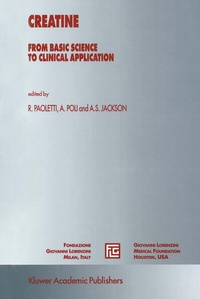
Creatine
From Basic Science to Clinical Application
Published on 5. November 2012
Book
Paperback/Softback
XI, 120 pages
978-94-010-5839-1 (ISBN)
Description
This volume, based on the International Congress
Creatine: From
Basic Science to Clinical Application
, held in Milan on June 4, 1999, outlines the physiological role of creatine in the human body as well as its possible role in different pathological conditions. Creatine is already used as a dietary supplement to augment muscle performance in healthy individuals and inpatients with immobilizing diseases, such as complex fractures. There is also an increasing interest in its administration in a growing number of clinical conditions. A specific deficit of endogenous synthesis of creatine which responds to high dosage exogenous supplementation has been described. In cardiac failure and in chronic obstructive pulmonary disease, creatine improves the contractility of the muscular system. Promising effects of this substance have also been described in animal models of neurodegenerative disorders, such as amyotrophic lateral sclerosis, and in some mitochondrial cytopathies.
This volume is of obvious interest to basic scientists working on the physiology of creatine and to clinicians interested in its medical indications.
This volume is of obvious interest to basic scientists working on the physiology of creatine and to clinicians interested in its medical indications.
More details
Series
Edition
2000 ed.
Language
English
Place of publication
Dordrecht
Netherlands
Target group
Professional and scholarly
Research
Illustrations
14 s/w Abbildungen
XI, 120 p. 14 illus.
Dimensions
Height: 240 mm
Width: 160 mm
Thickness: 8 mm
Weight
230 gr
ISBN-13
978-94-010-5839-1 (9789401058391)
DOI
10.1007/978-94-011-4237-3
Schweitzer Classification
Other editions
Additional editions
Book
12/1999
1st Edition
Kluwer Academic Publishers
€96.00
Article exhausted; check different version
Persons
Content
I. Creatine: Biochemical Aspects.- Creatine-Phosphocreatine Pathway in the Intracellular Networks of Energy Transfer and Signal Transduction in Muscle Cells.- Guanidinoacetate Methyltransferase (GAMT) Deficiency, the First Inborn Error of Creatine Metabolism.- II. Physiology and Physiopathology.- A Physiological View of The Creatine-Phosphate Shuttle, Exercise, and Protein Synthesis.- Creatine in Cardiovascular Metabolism During Physiological and Pathological Conditions: NMR Studies.- III. Role of Creatine in the Clinical Practice.- Effects and Safety of Dietary and Supplementary Creatine.- Creatine Supplementation in Patients with Chronic Heart Failure.- Creatine in Sports Medicine: Nutritional Supplementation and/or Medicinal Product?.- IV. Use of Creatine in Sports Medicine.- Physiological Role of Creatine in Muscle Metabolism During Exercise.- Impact of Oral Creatine Supplementation on Muscle Performance During Training and Rehabilitation.- Factors Modifying Creatine Accumulation in Human Skeletal Muscle.- V. Use of Creatine: New Potential Applications.- New Areas for Creatine Supplementation: Chronic Obstructive Pulmonary Disease and Geriatric Conditions.- Creatine Supplementation in Mitochondrial Cytopathies.- The Neuroprotective Properties of Creatine in Animal Models of Neurodegenerative Diseases.