

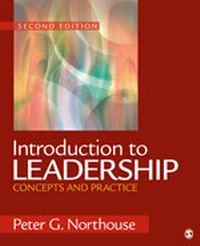
Introduction to Leadership
Concepts and Practice
2nd Edition
Published on 19. May 2011
Book
Paperback/Softback
304 pages
978-1-4129-8952-7 (ISBN)
Description
Offering a straightforward introduction to the basic principles of leadership, the Second Edition of Introduction to Leadership focuses on providing readers with practical strategies for becoming better leaders. An applied text by the author of the SAGE best-seller Leadership: Theory and Practice, Fifth Edition, this text provides the much needed "how-to" component of leading for students in leadership courses.
This new Second Edition is also available in an interactive ebook format as well as the traditional printed text. Click here to find out more and to take a demo of the e-book!
Three interactive components in every chapter: self-assessment questionnaires, observational exercises, and reflection and action worksheets get readers actively involved in applying leadership concepts to their own lives. Grounded in leadership theory, yet accessible and reader-friendly, this book covers a fundamental aspect of leadership in each chapter and illustrates its application in real leadership situations. A final chapter discusses the key topic of ethics in leadership.
Key features of the Second Edition
- Looks at one quality of leadership per chapter, making it easier for readers to understand and apply material to their own lives
- Uses examples and case studies to illustrate each fundamental aspect of leadership (creating a vision, listening to out-group members, and overcoming obstacles, for example)
- Encourages readers to complete a Self-Assessment Questionnaire before reading each chapter to explore their own leadership styles and preferences
- Guides readers in examining behaviours of leaders from their own lives through each chapter's Observational Exercise
- Includes Reflection and Action Worksheets that encourage readers to reflect upon their own leadership styles and identify an action plan for improving their leadership skills.
This new Second Edition is also available in an interactive ebook format as well as the traditional printed text. Click here to find out more and to take a demo of the e-book!
Three interactive components in every chapter: self-assessment questionnaires, observational exercises, and reflection and action worksheets get readers actively involved in applying leadership concepts to their own lives. Grounded in leadership theory, yet accessible and reader-friendly, this book covers a fundamental aspect of leadership in each chapter and illustrates its application in real leadership situations. A final chapter discusses the key topic of ethics in leadership.
Key features of the Second Edition
- Looks at one quality of leadership per chapter, making it easier for readers to understand and apply material to their own lives
- Uses examples and case studies to illustrate each fundamental aspect of leadership (creating a vision, listening to out-group members, and overcoming obstacles, for example)
- Encourages readers to complete a Self-Assessment Questionnaire before reading each chapter to explore their own leadership styles and preferences
- Guides readers in examining behaviours of leaders from their own lives through each chapter's Observational Exercise
- Includes Reflection and Action Worksheets that encourage readers to reflect upon their own leadership styles and identify an action plan for improving their leadership skills.
Reviews / Votes
"A coffee table leadership text that highlights the important leadership concepts at a reasonable price." -- Dr. Ron Cugno "I like both of Northouse's textbooks. I find the content thorough and written with clarity." -- Barbara Collins "Low cost; easy to read; each chapter provides a baseline of leadership principles that can be points of departure for thoughtful classroom discussion; rich in self-assessment exercises." -- Joseph W. T. Pugh "I absolutely love this book. My other favorite is Northouse's Leadership: Theory and Practice which I use in my Graduate Leadership class." -- Louis RubinoMore details
Edition
2nd Revised edition
Language
English
Place of publication
Thousand Oaks
United States
Target group
College/higher education
Edition type
Revised edition
Dimensions
Height: 232 mm
Width: 187 mm
Weight
454 gr
ISBN-13
978-1-4129-8952-7 (9781412989527)
Copyright in bibliographic data and cover images is held by Nielsen Book Services Limited or by the publishers or by their respective licensors: all rights reserved.
Schweitzer Classification
Other editions
Additional editions
Book
05/2009
1st Edition
SAGE Publications Inc
€95.52
Article exhausted; check different version
Previous edition
Book
01/2009
1st Edition
SAGE Publications Inc
€59.60
Article exhausted; check for reprint
Person
Peter G. Northouse, PhD, is Professor Emeritus of Communication in the School of Communication at Western Michigan University. Leadership: Theory and Practice is the best-selling academic textbook on leadership in the world and has been translated into 15 languages. In addition to authoring publications in professional journals, he is the author of Introduction to Leadership: Concepts and Practice (now in its sixth edition) and co-author of Leadership Case Studies in Education (now in its fourth edition) and Health Communication: Strategies for Health Professionals (now in its third edition). His scholarly and curricular interests include models of leadership, leadership assessment, ethical leadership, and leadership and group dynamics. For more than 40 years, he has taught courses in leadership, interpersonal communication, and organizational communication on both the undergraduate and graduate levels. Currently, he is a consultant and lecturer on trends in leadership research, leadership development, and leadership education. He holds a doctorate in speech communication from the University of Denver, and master's and bachelor's degrees in communication education from Michigan State University.
Content
Preface
Chapter 1. Being a Leader
Defining Leadership
Global Leadership Attributes
Practicing Leadership
1.1 Conceptualizing Leadership Questionnaire
1.2 Observational Exercise
1.3 Reflection and Action Worksheet
Chapter 2. Recognizing Your Traits
Historical Leaders: What Traits Do These Leaders Display?
Leadership Studies: What Traits Do Effective Leaders Exhibit?
2.1 Leadership Traits Questionnaire
2.2 Observational Exercise
2.3 Reflection and Action Worksheet
Chapter 3. Recognizing Your Philosophy and Style of Leadership
What Is Your View of Human Behavior at Work?
Styles of Leadership: Authoritarian, Democratic, and Laissez-Faire
Box 3.1 Leadership on the Silver Screen
What Is Your Style of Leadership?
3.1 Leadership Styles Questionnaire
3.2 Observational Exercise
3.3 Reflection and Action Worksheet
Chapter 4. Attending to Tasks and Relationships
What Is Your Personal Style?
What Kind of Leader Are You?
4.1 Task and Relationship Questionnaire
4.2 Observational Exercise
4.3 Reflection and Action Worksheet
Chapter 5. Developing Leadership Skills
What Are Your Core Leadership Skills?
5.1 Leadership Skills Questionnaire
5.2 Observational Exercise
5.3 Reflections and Action Worksheet
Chapter 6. Creating a Vision
What Are the Characteristics of a Vision?
How Is a Vision Articulated?
How Is a Vision Implemented?
6.1 Leadership Vision Questionnaire
6.2 Observational Exercise
6.3 Reflection and Action Worksheet
Chapter 7. Setting the Tone
Provide Structure
Clarify Norms
Build Cohesiveness
Promote Standards of Excellence
7.1 Setting the Tone Questionnaire
7.2 Observational Exercise
7.3 Reflection and Action Worksheet
Chapter 8. Listening to Out-Group Members
Who Is in the Out-Group?
Why Do Out-Groups Form?
What Is the Impact of Out-Groups?
How Should a Leader Respond to Out-Groups?
8.1 Responding to Members of the Out-Group Questionnaire
8.2 Observational Exercise
8.3 Reflections and Action Worksheet
Chapter 9. Handling Conflict
Conflict Defined
Communication and Conflict
Kinds of Conflict
Fisher and Ury Approach to Conflict
Communication Strategies for Conflict Resolution
Styles of Approaching Conflict
9.1 Conflict Style Questionnaire
9.2 Observational Exercise
9.3 Reflection and Action Worksheet
Chapter 10. Overcoming Obstacles
Obstacle 1: Unclear Goals
Obstacle 2: Unclear Directions
Obstacle 3: Low Motivation
Obstacle 4: Complex Tasks
Obstacle 5: Simple Tasks
Obstacle 6: Low Involvement
Obstacle 7: Lack of a Challenge
10.1 Path-Goal Styles Questionnaire
10.2 Observational Exercise
10.3 Reflection and Action Worksheet
Chapter 11. Addressing Ethics in Leadership
Ethical Leadership Is About the Character of the Leader
Ethical Leadership Is About the Actions of the Leader
Ethical Leadership Is About the Goals of the Leader
Ethical Leadership Is About the Honesty of the Leader
Ethical Leadership Is About the Power of the Leader
Ethical Leadership Is About the Values of the Leader
11.1 Core Values Questionnaire
11.2 Observational Exercise
11.3 Reflection and Action Worksheet
Questionnaires
Chapter 1. Being a Leader
Defining Leadership
Global Leadership Attributes
Practicing Leadership
1.1 Conceptualizing Leadership Questionnaire
1.2 Observational Exercise
1.3 Reflection and Action Worksheet
Chapter 2. Recognizing Your Traits
Historical Leaders: What Traits Do These Leaders Display?
Leadership Studies: What Traits Do Effective Leaders Exhibit?
2.1 Leadership Traits Questionnaire
2.2 Observational Exercise
2.3 Reflection and Action Worksheet
Chapter 3. Recognizing Your Philosophy and Style of Leadership
What Is Your View of Human Behavior at Work?
Styles of Leadership: Authoritarian, Democratic, and Laissez-Faire
Box 3.1 Leadership on the Silver Screen
What Is Your Style of Leadership?
3.1 Leadership Styles Questionnaire
3.2 Observational Exercise
3.3 Reflection and Action Worksheet
Chapter 4. Attending to Tasks and Relationships
What Is Your Personal Style?
What Kind of Leader Are You?
4.1 Task and Relationship Questionnaire
4.2 Observational Exercise
4.3 Reflection and Action Worksheet
Chapter 5. Developing Leadership Skills
What Are Your Core Leadership Skills?
5.1 Leadership Skills Questionnaire
5.2 Observational Exercise
5.3 Reflections and Action Worksheet
Chapter 6. Creating a Vision
What Are the Characteristics of a Vision?
How Is a Vision Articulated?
How Is a Vision Implemented?
6.1 Leadership Vision Questionnaire
6.2 Observational Exercise
6.3 Reflection and Action Worksheet
Chapter 7. Setting the Tone
Provide Structure
Clarify Norms
Build Cohesiveness
Promote Standards of Excellence
7.1 Setting the Tone Questionnaire
7.2 Observational Exercise
7.3 Reflection and Action Worksheet
Chapter 8. Listening to Out-Group Members
Who Is in the Out-Group?
Why Do Out-Groups Form?
What Is the Impact of Out-Groups?
How Should a Leader Respond to Out-Groups?
8.1 Responding to Members of the Out-Group Questionnaire
8.2 Observational Exercise
8.3 Reflections and Action Worksheet
Chapter 9. Handling Conflict
Conflict Defined
Communication and Conflict
Kinds of Conflict
Fisher and Ury Approach to Conflict
Communication Strategies for Conflict Resolution
Styles of Approaching Conflict
9.1 Conflict Style Questionnaire
9.2 Observational Exercise
9.3 Reflection and Action Worksheet
Chapter 10. Overcoming Obstacles
Obstacle 1: Unclear Goals
Obstacle 2: Unclear Directions
Obstacle 3: Low Motivation
Obstacle 4: Complex Tasks
Obstacle 5: Simple Tasks
Obstacle 6: Low Involvement
Obstacle 7: Lack of a Challenge
10.1 Path-Goal Styles Questionnaire
10.2 Observational Exercise
10.3 Reflection and Action Worksheet
Chapter 11. Addressing Ethics in Leadership
Ethical Leadership Is About the Character of the Leader
Ethical Leadership Is About the Actions of the Leader
Ethical Leadership Is About the Goals of the Leader
Ethical Leadership Is About the Honesty of the Leader
Ethical Leadership Is About the Power of the Leader
Ethical Leadership Is About the Values of the Leader
11.1 Core Values Questionnaire
11.2 Observational Exercise
11.3 Reflection and Action Worksheet
Questionnaires