

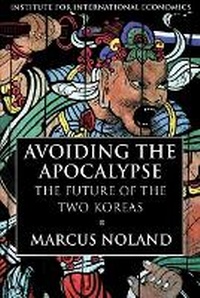
Avoiding the Apocalypse - The Future of the Two Koreas
The Future of the Two Koreas
Will be published approx. on 1. June 2000
Book
Paperback/Softback
456 pages
978-0-88132-278-1 (ISBN)
Description
On the Korean peninsula one of the greatest success stories of the postwar era confronts a famine-ridden-and possibly nuclear-armed-totalitarian state. The stakes are extraordinarily high for both North and South Korea and for countries such as the United States that have a direct stake in these affairs. This study, the most comprehensive volume to date on the subject, examines the current situation in the two Koreas in terms of three major crises: the nuclear confrontation between the United States and North Korea, the North Korean famine, and the South Korean financial crisis. The future of the peninsula is then explored under three alternative scenarios: successful reform in North Korea, collapse and absorption (as happened in Germany), and "muddling through" in which North Korea, supported by foreign powers, makes ad hoc, regime-preserving reforms that fall short of fundamental transformation.
More details
Language
English
Place of publication
Washington
United States
Target group
College/higher education
Professional and scholarly
Product notice
Paperback (trade)
Dimensions
Height: 229 mm
Width: 152 mm
Thickness: 15 mm
Weight
28 gr
ISBN-13
978-0-88132-278-1 (9780881322781)
Copyright in bibliographic data and cover images is held by Nielsen Book Services Limited or by the publishers or by their respective licensors: all rights reserved.
Schweitzer Classification
Other editions
Additional editions
E-Book
06/2000
Peterson Institute for International Economics
€9.49
Available for download
Person
Marcus Noland, executive vice president and director of studies, has been associated with the Institute since 1985. From 2009 through 2012, he served as the Institute's deputy director. His research addresses a wide range of topics at the interstice of economics, political science, and international relations. His areas of geographical knowledge and interest include Asia and Africa where he has lived and worked, and the Middle East. In the past he has written extensively on the economies of Japan, Korea, and China, and is unique among American economists in having devoted serious scholarly effort to the problems of North Korea and the prospects for Korean unification.