

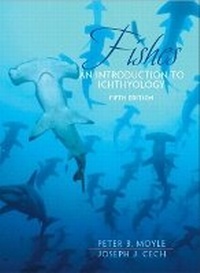
Fishes
An Introduction to Ichthyology
5th Edition
Published on 3. September 2003
Book
Hardback
752 pages
978-0-13-100847-2 (ISBN)
Description
For junior/senior-level courses in Fish Biology/Ecology, Ichthyology, and Fish Physiology.
One of the most comprehensive and current general sources of information on fishes, this text covers a broad number of topics such as including the structure and physiology, evolution, otaxanomy, zoogeography, ecology, and conservation of fishes. While providing the basic background of fish biology, the conservation approach and up-to-date coverage conveys the excitement being generated by recent research on fishes.
One of the most comprehensive and current general sources of information on fishes, this text covers a broad number of topics such as including the structure and physiology, evolution, otaxanomy, zoogeography, ecology, and conservation of fishes. While providing the basic background of fish biology, the conservation approach and up-to-date coverage conveys the excitement being generated by recent research on fishes.
More details
Other editions
Previous edition
Book
08/1999
4th Edition
Pearson
€51.98
Article exhausted; check for reprint
Persons
Laurence A. Moran
After earning his PhD from Princeton University in 1974, Professor Moran spent four years at the Universite de Geneve in Switzerland. He has been a member of the Department of Biochemistry at the University of Toronto since 1978, specializing in molecular biology and molecular evolution. His research findings on heat-shock genes have been published in many scholarly journals.
H. Robert Horton
Dr. Horton, who received his PhD from the University of Missouri in 1962, is William Neal Reynolds Professor Emeritus and Alumni Distinguished Professor Emeritus in the Department of Biochemistry at North Carolina State University, where he served on the faculty for over 30 years. Most of Professor Horton's research was in protein and enzyme mechanisms.
K. Gray Scrimgeour
Professor Scrimgeour received his doctorate from the University of Washington in 1961 and has been a faculty member at the University of Toronto since 1967. He is the author of The Chemistry and Control of Enzymatic Reactions (1977, Academic Press), and his work on enzymatic systems has been published in more than 50 professional journal articles during the past 40 years. From 1984-1992, he was editor of the journal Biochemistry and Cell Biology.
Marc D. Perry
After earning his PhD from the University of Toronto in 1988, Dr. Perry trained at the University of Colorado, where he studied sex determination in the nematode C. elegans. In 1994 he returned to the University of Toronto as a faculty member in the department of Molecular and Medical Genetics. His research has focused on developmental genetics, meiosis and bioinformatics. In 2004 he joined the Heart & Stroke / Richard Lewar Centre of Excellence in Cardiovascular Research in the University of Toronto's Faculty of Medicine.
After earning his PhD from Princeton University in 1974, Professor Moran spent four years at the Universite de Geneve in Switzerland. He has been a member of the Department of Biochemistry at the University of Toronto since 1978, specializing in molecular biology and molecular evolution. His research findings on heat-shock genes have been published in many scholarly journals.
H. Robert Horton
Dr. Horton, who received his PhD from the University of Missouri in 1962, is William Neal Reynolds Professor Emeritus and Alumni Distinguished Professor Emeritus in the Department of Biochemistry at North Carolina State University, where he served on the faculty for over 30 years. Most of Professor Horton's research was in protein and enzyme mechanisms.
K. Gray Scrimgeour
Professor Scrimgeour received his doctorate from the University of Washington in 1961 and has been a faculty member at the University of Toronto since 1967. He is the author of The Chemistry and Control of Enzymatic Reactions (1977, Academic Press), and his work on enzymatic systems has been published in more than 50 professional journal articles during the past 40 years. From 1984-1992, he was editor of the journal Biochemistry and Cell Biology.
Marc D. Perry
After earning his PhD from the University of Toronto in 1988, Dr. Perry trained at the University of Colorado, where he studied sex determination in the nematode C. elegans. In 1994 he returned to the University of Toronto as a faculty member in the department of Molecular and Medical Genetics. His research has focused on developmental genetics, meiosis and bioinformatics. In 2004 he joined the Heart & Stroke / Richard Lewar Centre of Excellence in Cardiovascular Research in the University of Toronto's Faculty of Medicine.
Content
Brief Contents
Introduction.
Form and Movement.
Respiration.
Blood and its Circulation.
Buoyancy and Thermal Regulation.
Hydronuneral Balance.
Feeding, Nutrition, Digestion, and Excretion.
Growth.
Reproduction.
Sensory Perception.
Behavior and Communication.
Systematics, Genetics and Speciation.
Evolution.
Hagfishes and Lampreys.
Sharks, Rays and Chimaeras.
Relict Bony Fishes.
Bonytongues, Eels and Herrings.
Minnows, Characins, and Catfishes.
Smelt, Salmon and Pike.
Angler Fish, Barracudinas, Cods, and Dragonfishes.
Mullets, Silversides, Flying Fish, and Killifish.
Opahs, Squirrelfish, Dories, Pipefish, and Sculpins.
Perciformes: Snooks to Snakeheads.
Flounders, Puffers, and Molas.
Zoogeography of Freshwater Fishes.
Zoogeography of Marine Fishes.
Introduction to Ecology.
Temperate Streams.
Temperate Lakes and Reservoirs.
Tropical Freshwater Lakes and Streams.
Estuaries.
Coastal Habitats.
Tropical Reefs.
Epipelagic Zone.
Deep Sea Habitats.
Polar Regions.
Conservation.
Introduction.
Form and Movement.
Respiration.
Blood and its Circulation.
Buoyancy and Thermal Regulation.
Hydronuneral Balance.
Feeding, Nutrition, Digestion, and Excretion.
Growth.
Reproduction.
Sensory Perception.
Behavior and Communication.
Systematics, Genetics and Speciation.
Evolution.
Hagfishes and Lampreys.
Sharks, Rays and Chimaeras.
Relict Bony Fishes.
Bonytongues, Eels and Herrings.
Minnows, Characins, and Catfishes.
Smelt, Salmon and Pike.
Angler Fish, Barracudinas, Cods, and Dragonfishes.
Mullets, Silversides, Flying Fish, and Killifish.
Opahs, Squirrelfish, Dories, Pipefish, and Sculpins.
Perciformes: Snooks to Snakeheads.
Flounders, Puffers, and Molas.
Zoogeography of Freshwater Fishes.
Zoogeography of Marine Fishes.
Introduction to Ecology.
Temperate Streams.
Temperate Lakes and Reservoirs.
Tropical Freshwater Lakes and Streams.
Estuaries.
Coastal Habitats.
Tropical Reefs.
Epipelagic Zone.
Deep Sea Habitats.
Polar Regions.
Conservation.