

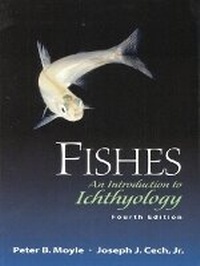
Fishes
An Introduction to Ichthyology
4th Edition
Published on 18. August 1999
Book
Paperback/Softback
612 pages
978-0-13-011282-8 (ISBN)
Description
For junior/senior-level courses in Fish Biology/Ecology, Ichthyology, and Fish Physiology.
One of the most comprehensive and current general sources of information on fishes, this text covers the structure and physiology, evolution and taxonomy, zoogeography, and ecology and conservation of fishes. Broad in perspective and flexibly arranged, it integrates the basics with recent developments in other areas and provides a feeling for the excitement being generated by recent research on fishes.
One of the most comprehensive and current general sources of information on fishes, this text covers the structure and physiology, evolution and taxonomy, zoogeography, and ecology and conservation of fishes. Broad in perspective and flexibly arranged, it integrates the basics with recent developments in other areas and provides a feeling for the excitement being generated by recent research on fishes.
More details
Edition
4th edition
Language
English
Place of publication
United States
Publishing group
Pearson Education (US)
Target group
Professional and scholarly
Dimensions
Height: 243 mm
Width: 183 mm
Thickness: 25 mm
Weight
1052 gr
ISBN-13
978-0-13-011282-8 (9780130112828)
Copyright in bibliographic data and cover images is held by Nielsen Book Services Limited or by the publishers or by their respective licensors: all rights reserved.
Schweitzer Classification
Other editions
New editions
Book
09/2003
5th Edition
Pearson
€242.63
Shipment within 15-20 days
Previous edition

Book
12/1995
3rd Edition
Pearson Education (US)
€47.03
Article exhausted; check different version
Content
I. INTRODUCTION.
1. Introduction.
II. STRUCTURE AND FORM.
2. Form and Movement.
3. Respiration.
4. Blood and Its Circulation.
5. Buoyancy and Thermal Regulation.
6. Hydromineral Balance.
7. Feeding, Nutrition, Digestion, and Excretion.
8. Growth.
9. Reproduction.
10. Sensory Perception.
11. Behavior and Communication.
III. THE FISHES.
12. Systematics, Genetics, and Speciation.
13. Evolution.
14. Hagfishes and Lampreys.
15. Sharks, Rays and Chimaeras.
16. Relict Bony Fishes.
17. Teleost Offshoots: Bonytongues, Herrings, and Eels.
18. Minnows, Characins, and Catfishes.
19. Pike, Smelt, and Salmon.
20. Anglerfish, Barracudinas, Cods, and Dragonfish.
21. Silversides, Flying Fish, and Killifish.
22. Opahs, Squirrelfish, Dories, Pipefish, and Sculpins.
23. Perciforms: Snooks to Snakeheads.
24. Flounders, Puffers, and Molas.
IV. ZOOGEOGRAPHY.
25. Zoogeography of Freshwater Fishes.
26. Zoogeography of Marine Fishes.
V. ECOLOGY.
27. Introduction to Ecology.
28. Temperate Streams.
29. Temperate Lakes and Reservoirs.
30. Tropical Freshwater Lakes and Streams.
31. Estuaries.
32. Coastal Habitats.
33. Tropical Reefs.
34. Epipelagic Zone.
35. Deepsea Habitats.
36. Polar Regions.
37. Conservation.
Bibliography.
Index.
1. Introduction.
II. STRUCTURE AND FORM.
2. Form and Movement.
3. Respiration.
4. Blood and Its Circulation.
5. Buoyancy and Thermal Regulation.
6. Hydromineral Balance.
7. Feeding, Nutrition, Digestion, and Excretion.
8. Growth.
9. Reproduction.
10. Sensory Perception.
11. Behavior and Communication.
III. THE FISHES.
12. Systematics, Genetics, and Speciation.
13. Evolution.
14. Hagfishes and Lampreys.
15. Sharks, Rays and Chimaeras.
16. Relict Bony Fishes.
17. Teleost Offshoots: Bonytongues, Herrings, and Eels.
18. Minnows, Characins, and Catfishes.
19. Pike, Smelt, and Salmon.
20. Anglerfish, Barracudinas, Cods, and Dragonfish.
21. Silversides, Flying Fish, and Killifish.
22. Opahs, Squirrelfish, Dories, Pipefish, and Sculpins.
23. Perciforms: Snooks to Snakeheads.
24. Flounders, Puffers, and Molas.
IV. ZOOGEOGRAPHY.
25. Zoogeography of Freshwater Fishes.
26. Zoogeography of Marine Fishes.
V. ECOLOGY.
27. Introduction to Ecology.
28. Temperate Streams.
29. Temperate Lakes and Reservoirs.
30. Tropical Freshwater Lakes and Streams.
31. Estuaries.
32. Coastal Habitats.
33. Tropical Reefs.
34. Epipelagic Zone.
35. Deepsea Habitats.
36. Polar Regions.
37. Conservation.
Bibliography.
Index.