

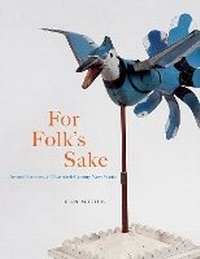
For Folk's Sake
Art and Economy in Twentieth-Century Nova Scotia
Will be published approx. on 24. October 2016
Book
Hardback
424 pages
978-0-7735-4811-4 (ISBN)
Description
Folk art emerged in twentieth-century Nova Scotia not as an accident of history, but in tandem with cultural policy developments that shaped art institutions across the province between 1967 and 1997. For Folk's Sake charts how woodcarvings and paintings by well-known and obscure self-taught makers - and their connection to handwork, local history, and place - fed the public's nostalgia for a simpler past. The folk artists examined here range from the well-known self-taught painter Maud Lewis to the relatively anonymous woodcarvers Charles Atkinson, Ralph Boutilier, Collins Eisenhauer, and Clarence Mooers. These artists are connected by the ways in which their work fascinated those active in the contemporary Canadian art world at a time when modernism - and the art market that once sustained it - had reached a crisis. As folk art entered the public collection of the Art Gallery of Nova Scotia and the private collections of professors at the Nova Scotia College of Art and Design, it evolved under the direction of collectors and curators who sought it out according to a particular modernist aesthetic language. Morton engages national and transnational developments that helped to shape ideas about folk art to show how a conceptual category took material form. Generously illustrated, For Folk's Sake interrogates the emotive pull of folk art and reconstructs the relationships that emerged between relatively impoverished self-taught artists, a new brand of middle-class collector, and academically trained professors and curators in Nova Scotia's most important art institutions.
Reviews / Votes
"An exciting, timely, important, and wonderfully written book that emphasizes the role of late capitalism in the development of the field of folk art, For Folk's Sake illuminates new histories around the establishment of Nova Scotia as the folk art capital of Canada." Sandra Alfoldy, NSCAD University "Morton advances-and brilliantly illustrates-her main thesis that the emergence of folk art in Nova Scotia, a longtime very rural province, was not something that happened spontaneously, but that it was the result of a complex set of converging historicalMore details
Series
Language
English
Place of publication
Montreal
Canada
Target group
College/higher education
Illustrations
76 photos, full colour throughout
Dimensions
Height: 248 mm
Width: 191 mm
Weight
1361 gr
ISBN-13
978-0-7735-4811-4 (9780773548114)
Copyright in bibliographic data and cover images is held by Nielsen Book Services Limited or by the publishers or by their respective licensors: all rights reserved.
Schweitzer Classification
Other editions
Additional editions
E-Book
11/2016
1st Edition
De Gruyter
€45.49
Available for download
Person
Erin Morton is associate professor of visual culture in the Department of History at the University of New Brunswick.