

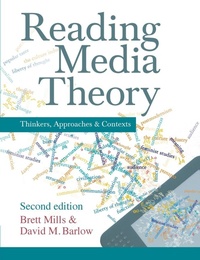
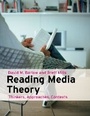
Reading Media Theory
Thinkers, Approaches and Contexts
2nd Edition
Published on 10. May 2012
Book
Paperback/Softback
704 pages
978-1-4082-8525-1 (ISBN)
Description
This groundbreaking volume ? part reader, part textbook - helps students to engage thoroughly with some of the major voices that have come to define the landscape of theory in media studies, from the public sphere to postmodernism, from mass communication theory to media effects, from production to reception and beyond. But much more than this, by providing assistance and questions directly alongside the readings, it crucially helps students develop the skills necessary to become a critical, informed and analytical reader.
Reviews / Votes
?A well organised reader which covers the key theories and theorists ... a required text for any student of the media and mass communication. It is a comprehensive overview of media theory, drawing together readings which represent milestones in the field with lucid explanation of their relevance and critical assessment of their impact.?Kevin Williams, Professor of Media and Communication Studies, Swansea University
"Clearly organised around key thinkers in the field, Reading Media Theory offers students an ideal combination of landmark original writings, clear and concise explanations and thoughtful reflection.?
Andy Willis, Reader, School of Media, Music and Performance, University of Salford
More details
Other editions
Additional editions
Book
10/2015
2nd Edition
Routledge
€207.20
Shipment within 10-20 days
E-Book
06/2014
2nd Edition
Routledge
€89.99
Available for download
E-Book
06/2014
2nd Edition
Routledge
€89.99
Available for download
Previous edition
Book
12/2008
Longman Publishing Group
€67.29
Article exhausted; check for reprint
Persons
Brett Mills is Head of the School of Film and Television Studies at the University of East Anglia. He is the author of Television Sitcom (British Film Institute, 2005) and The Sitcom (Edinburgh University Press, 2009).
David Barlow was Lecturer in Media, Culture and Communication in the Cardiff School of Creative and Cultural Industries at the University of Glamorgan and Director of the Centre for the Study of Media and Culture in Small Nations. He is a joint author (with Philip Mitchell and Tom O?Malley) of The Media in Wales: Voices of a Small Nation (UWP, 2005) and co-editor (with Vian Bakir) of Communication in the Age of Suspicion: Trust and the Media (Palgrave Macmillan, 2007).
David Barlow was Lecturer in Media, Culture and Communication in the Cardiff School of Creative and Cultural Industries at the University of Glamorgan and Director of the Centre for the Study of Media and Culture in Small Nations. He is a joint author (with Philip Mitchell and Tom O?Malley) of The Media in Wales: Voices of a Small Nation (UWP, 2005) and co-editor (with Vian Bakir) of Communication in the Age of Suspicion: Trust and the Media (Palgrave Macmillan, 2007).
Content
1 Introduction
Part I Reading theory
2 What is theory?
3 What is reading?
Part II Key thinkers and schools of thought
4 Liberal press theory
Reading: Mill, J.S. (1997 [1859]) 'Of the liberty of thought and discussion', in Bromley, M. and O'Malley, T. (eds) A Journalism Reader, London: Routledge, pp. 22-6.
5 F.R. Leavis
Reading: Leavis, F.R. (1930) Mass Civilisation and Minority Culture, Cambridge: Minority Press.
6 The Frankfurt school
Reading: Horkheimer, M. and Adorno, T.W. (2002 [1944]) Dialectic of Enlightenment: Philosophical fragments, translated by Jephcott, E. Stanford, California: Stanford University Press. Excerpt from Chapter 4, 'The culture industry: enlightenment as mass deception', pp. 94-8.
7 Harold D. Lasswell
Reading: Lasswell, H.D. (1948) 'The structure and function of communication in society', in Bryson, L. (ed.) The Communication of Ideas, New York: Harper and Brothers, pp. 37-51.
8 The Columbia school
Reading: Lazarsfeld, P.F. and Merton, R.K. (1948) 'Mass communication, popular taste and organized social action', in Bryson, L (ed.) The Communication of Ideas, New York: Harper and Brothers, pp. 95-118.
9 C. Wright Mills: Mass society theory
Reading: Mills, C.W. (1956) 'The mass society', in Mills, C.W. (ed.) The Power Elite, London: Oxford University Press, pp. 298-324.
10 The Toronto school
Reading: Innis, H.A. (1951a) 'The bias of communication', in The Bias of Communication, Toronto: University of Toronto Press, pp. 33-60.
11 The Centre for Contemporary Cultural Studies
Reading: Hall, S. (1980c) 'Encoding/Decoding', in Culture, Media, Language: Working papers in cultural studies, 1972-9, Hall, S., Hobson, D., Lowe, A. and Willis, P. (eds), London: Hutchinson, pp. 128-38.
Part III Approaches to media theory
12 Political economy
Reading: Herman, E.S. (1995) 'Media in the US political economy', in Downing, J., Mohammadi, A. and Sreberny-Mohammadi, A. (eds) Questioning the Media: A critical introduction, 2nd edition, London: Sage, pp. 77-93.
13 Public sphere
Reading: Habermas, J. (1974 [1964]) 'The public sphere: an encyclopedia article', New German Critique 3 (1): 49-55.
14 Media effects
Reading: Gauntlett, D. (2005) 'Ten things wrong with the media 'effects' model', Theory.org.uk: the Media Theory Site, www.theory.org.uk/tenthings.html.
15 Structuralism
Reading: Todorov, T. (1990 [1978]) Genres in Discourse, translated by Porter, C., Cambridge: Cambridge University Press, pp. 27-38.
16 Feminist media theory
Reading: van Zoonen, L. (1994) Feminist Media Studies, London: Sage, pp. 11-18, 21-8.
17 Cultural theory
Reading: Williams, R. (1961) The Long Revolution, Orchard Park: Broadview Press, pp. 57-70.
18 New Media
Reading: Jenkins, H. (2006) Convergence Culture: Where old and new media collide, New York and London: New York University Press, pp. 2-10.
19 Postmodernism
Reading: Baudrillard, J. (1994 [1981]) 'The implosion of meaning in the media', in Simulacra and Simulation, translated by Glaser, S.F., Ann Arbor: University of Michigan Press, pp. 79-86.
20 The information society
Reading: Webster, F. (2002) Theories of the Information Society, 2nd edition, London: Routledge, pp. 8-21.
Part IV Media theory in context
21 Production
Reading: Hesmondhalgh, D. (2007) The Cultural Industries, 2nd edition, London: Sage, pp. 3-8.
22 Texts
Reading: Barthes, R. (1977 [1967]) 'The death of the author', in Image Music Text, translated by Heath, S., London: Fontana, pp. 142-8.
23 Audiences
Reading: Ang, I. (1991) 'Audience-as-market and audience-as-public', in Desperately Seeking the Audience, London: Routledge, pp. 26-32.
24 Audiences as producers
Reading: Shirky, C. (2008) Here Comes Everybody: How change happens when people come together, London: Penguin, pp. 55-66.
Part I Reading theory
2 What is theory?
3 What is reading?
Part II Key thinkers and schools of thought
4 Liberal press theory
Reading: Mill, J.S. (1997 [1859]) 'Of the liberty of thought and discussion', in Bromley, M. and O'Malley, T. (eds) A Journalism Reader, London: Routledge, pp. 22-6.
5 F.R. Leavis
Reading: Leavis, F.R. (1930) Mass Civilisation and Minority Culture, Cambridge: Minority Press.
6 The Frankfurt school
Reading: Horkheimer, M. and Adorno, T.W. (2002 [1944]) Dialectic of Enlightenment: Philosophical fragments, translated by Jephcott, E. Stanford, California: Stanford University Press. Excerpt from Chapter 4, 'The culture industry: enlightenment as mass deception', pp. 94-8.
7 Harold D. Lasswell
Reading: Lasswell, H.D. (1948) 'The structure and function of communication in society', in Bryson, L. (ed.) The Communication of Ideas, New York: Harper and Brothers, pp. 37-51.
8 The Columbia school
Reading: Lazarsfeld, P.F. and Merton, R.K. (1948) 'Mass communication, popular taste and organized social action', in Bryson, L (ed.) The Communication of Ideas, New York: Harper and Brothers, pp. 95-118.
9 C. Wright Mills: Mass society theory
Reading: Mills, C.W. (1956) 'The mass society', in Mills, C.W. (ed.) The Power Elite, London: Oxford University Press, pp. 298-324.
10 The Toronto school
Reading: Innis, H.A. (1951a) 'The bias of communication', in The Bias of Communication, Toronto: University of Toronto Press, pp. 33-60.
11 The Centre for Contemporary Cultural Studies
Reading: Hall, S. (1980c) 'Encoding/Decoding', in Culture, Media, Language: Working papers in cultural studies, 1972-9, Hall, S., Hobson, D., Lowe, A. and Willis, P. (eds), London: Hutchinson, pp. 128-38.
Part III Approaches to media theory
12 Political economy
Reading: Herman, E.S. (1995) 'Media in the US political economy', in Downing, J., Mohammadi, A. and Sreberny-Mohammadi, A. (eds) Questioning the Media: A critical introduction, 2nd edition, London: Sage, pp. 77-93.
13 Public sphere
Reading: Habermas, J. (1974 [1964]) 'The public sphere: an encyclopedia article', New German Critique 3 (1): 49-55.
14 Media effects
Reading: Gauntlett, D. (2005) 'Ten things wrong with the media 'effects' model', Theory.org.uk: the Media Theory Site, www.theory.org.uk/tenthings.html.
15 Structuralism
Reading: Todorov, T. (1990 [1978]) Genres in Discourse, translated by Porter, C., Cambridge: Cambridge University Press, pp. 27-38.
16 Feminist media theory
Reading: van Zoonen, L. (1994) Feminist Media Studies, London: Sage, pp. 11-18, 21-8.
17 Cultural theory
Reading: Williams, R. (1961) The Long Revolution, Orchard Park: Broadview Press, pp. 57-70.
18 New Media
Reading: Jenkins, H. (2006) Convergence Culture: Where old and new media collide, New York and London: New York University Press, pp. 2-10.
19 Postmodernism
Reading: Baudrillard, J. (1994 [1981]) 'The implosion of meaning in the media', in Simulacra and Simulation, translated by Glaser, S.F., Ann Arbor: University of Michigan Press, pp. 79-86.
20 The information society
Reading: Webster, F. (2002) Theories of the Information Society, 2nd edition, London: Routledge, pp. 8-21.
Part IV Media theory in context
21 Production
Reading: Hesmondhalgh, D. (2007) The Cultural Industries, 2nd edition, London: Sage, pp. 3-8.
22 Texts
Reading: Barthes, R. (1977 [1967]) 'The death of the author', in Image Music Text, translated by Heath, S., London: Fontana, pp. 142-8.
23 Audiences
Reading: Ang, I. (1991) 'Audience-as-market and audience-as-public', in Desperately Seeking the Audience, London: Routledge, pp. 26-32.
24 Audiences as producers
Reading: Shirky, C. (2008) Here Comes Everybody: How change happens when people come together, London: Penguin, pp. 55-66.